

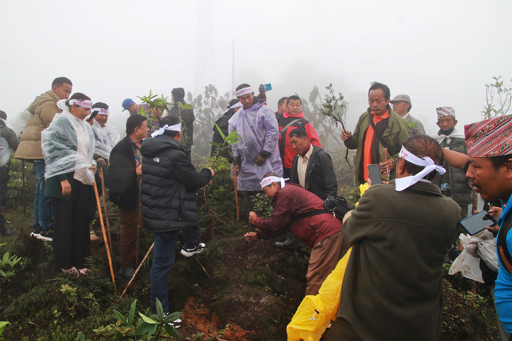
KATHMANDU — A cable car line is being built to serve the mountaintop temple of Pathibhara Devi, a popular pilgrimage destination for Hindus in eastern Nepal. But the area is also revered by the region’s Indigenous Yakthung (or Limbu) people, many of whom have objected to the clearing of trees that they say will weaken the spiritual power that the site holds according to their beliefs. The World Bank Group’s Compliance Advisor/Ombudsman (CAO) says it is looking into a complaint filed by the Yakthung people against the International Finance Corporation (IFC) — the private sector investment arm of the World Bank Group — for providing advisory support to a controversial cable car project in their ancestral land. The CAO recently confirmed to Mongabay that it had received the complaint filed in August 2025 and it meets the ombudsman’s criteria for formal registration. “As the Nepal cable car complaint met these criteria, it is now in the assessment phase of the CAO process,” Emily Horgan, communications and outreach lead at CAO, told Mongabay via email referring to the ombudsman’s policy of accepting a complaint if it concerns an IFC or MIGA (Multilateral Investment Guarantee Agency) project. Horgan said that the Pathibhara issue also falls within the CAO’s mandate to address potential environmental and social impacts of projects. The CAO’s registry states that the complaint was accepted for review on Dec. 12, 2025. Project developer Pathibhara Devi Darshan Cable Car Pvt. Ltd., part of the IME Group led by prominent Nepali tycoon…This article was originally published on Mongabay
From Conservation news via this RSS feed