

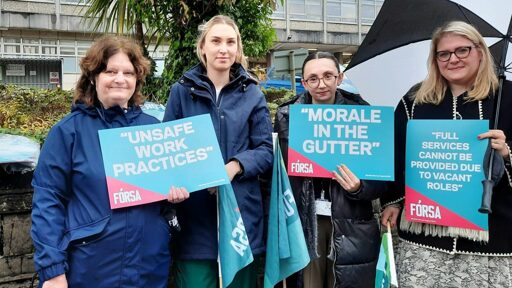
Workers in Ireland’s health and social services are experiencing high levels of stress and low morale due to inadequate workforce policies, according to a report delivered by the labor union Fórsa and the Think-tank for Action on Social Change (TASC). The findings suggest the situation is so severe that a majority of workers are actively considering leaving the sector.
“Understaffing is leading to longer waiting lists, reduced access to local services, and an increased reliance on private providers,” Fórsa pointed out. “Workers reported that these delays undermine preventative care, worsen outcomes, and demoralize staff who feel they are delivering care far below acceptable standards.”
Read more: 15,000 New York nurses strike for safe staffing and quality care
The research identifies high rates of understaffing and resulting pressure on workers, top-down communication, and faltering quality of care as some of the key problems. “Stress from understaffing and poor retention in the health and social sector contribute to a vicious circle that is draining the service, particularly of more senior, experienced workers,” the report states. “More than three quarters of survey respondents reported that they often think about leaving their current role.”
These challenges continued taking shape as health authorities pursue the Sláintecare reform, which formally aims to improve access to care by strengthening primary and community-based services and ultimately achieving universal healthcare provision “with a strong emphasis on prevention and improved public health.”
In practice, however, the reform has faced significant obstacles. These include the fact that workforce investments have failed to align with officially projected requirements, let alone the concrete needs identified by frontline staff. This gap has led to multiple grievances. On the one hand, Fórsa and TASC report that many workers feel their observations and proposals are routinely ignored by management, preventing services from benefiting from experience from the ground. On the other hand, the combined effects of heavy workloads and lack of recognition are adding to physical strain, frustration, and already high levels of burnout.
Read more: A health system for all of Ireland
Efforts to reorganize services without sufficient funding or staffing capacity may have even worsened public perceptions of the sector. “A common view was that the public had come to accept an unacceptably low standard of health and social care provision,” the report notes. Workers themselves are no better off, Fórsa representatives insist. “The lived reality for our health and welfare members is long waiting lists, reduced access to community services, and local networks closing or shrinking,” said Ashley Connolly, Fórsa’s head of health and welfare.
The report concludes by calling for a decisive shift in how workforce policy is designed and implemented. This includes giving greater importance to input from health workers and ensuring fair pay across the sector. Crucially, the report’s overall findings indicate that meaningful change will not happen without a true commitment to properly funding health and social care services. “The current situation [in Ireland’s healthcare system overall] is a result of Ireland’s long-term failure to invest properly in public health and social care,” the report notes at one point, pointing both to the strain brought by the COVID-19 pandemic and the lingering effects of decades of austerity policies.
People’s Health Dispatch is a fortnightly bulletin published by the People’s Health Movement and Peoples Dispatch*. For more articles and subscription to People’s Health Dispatch, click* here.
The post Irish health workers think patients have been conditioned to accept “unacceptably low standard” of care appeared first on Peoples Dispatch.
From Peoples Dispatch via this RSS feed