

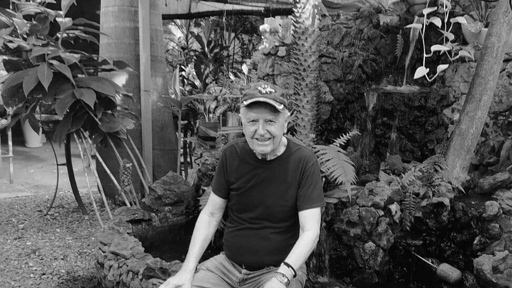
For much of South America’s history, the arrival of a missionary has carried two reputations at once. One is charitable: a figure with medicine, schooling, and a language of human dignity that can be useful in a state that is often absent. The other is coercive: an agent of conversion and acculturation, sometimes entangled with land seizures, forced settlement, and abuses that Indigenous communities still live with. Among the peoples of the Gran Chaco, the story of “contact” is still unfolding, with some groups settled and others choosing isolation. In that setting, the line between accompaniment and intrusion has never been simple. Anthropology, too, has had its double role. At its best it records languages, histories, and ways of seeing that outsiders once dismissed as obstacles to “progress.” At its worst it becomes another instrument for ordering Indigenous people into categories designed by others. The most careful scholars learn to doubt their own categories. They also learn that a field notebook can outlast a sermon. That tension framed the life of Father José (Giuseppe) Zanardini, a Salesian priest and anthropologist who arrived in Paraguay in 1978 and spent decades working among Indigenous communities, especially the Ayoreo in the Chaco. He died on January 19th 2026, aged 83. Zanardini was born in Brescia, Italy, in 1942. He studied engineering in Milan before turning to philosophy and theology. The Salesians chose him for Paraguay, and he chose, in turn, to study anthropology, completing a doctorate in social anthropology in England. He would…This article was originally published on Mongabay
From Conservation news via this RSS feed
You must log in or # to comment.