

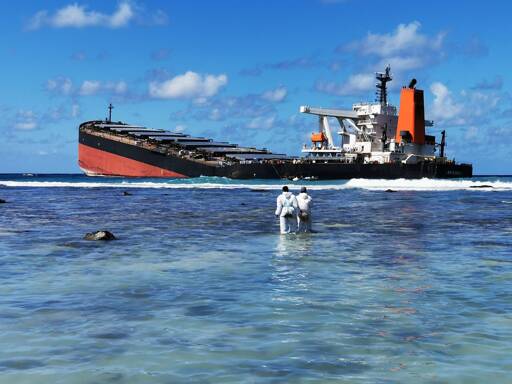
POINTE D’ESNY, Mauritius — In August 2020, Vikash Tatayah at the Mauritian Wildlife Foundation made a phone call he never expected to make. He had “an unusual request,” he recounts telling friends in the U.K. who owned a private jet: A bunch of geckos needed to be evacuated. Mauritius had just entered COVID-19 lockdown, its airspace was closed, so it would have to be a special flight. Amid the chaos of the pandemic, the island nation had been hit by one of the worst environmental disasters in its history. On July 25, the MV Wakashio crashed onto coral reefs off Mauritius’ southeastern coast, later spilling around 1,000 metric tons of oil. In time, the slick spread north, creeping to the islets that line the coast. These are home to threatened lesser night geckos (Nactus coindemirensis), prompting Tatayah to call for their evacuation. The oil spill occurred near Blue Bay Marine Park, a coral hotspot, and two other protected sites: the Pointe d’Esny Wetland (a Ramsar site blessed with rich mangroves ) and the Ile aux Aigrettes Nature Reserve. Oil started leaking from the ship in the first week of August. On Aug. 15, the Wakashio broke in two. In the days following the spill, ocean currents nudged the floating oil northward toward Vieux-Grand-Port. At its most expansive, the oil spill covered nearly 30 square kilometers (11.6 square miles) of coastal waters. A government-appointed group estimated that the shipwreck and oil spill affected 96 km2 (37 mi2) of coastal and marine…This article was originally published on Mongabay
From Conservation news via this RSS feed
You must log in or # to comment.