

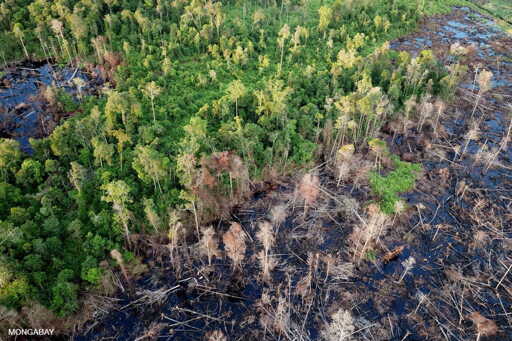
A week ago, the media reported that the Ministry of Forestry estimated the total cost of rehabilitating Indonesia’s forests and critical lands at Rp153.78 trillion, or about US$9.2 billion, over nine years, ending in 2034. The Ministry plans to rehabilitate 12 million hectares of critical land by then, including 6.3 million hectares within forest areas and 5.7 million hectares outside. On average, about 1.3 million hectares will be rehabilitated annually, requiring roughly Rp17.08 trillion in funding from the State Budget (APBN) and regional budgets. Additional financing will also depend on domestic and international cooperation, as well as commitments to watershed-area rehabilitation by holders of Forest Area Use Permits (PPKH) and Forest Utilization Business Permits (PBPH). Ecosystem restoration efforts will also be supported through carbon schemes and corporate social responsibility (CSR). It’s not yet clear where the 12 million hectares are located, how the number was derived, which indicators were used, or what their actual condition is. It’s also unclear how this overlaps with the 12.7 million hectares under the Ministry’s Social Forestry Program. In November 2024, the Forestry Minister announced his intention to develop a roadmap and strategic plan to reforest 12 million hectares of degraded forest, following a statement by the President’s Special Envoy for Climate, who said that 12.7 million hectares of damaged forest in Indonesia would be reforested at COP29 in Azerbaijan. I have not seen this roadmap made publicly available. Despite this confusion, it is critical that a large-scale forest rehabilitation program ensure transparency for the…This article was originally published on Mongabay
From Conservation news via this RSS feed
You must log in or # to comment.