

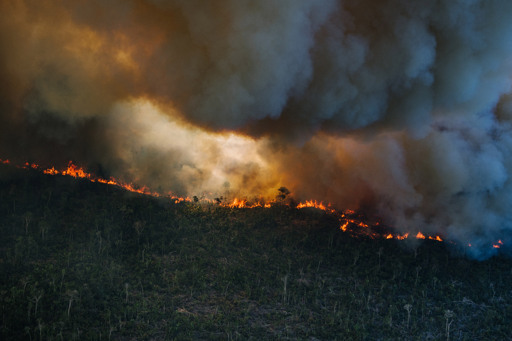
Britain’s national security thinking has traditionally been shaped by familiar concerns: hostile states, terrorism, energy supply, and, more recently, cyber threats. A new assessment from the U.K. government adds a different category to that list. Global biodiversity loss and ecosystem collapse, it argues, now pose a direct and growing risk to national security, with implications that extend well beyond conservation policy and into food supply, economic stability, migration, and conflict. The assessment is explicit about its framing. This is not a scientific review, nor an environmental strategy. It is an intelligence-style analysis, designed to support national security planning under conditions of uncertainty. It draws on scientific literature, expert judgment, and probabilistic reasoning, applying the same tools used to assess geopolitical or military risk. Its core judgment is delivered with high confidence: global ecosystem degradation already threatens U.K. prosperity and security, and without major intervention, those risks are likely to intensify through mid-century and beyond. Deforestation for palm oil production in Malaysian Borneo. At the heart of the argument is the idea of cascading risk. Ecosystems underpin food production, water availability, climate regulation, and disease control. When they degrade, the effects rarely remain local. Crop failures in one region can ripple through global markets. Water scarcity can destabilize fragile states. Disease outbreaks can spread rapidly through interconnected societies. The assessment emphasizes that biodiversity loss should be understood not as an isolated environmental problem, but as a multiplier of existing social, economic, and political stresses. The report identifies several pathways through which…This article was originally published on Mongabay
From Conservation news via this RSS feed