

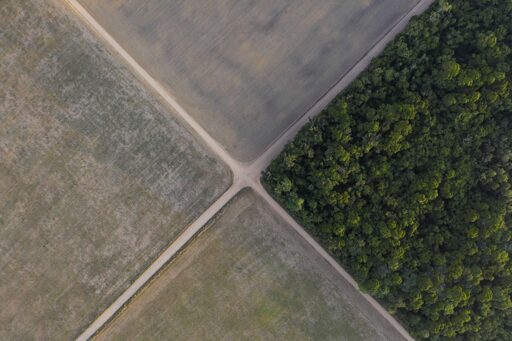
Major soy traders operating in Brazil announced in early January that they would abandon one of the world’s most successful zero-deforestation agreements, known as the soy moratorium. As a result, deforestation in the Brazilian Amazon may increase by up to 30% by 2045, according to the Amazon Environmental Research Institute (IPAM), pushing the rainforest toward the much-feared tipping point. The coup de grâce to the 20-year-long soy moratorium, under which companies voluntarily agreed to ban soy grown in areas deforested after 2008, came from the Brazilian Association of Vegetable Oil Industries(Abiove). Representing some of the world’s largest soy traders, like Cargill, Bunge, Amaggi and ADM, the trade association announced in a statement on Jan. 5 that it “began negotiations to withdraw from the Soy Moratorium Commitment Agreement.” Brazil is the world’s largest soy exporter, and Abiove’s members account for nearly 45% of these shipments, according to 2022 data from commodity supply-chain watchdog Trase. The decision followed a new law in Mato Grosso state, Brazil’s largest soy producer. The legislation, which went into effect Jan. 1, allows the state government to suspend tax breaks to companies adopting environmental criteria beyond those required by Brazilian law, such as the soy moratorium. In Brazil, deforestation is permitted under rules for each biome — 20% for properties in the Amazon, 65-80% in the Cerrado, and so on. This means that a farmer who deforested their land after 2008 couldn’t sell soy to moratorium members even when complying with Brazilian deforestation laws. “Abiove understands that…This article was originally published on Mongabay
From Conservation news via this RSS feed
You must log in or # to comment.