

Bullets:
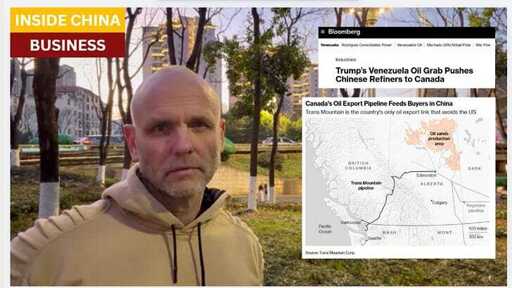
Following the US takeover of the Venezuelan oil industry, commodities trading firms were given contracts to market the crude to buyers across the world, including to China.But Venezuelan crude oil is now being sold at far higher prices than before, with the profits routed through US companies and energy traders. The higher prices have pushed Chinese refiners out of the market for the heavy crude from Venezuela, and they are shifting their orders to Canada, Russia, and Iran.Canadian tar sands oil is more expensive than Venezuelan heavy sour, but is similar, and offers far shorter transit times and lower shipping costs.Chinese energy traders have been instructed to refuse new offers for Venezuelan crude.
Inside China / Business is a reader-supported publication. To receive new posts and support my work, consider becoming a free or paid subscriber.
Report:
Good morning.
We only needed a few weeks to confirm how things would work out for oil markets after the takeover of Venezuela’s oil industry, and for China’s supply chain in particular.
Immediately after American forces went into Caracas and hauled Maduro back to the US, we got headlines like these. In order to resume production, the Trump administration demanded that the “country must cut ties with China, Iran, Russia and Cuba, and partner exclusively with the United States on oil production.” Venezuela must also “favor the Trump Administration and American oil companies for all future” business.
The presumption here was that China would be cut off from Venezuela’s oil that they were dependent on. That entire premise is faulty, and backwards. It wasn’t that China was dependent on Venezuela’s oil supply. Venezuela was dependent on China to buy it. Because just a few days later, Chinese oil refiners are getting phone calls from Trafigura and Vitol to see if they want to buy any of the Venezuelan oil. These are commodities traders, who have big new contracts with the US government to broker new sales of Venezuelan crude.
Vitol got some interest from refiners in India, and both companies reached out to PetroChina for sales of Merey crude, a heavy-sour grade. The administration confirmed that China is again allowed to buy oil from Venezuela, but not at the steep discounts they were buying at before, and repeated that the United States is in control of Venezuela’s oil sales.
China is cutting the big trading companies like Trafigura out of their economy here, and PetroChina so far has refused to buy or trade Venezuelan crude since Trump took over the exports.
The discounts that Venezuela used to offer buyers, including China—that is the problem now. The world is well-supplied with oil. Oil prices are grinding ever lower. China is the world’s biggest importer and consumer of oil, but China is also well-supplied with it. If the big discounts on Venezuelan crude go away, Chinese buyers can simply shift to Canada, Iran, or Russia.
So the idea that Chinese crude refiners would be in a panic, racing to replace Venezuelan oil in its supply chain—it’s upside down. PetroChina traders were told, don’t even think about buying Venezuelan oil until told otherwise, and the trading companies now are scrambling to find buyers to replace China for Venezuelan exports. And that cannot be done without resorting to the discounts that were on before; China was simply too big a buyer.
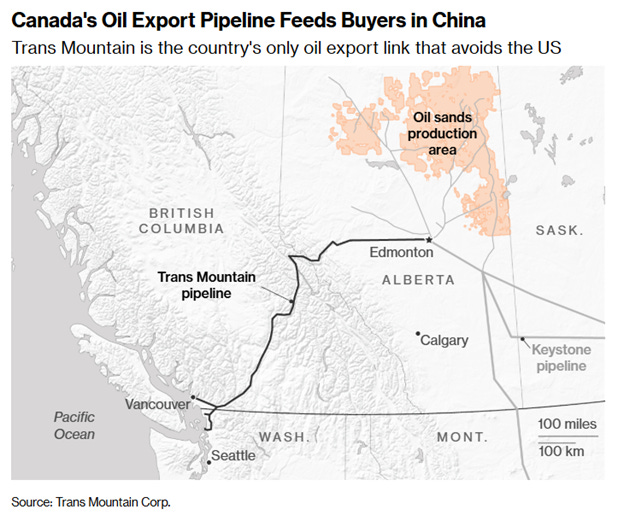
Here is where things get weirder still, that it’s Canadian crude suppliers who are likely to benefit. The Trans Mountain Pipeline runs from oil sands in Alberta to Vancouver. Two thirds of the oil pumped through that line goes to China, with the rest going to the United States.
This oil is very similar to what comes from Venezuela. It is more expensive than the Merey crude, from Venezuela. On the plus side, it is 40 days of shipping time closer to China, and more classes of ships can be used to transport the Canadian oil, which also cuts shipping cost. What’s more, the Trans Mountain Pipeline is also what pushed American crude oil out of China’s energy supply chain. In 2025, China’s imports of crude from the US dropped by over 60%. Imports from Canada more than quadrupled.
Be good.
**Resources and links:**Reuters, Vitol, Trafigura offer Venezuelan oil to Indian, Chinese refiners for March delivery, sources sayhttps://www.reuters.com/business/energy/vitol-trafigura-offer-venezuelan-oil-indian-chinese-refiners-march-delivery-2026-01-12/China replaces US barrels with crude from canadahttps://www.seatrade-maritime.com/tankers/china-replaces-us-barrels-with-crude-from-canadaTrump%E2%80%99s Venezuela oil grab is pushing Chinese refiners to Canada (Not paywalled)https://calgaryherald.com/business/trumps-venezuela-oil-grab-is-pushing-chinese-refiners-to-canadaReuters Exclusive: PetroChina holds off from buying Venezuelan oil marketed under US control, sources sayhttps://www.reuters.com/business/energy/petrochina-holds-off-buying-venezuelan-oil-marketed-under-us-control-sources-say-2026-01-27/Bloomberg, Trump’s Venezuela Oil Grab Pushes Chinese Refiners to canadahttps://www.bloomberg.com/news/articles/2026-01-08/trump-s-venezuela-oil-grab-is-pushing-chinese-refiners-to-canadaTrump administration demands Venezuela cut ties with US adversaries to resume oil productionhttps://www.cnn.com/2026/01/07/politics/venezuela-trump-oil-demands
Inside China / Business is a reader-supported publication. To receive new posts and support my work, consider becoming a free or paid subscriber.
From Inside China / Business via this RSS feed