

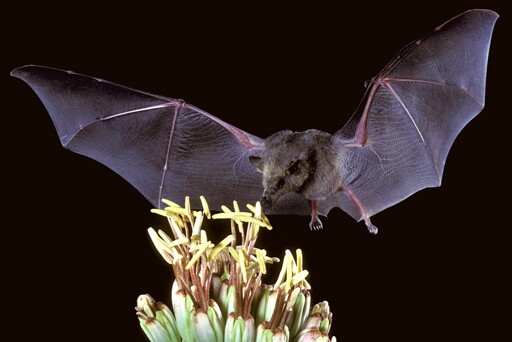
ALBUQUERQUE, N.M. (AP) — Mexican long-nosed bats have a taste for agave, their tongues designed to lap up the famous desert plant’s nectar during nightly flights. It’s not just a means of satisfying taste buds. It’s a matter of fueling up for an arduous journey. The endangered species migrates each summer from Mexico into the southernmost reaches of the United States. Big Bend National Park in Texas is a destination, as is Hidalgo County in New Mexico’s Bootheel. It wasn’t until last year that DNA evidence helped to add Arizona to the list. Bat Conservation International announced on Tuesday that swabbing agave plants and hummingbird feeders on the fringes of New Mexico’s Gila National Forest also turned up proof that the bats are farther north than ever before. The research shows they’re traveling about 100 miles (160 kilometers) beyond their known roosts in New Mexico. The state’s Bootheel region has been hit hard by drought, and agaves there don’t seem to flower as much as they used to, said Kristen Lear, director of the Agave Restoration Initiative at Bat Conservation International. “We think these bats are trying to look for healthy agave food sources elsewhere,” she said. “So that’s kind of driving them farther north, where the agaves are a little bit less hit by drought.” Traveling another 30 miles (48 kilometers) can add another night to a bat’s journey. To keep the sweet nectar flowing along the route, researchers on both sides of the international border say restoration of desert…This article was originally published on Mongabay
From Conservation news via this RSS feed