

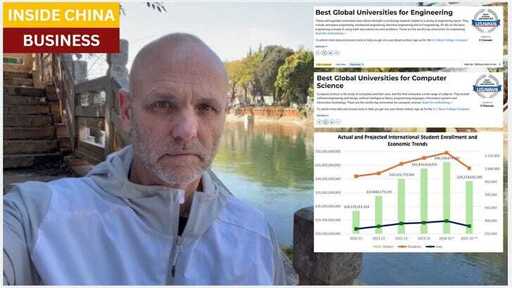
Bullets:
Chinese universities dominate the global rankings in hard sciences, Engineering, and Computer Science.Many of them now accept international students, and are marketing their schools in foreign countries.US schools already face serious financial challenges, from the steep decline in international student enrollment. Foreign families typically pay full tuition and room and board, and American colleges rely on those higher fees.Chinese universities pose an existential problem, going forward. They are qualitatively superior, even in Western surveys. And the over cost of attendance is a mere tenth of going to a top American program.
Inside China / Business is a reader-supported publication. To receive new posts and support my work, consider becoming a free or paid subscriber.
Report:
Good morning.
Chinese universities opening to international students from across the world. And that is a serious problem right now for universities in the United States, who rely on international students paying full tuition to stay open. It will become an existential problem for them, going forward.
And to understand the shift that’s taking place, imagine your family lives in South America, or Africa, or elsewhere, here in Asia. You have a kid at home, some money saved up for a good university, and soon you’ll need to make some hard decisions, as to which university you should send your son, or your daughter, and your money.
I admit that I am cherry-picking the data here. If your kid wants to be a lawyer or study political science or French Literature, this isn’t for you. Here is the US News and World Report, and their rankings of top global universities for Engineering:
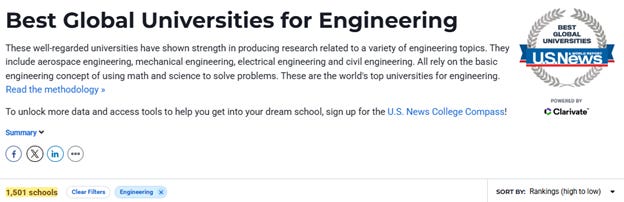
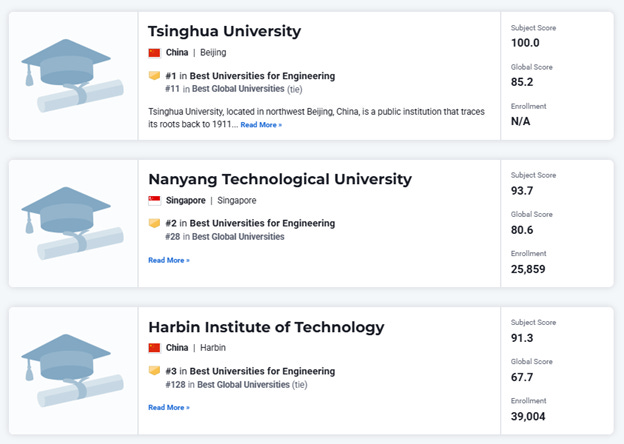
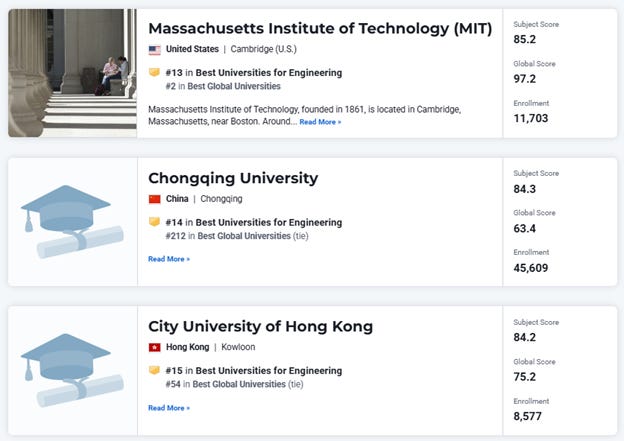
Chinese universities are ranked #1, 3, 4, 5, 6, 8, 9, 10, 11, and 12. MIT shows up at #13, then China again at 14 and 15. So MIT is the top-ranked American program for Engineering. The cost to go to MIT, before Financial Aid, for this academic year:
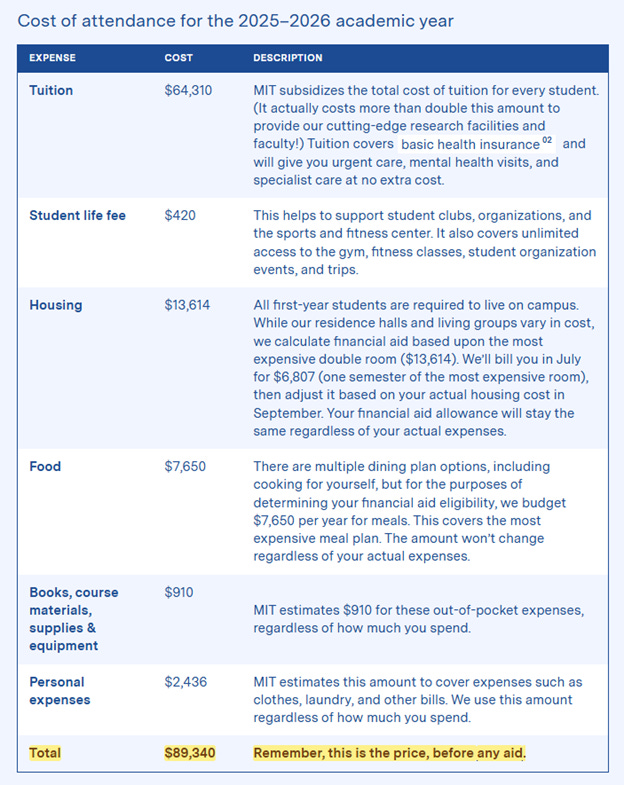
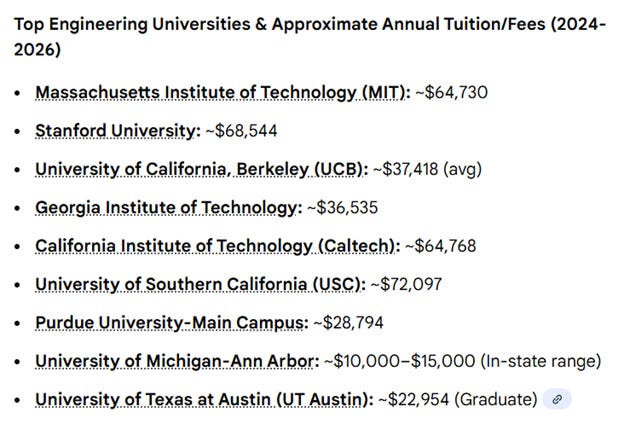
Tuition of $64 thousand, housing and food is another twenty thousand, total of over $89,000. Financial aid is available, they are happy to point out. MIT is the top US university for engineering, and American students may be getting what they pay for. Tuition there is not too far out of line with other top engineering schools in the United States, who are ranked lower:
Harbin Institute of Technology is in Heilongjiang province, and is world ranked at #3. To convert Renminbi, Chinese yuan to US dollars, divide by seven and that’s close enough. So tuition for these international bachelor programs at Harbin is under $4,000 per year.
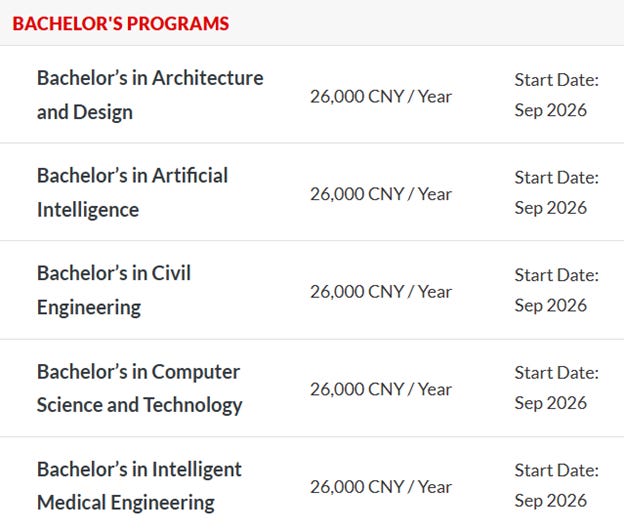
For master’s degrees, it’s under $5,000 USD per year. Those figures are typical, by the way, of international programs from other top Chinese universities.
Looking next at Computer Science: China and Singapore again hold the top spots in the rankings, and Stanford shows up at #8. Tuition at Stanford is over $67,000 a year, total cost of attendance—let’s just call it $100,000 after your family buys the plane tickets.
So we see the problem, to international families, if the universities in Asia—and in China in particular—are qualitatively better, even in our own surveys? And when the cost to attend is a tenth, compared to US programs?
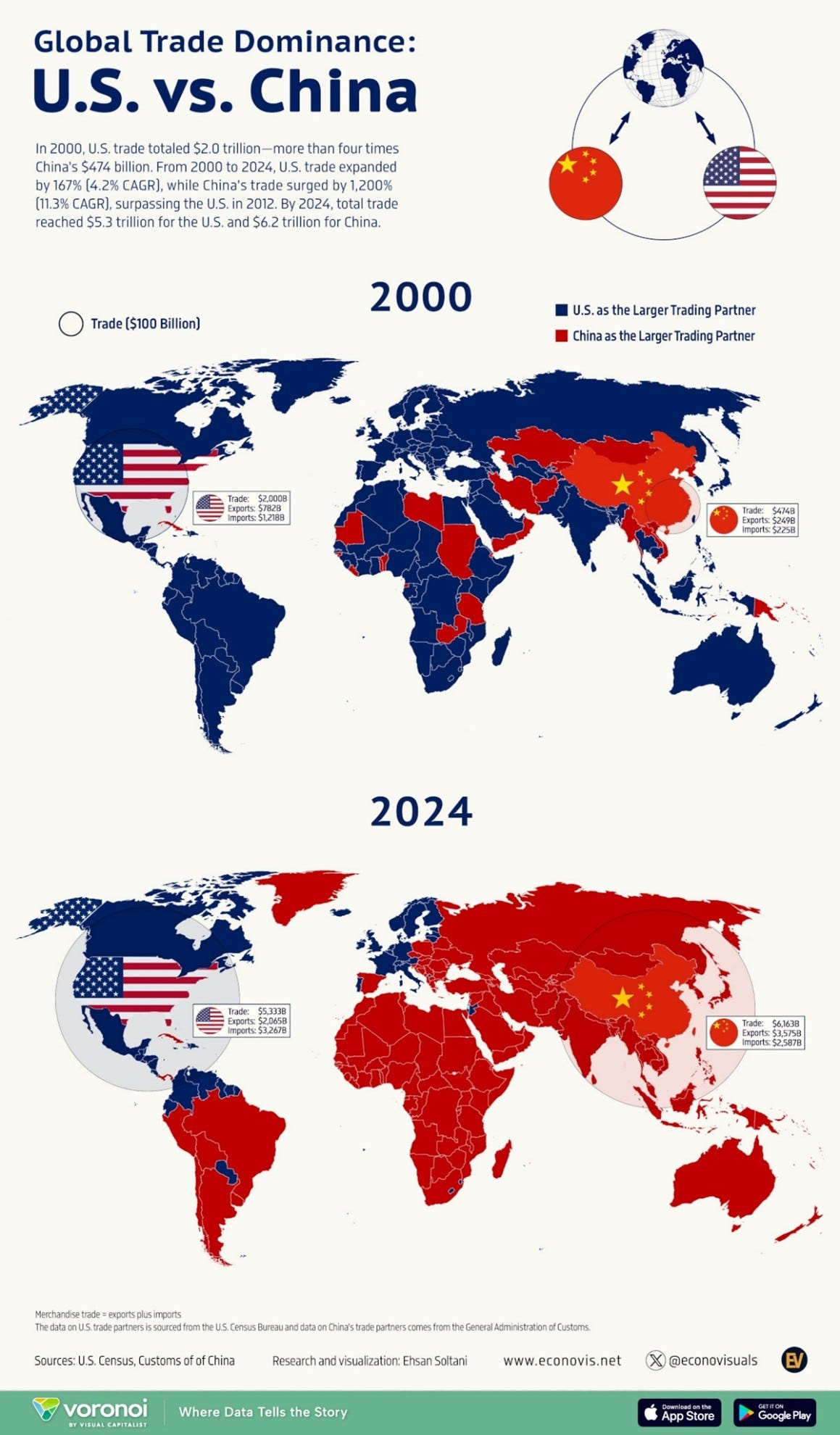
Then we have this map. Remember, you’re not an American in this thought exercise. And it’s today, not twenty-five years ago. And you have some important decisions to make that may determine the long-term future of your family. China is the top source of trade for almost all of Asia, Africa, Europe, and South America.
A big reason to go to MIT, or Stanford, is so your kid can meet today the other kids who will be managers of key companies in ten years, and upon graduation be part of the powerful business and professional networks of university alumni across the world. Please remember, too, that for Chinese students, the competition to get into a Tsinghua or a JiaoTong or a Zhejiang is very high—it is only the very top students from across the country who gain admittance into the best Chinese schools, which also are the best schools, period.
Point we’re making here is that going forward, where is your student more likely to form those relationships that lead to the best career opportunities later? Is it in Cambridge, Massachusetts, or in Palo Alto? Or is it more likely to be in Shanghai or Beijing or Hong Kong? Or in Harbin? And is it worth it, to your family, to spend ten times as much, on a wager that this map is going to flip back to where it was, back in 2000?
Be good.
**Resources and links:**Mapped: How China Overtook the U.S. in Global Trade (2000–2024)https://www.visualcapitalist.com/cp/how-china-overtook-u-s-in-global-trade-dominance-2000-2024/Fewer international students are enrolling at U.S. colleges, which could cost the country $1 billion, reports findhttps://www.cnbc.com/2025/11/30/international-student-enrollment-decline.htmlThe College Conundrum: Chasing International Students And Full-Pay familieshttps://www.forbes.com/sites/scottwhite/2025/03/05/the-college-conundrum-chasing–international-students-and-full-pay-families/Massachusetts Institute of Technology (MIT)https://stubard.com/blog/admission/best-engineering-universities-in-usa/Harbin Institute of Technology (HIT)https://apply.china-admissions.com/university/harbin-institute-technology/#moreinfoBest Global Universities for engineeringhttps://www.usnews.com/education/best-global-universities/engineeringBest Global Universities for Computer sciencehttps://www.usnews.com/education/best-global-universities/computer-scienceInternational college students bring billions to the US. Here’s why that may change.https://www.usatoday.com/story/news/education/2025/05/15/international-college-students-billions-economy-immigration/83417546007/U.S. Economy Could Suffer a $7 Billion Loss from Precipitous Drop in International studentshttps://www.nafsa.org/about/about-nafsa/us-economy-could-suffer-7-billion-loss-precipitous-drop-international-student
Inside China / Business is a reader-supported publication. To receive new posts and support my work, consider becoming a free or paid subscriber.
From Inside China / Business via this RSS feed
This is totally unrelated to the message, I think one of the embeds is causing this post to lag badly. Not sure whats going on but I can barely scroll through to read it, which I’ve never encountered on Lemmy before.
Related to the message: This is all relying on publication and citation metrics, which are metrics heavily criticized for the ease with which they can be manipulated due to their lack of substantive analysis. While Chinese universities are doing good work, they’re also even worse about the publish/perish culture than US universities are.