

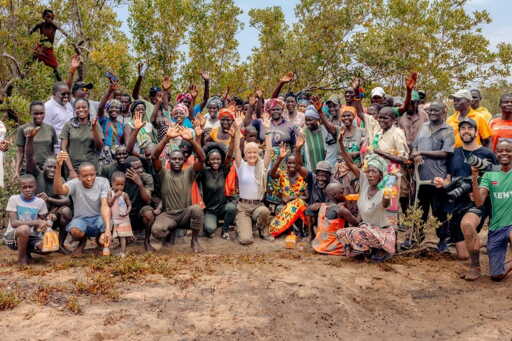
Mangrove forests, located along tropical and subtropical coastlines, are increasingly recognized for their role in buffering climate disasters, storing carbon, supporting wildlife and livelihoods. Yet even as interest in mangrove conservation and restoration has surged in recent years, many projects fail — seedlings die, sites degrade further or communities disengage. One reason, according to Catherine Lovelock, professor in the School of the Environment at the University of Queensland in Australia and expert in mangrove ecology, is that restoration efforts are often led by small community groups with limited resources and expertise. In fact, studies have shown that around 70% of mangrove restoration projects in some regions, particularly Southeast Asia and Latin America, have low rates of success. To bridge this gap, a growing number of environmental nonprofits are tapping into their experience with fundraising and resource mobilization to help local communities more effectively conduct restoration. Seatrees, a California-based NGO (formerly known as Sustainable Surf), is one such organization. Rather than running projects itself, the organization partners with local community groups and other NGOs, providing funding, scientific expertise and media support to boost coastal and marine restoration efforts worldwide, including mangroves. Over the past five years, Seatrees has supported mangrove restoration projects in Kenya, Mexico, the U.S. and Indonesia “by providing much needed funds to scale up tree planting, produce storytelling materials and build capacity in science, monitoring and impact measurement,” Leah Hays, the program director, told Mongabay. Seatrees is one of nearly 130 organizations worldwide identified by researchers at the…This article was originally published on Mongabay
From Conservation news via this RSS feed
You must log in or # to comment.