

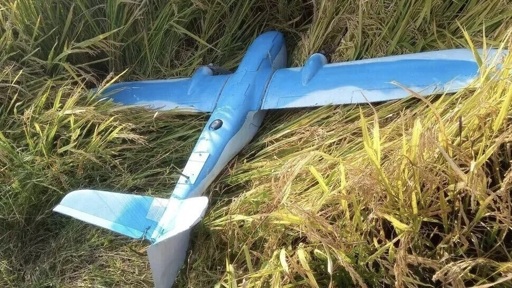
New revelations of recent drone incursions into the Democratic People’s Republic of Korea’s (DPRK) airspace have cast a pall on inter-Korean relations, and raised questions about the internal integrity of ROK President Lee Jae-Myung’s government.
On January 10, the DPRK released photographs of a recently downed drone that violated its airspace on January 4. A separate drone incursion that occurred last September was also announced for the first time.
The DPRK accused the Republic of Korea (ROK) of carrying out the drone incursions. ROK President Lee Jae Myeong denied any responsibility, and ordered a joint military and police investigation to uncover possible civilian or military culprits.
Shortly after, a graduate student, only identified by the surname Oh, claimed responsibility for the drone incursions in a media interview. Mr. Oh and two other suspects, Mr. Jang and Mr. Kim, are being investigated by police, and face numerous criminal charges.
Oh, Kim, and Jang all serve in the leadership of Estel Engineering, a start-up drone manufacturing company that also runs anti-DPRK media publications. Oh and Jang reportedly previously worked as contractors for the office of former President Yoon Seok Yeol, who was ousted from office last April following a failed self-coup attempt in December 2024. The Yoon administration has been found to have ordered at least 11 drone incursions into the DPRK in the weeks leading up to the declaration of martial law.
ROK Defense Intelligence Command has confirmed Oh participated in covert media operations against the DPRK. Oh has also been reported to have held the rank of colonel in the ROK military, and to have served in the special HID Unit, which oversees infiltration and psychological warfare operations against the DPRK. The HID Unit was previously implicated in Yoon’s self-coup plot. The special investigatory commission is reportedly expanding its investigation in light of these findings, as suspicions of intelligence agency involvement rise.
While the details of what occurred have yet to fully come to light, the incident raises serious questions about the extent to which rogue elements loyal to the past Yoon administration may be seeking to sabotage inter-Korean affairs, and to what extent these forces may be linked to actors outside of the Korean Peninsula.
The revelations also come in a period of intense tension between the two Korean governments. Since the end of 2023, the DPRK has redefined its political line to reject peaceful reunification and categorize the ROK as a hostile state. Its constitution has since been updated to concretize this new position, which many analysts refer to as the “hostile two states theory”. While Lee has pledged to reestablish trust between the two governments and taken a number of public measures towards this end, the DPRK has repeatedly rejected his overtures, citing a long record of escalating military aggression, and the ROK’s lack of political sovereignty.
A track record of hostility
Since coming to power last June, ROK President Lee has sought to clean out the government of insurrectionists who supported Yoon’s self-coup attempt. These investigations have brought former leading politicians, including the ex-president (who may face the death penalty) and former prime minister, before the National Assembly, and also seen a purge of the leadership of the ROK Armed Forces.
A core pillar of the investigation concerns Yoon’s involvement and intent in at least 11 drone incursions into the DPRK carried out between October and November of 2024. In January, a disciplinary military commission found Lt. Gen. Yeo In-hyung, former commander of ROK military counterintelligence, guilty of general treason for his role in these operations. The drones reportedly dropped anti-DPRK propaganda leaflets over a number of targeted cities.
The DPRK expediently announced the 2024 drone incursions, providing photographic evidence, and taking measures to fortify its side of the DMZ, the de facto border separating the two Koreas. International media widely reported the incident, but focused on the DPRK’s detonation of roads and bridges at the DMZ.
At the time, the ROK Ministry of Defense dismissed questions by reporters about the drone incursions. In the aftermath of the failed coup, the incident became subject to renewed scrutiny.
As the prosecution pieced together Yoon’s coup plot, it became evident that the former president sought to spark a new “limited conflict” with the DPRK in order to justify his declaration of martial law. However, these plans did not bear fruit after the DPRK refused to take the bait.
The drone incursions came on the heels of a number of other provocations against the DPRK during the Yoon administration. Upon entering office in 2022, Yoon enshrined preemptive strikes against the north as part of his government’s military policy. Live-fire military drills with the US, which had been paused since 2019, resumed under Yoon’s watch and escalated explosively. US Forces Korea conducted war drills on 200 days in 2023 and 275 days in 2024. Yoon also entered a new trilateral security pact with Japan and the US, known as JAKUS, which became the container for annual trilateral military exercises on the Korean peninsula.
These measures struck a lasting blow to inter-Korean relations, becoming a major factor in the DPRK’s decision to renounce the framework of peaceful reunification at the end of 2023. More ROK provocations continued throughout 2024. Balloons carrying propaganda leaflets were sent into the DPRK by military and civilian forces, loudspeakers were placed on the DMZ to barrage border communities with noise pollution, and Yoon scrapped the 2018 Inter-Korean Military Agreement that summer, moving troops into previously designated buffer zones. With such a record of hostility, the ROK prosecutor’s office has found little challenge in establishing Yoon’s intent to shatter the Korean War armistice and renew hostilities on the peninsula.
While the Lee government has taken measures to oust the remaining insurrectionary forces from the government, the new revelations of drone incursions undertaken during his own presidency, possibly with the support of ROK intelligence agencies, raises the question of whether the investigations, prosecutions, and purges have gone far enough.
In the background, too, is the question of possible US involvement. While the investigation thus far has shed no light on US knowledge of the most recent drone incursions or those that occurred in 2024, the extent of US integration and control of the ROK’s Armed Forces and intelligence services naturally raises suspicions that have yet to be thoroughly addressed.
The US has held operational control of the ROK military since 1950. The armed forces of the two countries routinely train together, and their intelligence agencies also routinely collaborate. The US also extensively surveils the skies above the Korean Peninsula, which raises questions about how so many drone operations could have occurred without US knowledge.
Reconciliation: a dead end?
Lee’s administration may hope its efforts to investigate the drone incidents could reduce tensions with Pyongyang. A scathing statement from Kim Yo Jong, speaking in her capacity as a Workers’ Party of Korea (WPK) Central Committee member, demonstrates this may be easier said than done.
While Kim expressed “personal appreciation” for the ROK Defense Ministry’s disavowal of the events and pledges to investigate their causes, she maintained the position that ROK officials still bear responsibility for violations of the DPRK’s sovereignty. In response to assertions that the drones could have been sent by civilian operators, Kim made her party and government’s position clear: “We don’t care.” Kim ended her statement by warning ROK officials, who she referred to as “a group of hooligans and scrap,” that attempts to cast off responsibility onto civilian groups would invite the DPRK’s own civilian organizations to deploy drones into the ROK’s airspace.
The disconnect between the two governments demonstrates a fundamental misunderstanding of the DPRK’s position within the Lee administration.
Kim Jong Un’s adoption of the hostile two states theory reflects the WPK’s assessment of the historical reality of the peninsula and the character of the ROK state. It is not an analysis of any particular administration or individual.
The hostile two states theory identifies the ROK as a fundamentally hostile entity owing to its colonial subordination to US imperialism. While Lee’s efforts could still buy limited good will, the problem, from Pyongyang’s vantage, is structural, not personal.
Lee has notably pursued a number of other measures to improve relations with the DPRK. His government dismantled the loudspeakers aimed at the DPRK along the DMZ, and put an end to all civilian and government campaigns to send propaganda balloons into the north. Under Lee, the ROK has also repatriated fishermen from the DPRK who were lost at sea.
In January, Lee announced his government’s intention to unilaterally reestablish the 2018 Inter-Korean Military Agreement, which was previously dismantled by Yoon. Lee has also publicly explained that while he still supports the eventual denuclearization of the Korean Peninsula, insisting on the DPRK’s disarmament is no longer a practical position.
Nevertheless, the DPRK has insisted that any prospect of inter-Korean reconciliation is incompatible with the ongoing reality of the US hostile policy against the DPRK, which the ROK is a party to as an ally of the US which hosts dozens of US military bases and more than 28,000 of its troops.
While trumpeting his administration’s commitment to peace and reconciliation, the Lee government has taken few measures to disentangle itself from the US. While he has vowed to regain operational control of the military, this will require Lee’s administration to participate further in the very war exercises which routinely threaten the DPRK. Under pressure from Trump’s tariff threats, which recently redoubled, Lee made further concessions: moving to increase the ROK’s defense spending to 3.5% of GDP (though some call for as high as 5%), promising USD 25 billion in US weapons purchases over the next decade, and committing USD 33 billion to financially support USFK. These measures, along with the recent drone debacle, have only cemented the DPRK’s view that the ROK lacks the political independence to be regarded as an equal negotiating partner.
The diplomatic impasse in Korea will not be resolved until engagement between Washington and Pyongyang becomes possible. To achieve this, the DPRK set forth conditions that the Trump administration has still yet to meet: namely, for Washington to abandon the goal of denuclearization, and for an overall reduction or elimination in US-led aggression. A recent decision by the UN Security Council (UNSC) to allow further humanitarian exemptions for UNSC sanctions is a step in the right direction, but more must be done.
Trump’s upcoming meeting with Xi Jinping in Beijing this April has generated substantial speculation that a summit with Kim could also take place around the same time. Lee recently completed his own four-day state visit to China, where he highlighted China’s potential future role in Korean peninsula affairs, and proposed collaboration on a number of regional projects, including the long-sought inter-Korean railway connecting Seoul to Beijing.
In the end, Beijing may prove the key to unlocking the diplomatic puzzle in Korea. Xi’s own words regarding this question, however, ought to be heeded: “Three feet of ice won’t melt all at once.”
The post Fresh reports of drone incursions in DPRK raise stakes on the Korean peninsula appeared first on Peoples Dispatch.
From Peoples Dispatch via this RSS feed