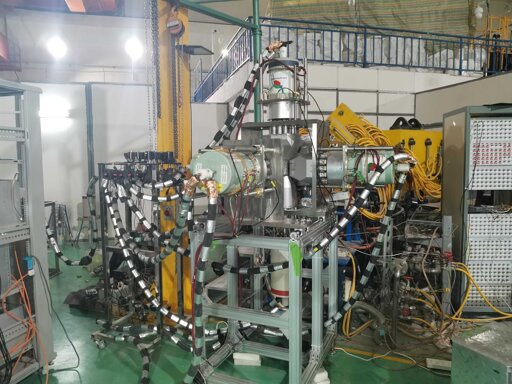
A team of physicists from the Institute of Modern Physics (IMP) of the Chinese Academy of Sciences, together with collaborators, has identified the dominant physical mechanism responsible for energy release in the nuclear isomer molybdenum-93m (Mo-93m). Using high-precision experiments, the researchers showed that inelastic nuclear scattering—rather than the long-hypothesized nuclear excitation by electron capture (NEEC)—is the primary driver of isomer depletion under their experimental conditions.