

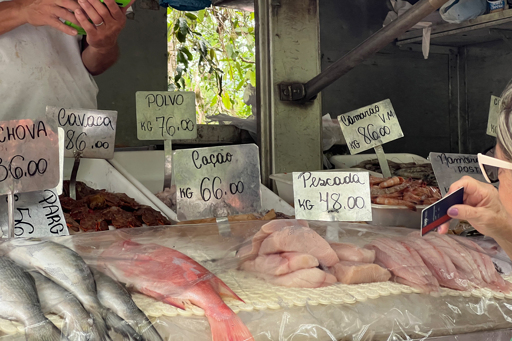
The Brazilian state of Rio de Janeiro recently announced it has banned the purchase of shark meat for roughly 95% of its state-run schools, citing environmental and health concerns. A July 2025 Mongabay investigation found shark meat was commonly purchased for use across Brazil in public institutions, including eldercare facilities and schools. The exposé found that more than a thousand public tenders had been issued since 2024, amounting to more than 5,400 metric tons of shark meat destined for public consumption. In Brazil, shark meat is often generically labeled cação instead of the Portuguese word for shark, tubarão. As a result, people often don’t know exactly what they are eating. Conservationists warn that such a lack of transparency can result in endangered sharks or rays being illegally fished and sold to unwitting buyers. Public-health experts also point to potential health risks. As apex predators, sharks bioaccumulate heavy metals in their tissue, including mercury, a neurotoxin. Scientists say there is no safe level of mercury exposure, but children and their growing bodies are especially vulnerable. In an email to Mongabay, the Rio de Janeiro department of education acknowledged the risks. “The suspension was based on technical, scientific, health and environmental grounds … complying with the principle of precaution and comprehensive protection of children.” However, the Brazilian Association for the Promotion of Fish pushed back on the ban. In an email to Mongabay, a spokesperson said, “The consumption of cação is completely legal and safe.” Moreover, they expressed concern that removing shark…This article was originally published on Mongabay
From Conservation news via this RSS feed
You must log in or # to comment.