

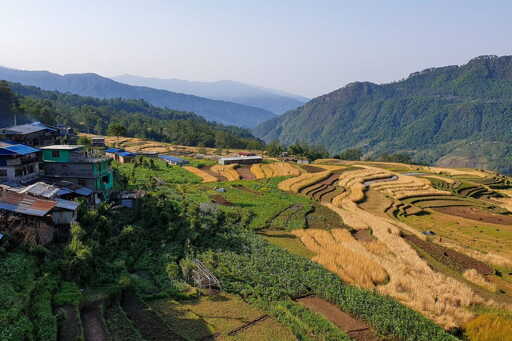
KATHMANDU — The Khorthali Community Forest User Group in Dolakha, central Nepal, produced 1,189 cubic meters (42,000 cubic feet) of timber in 2025 — roughly 18 standard 40-foot shipping containers in volume. However, the group could not sell all of it. About 340 m3 (12,000 ft3) of wood still lies on the roadside. “Community members have asked us to help sell the timber, but potential buyers are not interested,” said Anil Regmi, an official at the district forest office in Dolakha. Across Nepal, other districts face similar challenges. In Bara, the district forest office has 2,605 m3 (92,000 ft3) of unsold timber, while in Nawalpur, the figure reaches 1,100 m3 (40,000 ft3), despite repeated attempts to sell it. According to ForestAction Nepal, 60,000 m3 (2.1 million ft3) of timber remains unsold in Lumbini province alone. The estimate represents timber accumulated across multiple storage locations and years, rather than unsold stock from a single harvesting season. Nepal’s community forests are producing large volumes of timber that remain unsold due to high government taxes and competition from private and imported wood, leaving local user groups without funds to implement sustainable forest management while politicians blame strict conservation laws for not facilitating large-scale infrastructure development. “The government set tax rate for timber is very high compared to the prevailing market rate,” said Nabaraj Pudasaini, joint secretary at the Ministry of Forests and Environment. “When you add collection costs and other charges, the prices get further inflated,” he told Mongabay. Nepal is considered a…This article was originally published on Mongabay
From Conservation news via this RSS feed
You must log in or # to comment.