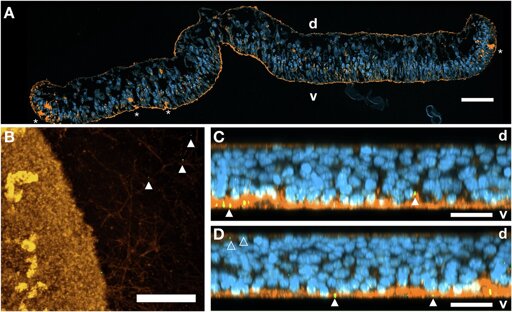
Marine animals, such as the extremely simple flatworm Trichoplax, are ideal model organisms for studying the early evolutionary origins of animal life processes. Despite measuring only a few millimeters and lacking true organs or nervous system, this animal interacts effectively with bacteria. A highly efficient enzyme, goose-type lysozyme (PLys, GH23), plays a key role in this process. Trichoplax uses this enzyme specifically during digestion to degrade bacterial cell walls and neutralize ingested bacteria.