

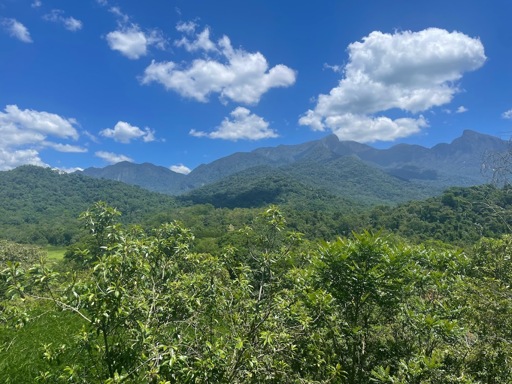
“The land is the greatest asset we have,” said Luzineth Pataxó, a Pataxó leader from the Caramuru-Paraguaçu Indigenous Territory, in the Atlantic forests of Brazil’s Bahia state. “Our people have always taken care of our territory and forests because it is from them that we derive our livelihoods … and connect with the sacred beings that inhabit them.” These efforts have paid off, some research suggests. A recent study comparing different land tenure regimes in the Brazil’s Atlantic Forest found that Indigenous lands and agrarian-reform settlements have greater restoration gains than private properties. “As part of the study, we isolated and compared many different land tenure regimes to private properties through our analysis design, and the staggering result was for Indigenous lands,” said Rayna Benzeev, one of the study authors. The research comparison included Indigenous lands, territories of descendants of Afro-Brazilian runaway enslaved people (Quilombola), agrarian-reform settlements, protected areas and private properties. “There are [on average] 189 hectares [467 acres] more long-term restoration gains on Indigenous lands compared to private properties.” While the study found positive outcomes on Indigenous lands, Benzeev noted that the study did not directly measure the factors driving these results. After analyzing restoration gains and reversals across 1.9 million territories in the Atlantic Forest from 1985 to 2022, the authors also found that Indigenous lands and agrarian-reform settlements had higher rates of restoration reversals (restored forests later deforested). Each had 21 hectares (52 acres) and roughly 4.5 hectares (11 acres) more restoration reversals than private properties,…This article was originally published on Mongabay
From Conservation news via this RSS feed
You must log in or # to comment.