


By NIAC and the undersigned, February 11, 2026
Dear Members of Congress,
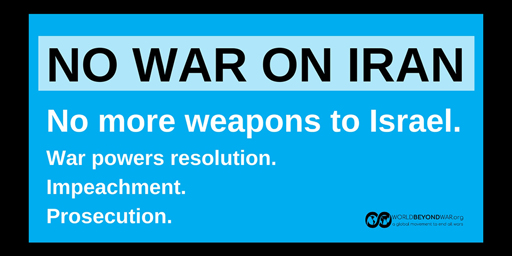
We write to urge you to support the vital War Powers Resolutions on Iran in both the House and Senate that clarify that there is no authorization for the use of force against Iran. President Trump and his administration have undertaken a major military build-up in the Middle East and made repeated threats to attack Iran in response to the Iranian Government violently repressing protests and killing thousands of its citizens. We condemn this violence by the Islamic Republic in the strongest possible terms, but we do not believe that military strikes would help the protestors. Rather, they would pose a much graver risk of causing instability inside Iran that leads to more suffering while potentially triggering a regional conflict.
Iran has not attacked the United States nor threatened an offensive strike, and Congress has not authorized any military action against Iran. As a coalition of groups concerned with reckless military escalation, we urge Congress to represent its constituents, assert its Constitutional role and block an unauthorized war with Iran. Additionally, we urge support for critical diplomacy that could represent a way to reduce tensions in the region, roll back Iran’s nuclear program, and dramatically reduce the risk of another reckless war of choice.
The strikes that President Trump is considering would be highly destabilizing and lead to potentially violent, unintended consequences for the Iranian people, civilians in the region and U.S. troops. Secretary Rubio has openly acknowledged that Iran is “far more complex” than the situation in Venezuela, and that “no one knows what would take over” if Khamenei were removed from power.
Apart from the absence of any long-term planning by this administration, Iranian officials have made clear that it may view a new attack, especially one targeting the country’s leadership, as an existential threat and respond in much more severe fashion. U.S. military action therefore could be potentially devastating for Iranian civilians both due to potential casualties and likely crackdowns, on top of those that recently crushed the protesters. Attacking Iran also could endanger 30,000-40,000 U.S. troops at bases throughout the region by potentially triggering retaliation from both Iran and Iran-aligned forces in Iraq, Lebanon, Yemen, and elsewhere. Israel’s experience during the 12 Day War, in which 33 civilians were killed, also made clear the limits of U.S. and Israeli capacity to intercept Iranian ballistic missiles, and a longer conflict risks overwhelming that capacity. This is all the more concerning, as U.S. partners, such as Saudi Arabia and the United Arab Emirates, have barred the use of their airspace for a US-led attack and are encouraging the United States to stand down.
The American people have not been consulted and there has been no serious debate on whether the risks of war with Iran are worth taking on. Extensive public polling shows that Americans do not want war with Iran, either: 70% of U.S. voters do not support military strikes on Iran in response to the protests there, a 42% plurality of Americans oppose using military force to overthrow Iran’s Supreme Leader Ali Khamenei, and 49% oppose any military action in Iran, while only 33% support it. Moreover, 70% of Americans believe that the President must first receive authorization from Congress before taking military action against another country. The two War Powers Resolutions represent Congress’s ability to side with the American people and assert its constitutional warmaking authority.
Support for the War Powers Resolutions must also be coupled with support for U.S.-Iran diplomacy that could ultimately benefit both Americans, our allies, and the people of Iran. U.S.-Iran talks could lead to further diplomacy that not only resolves the current crisis, but addresses a range of concerns about Iran. We urge Congress to support this tentative opening and to push for pragmatism and flexibility in talks, avoiding maximalist positions that undermine talks and guarantee war.
The American people do not want war with Iran, but if it happens the costs of that war will fall upon all of us. The War Powers Resolutions in both the Senate and House are Congress’s opportunity to stand up for the Constitution and the anti-war American majority, to prevent catastrophic escalation, and to push for diplomacy that makes us all safer.
Sincerely,
Afghans For A Better Tomorrow
American Friends Service Committee
Arms Control Association
Center for International Policy
CODEPINK
Common Defense
Demand Progress
Foreign Policy for America
Friends Committee on National Legislation
Hindus for Human Rights Action
Historians for Peace and Democracy
J Street
Just Foreign Policy
MPower Change Action Fund Migrant Roots Media
National Iranian American Council Action
Peace Action
Peace Action New York State
Peace Corps Iran Association
Quincy Institute for Responsible Statecraft
RootsAction
United Church of Christ
United for Peace and Justice
Win Without War
World BEYOND War
The post Twenty-Five Organizations Tell Congress to Prevent War on Iran appeared first on World BEYOND War.
From World BEYOND War via this RSS feed
You must log in or # to comment.