

Bullets:
Chinese engineers build nuclear reactors far faster, and at far lower costs than the United States, France, and Japan.The Chinese nuclear industry is building half of the plants now under construction, and exports new reactors to their closest trading partners.The countries in the BRICS+ bloc, and in the countries involved in China’s Belt and Road Initiative, are resource-rich in uranium, and in key mining and enrichment industries for nuclear fuel.The BRI countries now enjoy an end-to-end value chain of uranium, nuclear power plants, and energy transmission completely outside Western systems.
Inside China / Business is a reader-supported publication. To receive new posts and support my work, consider becoming a free or paid subscriber.
Report:
Good morning.
About half of all the nuclear reactors that are under construction across the world are here in China.
One very important driver of that, is that Chinese technicians have solved the cost problem, which makes new nuclear reactor construction so expensive in Western countries. In this report, published in Nature, researchers studied nuclear projects in the United States, France, and China, and broke down the costs to build them and produce electricity.
In the United States, the average cost for a new nuclear plant build is $15 per watt. In France, it’s a lot less, at just $4. But in China it’s far less than that, at $2.
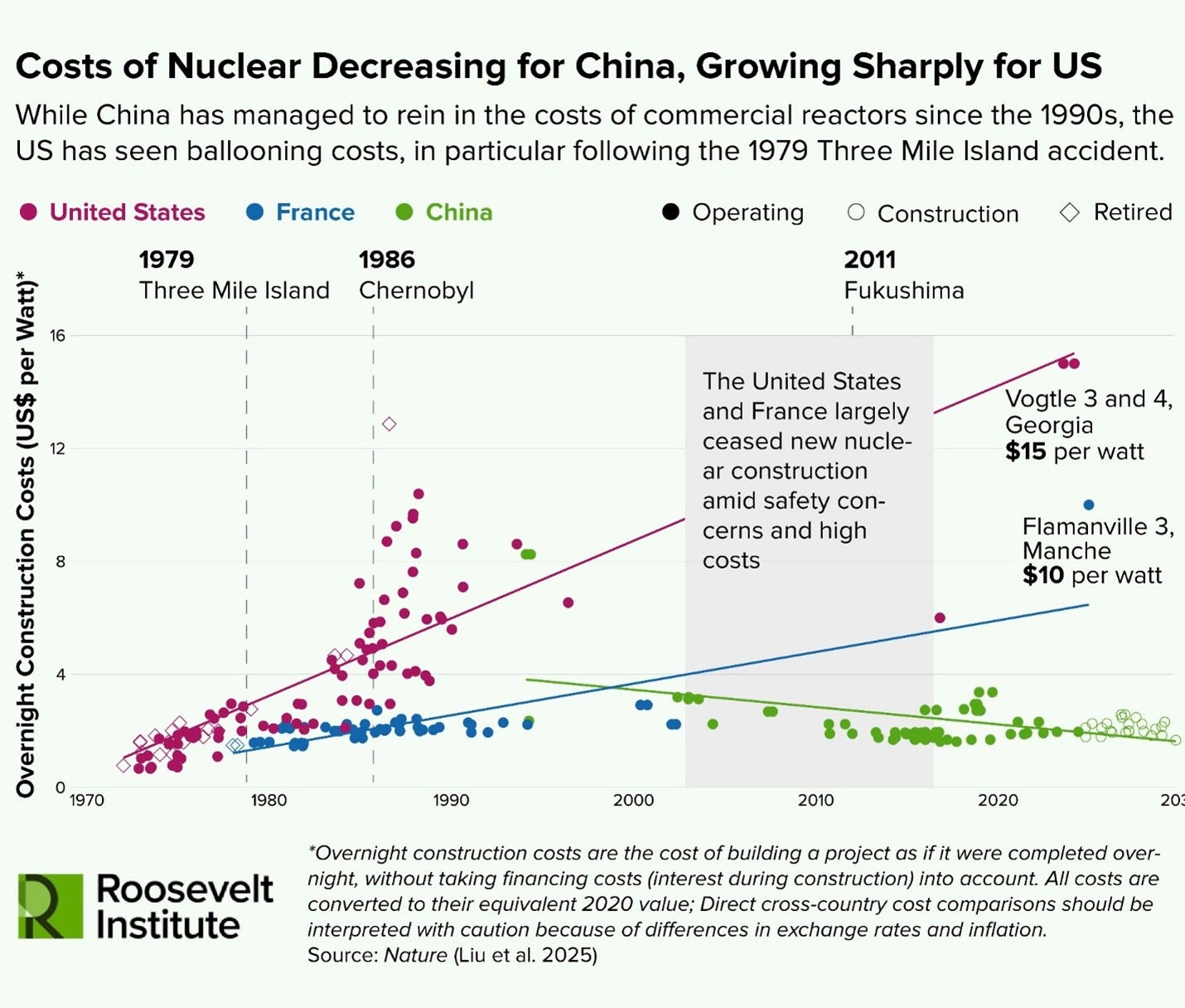
Each dot on this chart represents a nuclear project coming online, and its cost of construction. The most recent nuclear plants in the United States were in Georgia, Vogtle-3 and -4, and that project saw lots of cost overruns and delays. Total build costs in the US are up sharply since the 1960’s, increasing 10 times. Flamanville-3 in France come online a few months later.
Those Green dots at the bottom are Chinese nuclear plants, and their costs fell by half as they achieved scale, and have remained steady since.
Chinese engineers have standardized their reactor designs and have achieved industrial efficiencies, and are now exporting their reactors to friendly countries. Hualong-One is the most popular reactor design in the world, and China has 41 of them up and running, or under construction. Each Hualong-One generates power for a million people, and Pakistan and Argentina are buying them for their markets, with another 20 countries waiting in line behind them.
These reactors from China hold deep advantages for Belt and Road Initiative countries. Hualong-One reactors cost less, compared to designs from France or the United States or Japan. They can be paid for in local currencies. They can be built more quickly.
And they also build on the advantages that Global Majority Countries have in raw materials. These reactors need uranium, and this table shows the top 10 countries for uranium reserves:
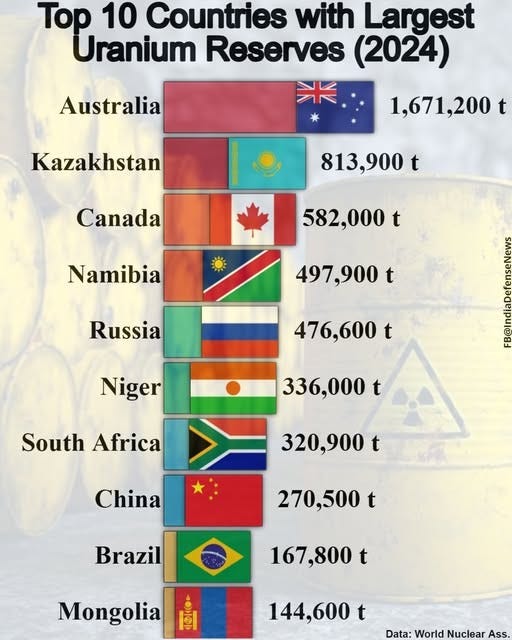
Australia has twice as many proven reserves of uranium as Kazakhstan, the world’s number two. Taken together, the countries on this list are far more friendly with China, than with the EU or the United States.
Then we consider the uranium that is actually mined—pulled out of the ground–and it’s Kazakhstan on top, with four times more than Australia. But then comes uranium refining—turning the uranium into enriched fuel that can be used in reactors, and Russia plus China is two thirds of the global total:
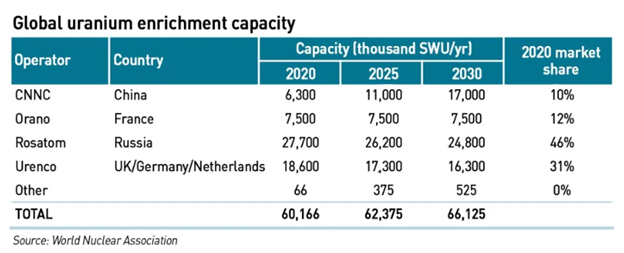
In the United States, only 5% of the fuel used in American nuclear reactors come from domestic sources. So the BRICS and BRI countries have vast reserves of raw materials, and enjoy monopolies on their mining and refining. And now China is mass-producing nuclear reactors at the world’s lowest cost and setting them up across the world.

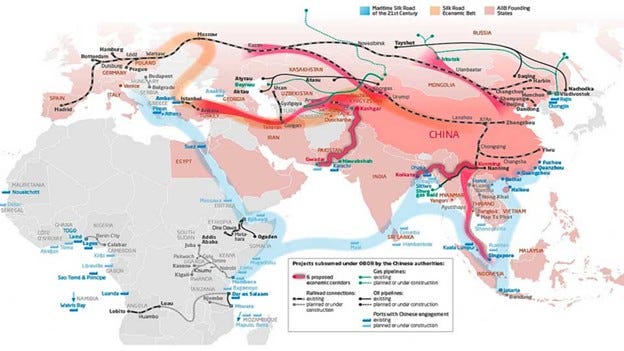
This is yet another example of a supply chain, and a value chain, that exist completely outside Western systems. End-to-end — rom the uranium coming out of the ground, to the refining of it, to these power plants that use that fuel, then to the wires that carry the electricity, and to the electronics and appliances and phones and cars and robots that are also built here. That’s what all this is.
Be good.
Resources and links:‘Cost curse’: China’s $2 per watt nuclear plants highlight US, France woeshttps://interestingengineering.com/energy/china-cuts-nuclear-construction-costChina’s Hualong One nuclear reactor enters batch-scale expansionhttps://news.cgtn.com/news/2026-02-01/China-s-Hualong-One-nuclear-reactor-enters-batch-scale-expansion-1KpwE2zDN28/p.htmlChina reins in the spiralling construction costs of nuclear power — what can other countries learn?https://www.nature.com/articles/d41586-025-02341-zThe uranium fuel supplies are highly concentratedhttps://watt-logic.com/2024/07/22/the-uranium-fuel-supplies-are-highly-concentrated/China: World’s most widely deployed nuclear reactor enters batch-scale buildshttps://interestingengineering.com/energy/batch-scale-construction-expansion-of-hualong-oneUS Nuclear Fuel cyclehttps://world-nuclear.org/information-library/country-profiles/countries-t-z/usa-nuclear-fuel-cycleThe Hualong One: China’s solution for the global clean energy sectorhttps://en.cnnc.com.cn/2025-05/12/c_10
Inside China / Business is a reader-supported publication. To receive new posts and support my work, consider becoming a free or paid subscriber.
From Inside China / Business via this RSS feed