

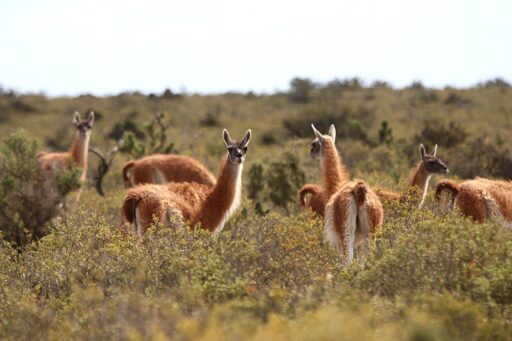
After a 3,200-kilometer (2,000-mile) journey from Patagonia National Park to El Impenetrable National Park and a year spent adapting to their new environment, five guanacos, South America’s largest camelids, have been released into the wild. The guanacos (Lama guanicoe) are being reintroduced to boost the regional population across the Dry Chaco ecosystem in El Impenetrable and are meant to play an important role in helping the park’s grasslands recover after decades of overgrazing by cattle. But although Rewilding Argentina, the wildlife conservation NGO that led the effort, labels this initiative a success, some Argentinian academics argue that translocations like these risk mixing guanaco populations with different genetic makeup and could be more harmful than good. The guanaco’s population is estimated at around 1.5-2.2 million across the continent’s southern and western grasslands. Between 81 to 86% of guanacos are found in Argentina, 14- 18% in Chile, while a small relict population inhabits northern Peru. However, the last recorded sighting of a guanaco in Argentina’s Chaco province was in 1913; hunting and the loss of grasslands to livestock farming have led to the species’ local extinction, with only fragmented populations surviving on the border between Paraguay and Bolivia. The translocation of three females, a male and a juvenile guanaco was completed by Rewilding Argentina in coordination with Argentina’s National Parks Administration and the provinces of Chaco and Santa Cruz. The animals came from Patagonia, which, according to research, is home to around 90% of the guanacos in Argentina. The guanaco (Lama guanicoe)…This article was originally published on Mongabay
From Conservation news via this RSS feed
You must log in or # to comment.