

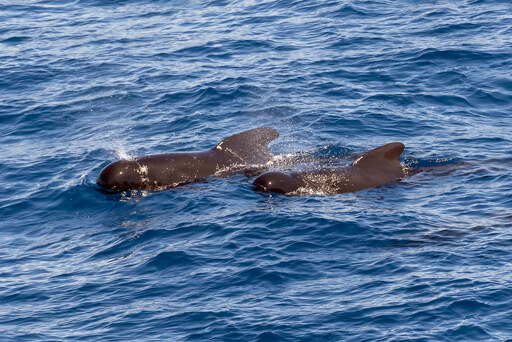
Levels of some of the most persistent industrial chemicals in the North Atlantic appear to be falling, at least in one unlikely place. Long-finned pilot whales (Globicephala melas) now carry markedly lower concentrations of several legacy PFAS compounds than they did a decade ago, according to a new multidecade analysis of tissue samples from the Faroe Islands. For a class of substances often described as indestructible, the finding is notable, reports Liz Kimbrough. PFAS — per- and polyfluoroalkyl substances — have been used since the mid-20th century in everything from nonstick cookware to firefighting foam. Their chemical stability allows them to persist in water, soil and living tissue. In marine food webs, that persistence is magnified. Apex predators such as whales tend to accumulate the highest burdens, making them useful sentinels of ocean contamination. The new study examined pilot whale samples collected between 1986 and 2023. Concentrations of bulk organofluorine, a proxy for total PFAS exposure, rose steadily until around 2011, then declined by more than 60% by 2023. The timing matters. Major manufacturers began phasing out several long-chain PFAS in the early 2000s. The decade-long delay before whale levels began to fall reflects the slow movement of chemicals through ocean currents into the open North Atlantic. That lag also helps explain why the result is unusual. In human blood samples, total organofluorine levels have not fallen in the same way. Newer replacement PFAS appear to be accumulating closer to where they’re produced and used, rather than dispersing widely into…This article was originally published on Mongabay
From Conservation news via this RSS feed