

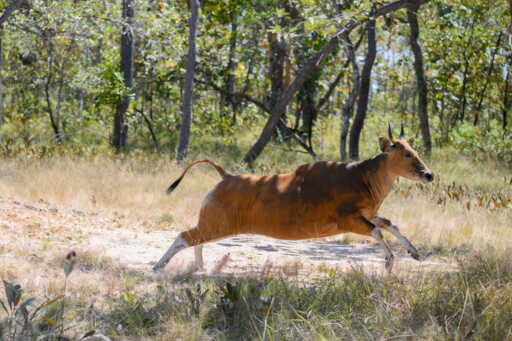
Earlier this month, a team of conservationists translocated 16 critically endangered banteng into Siem Pang Wildlife Sanctuary in northeast Cambodia in a bid to boost numbers that had dwindled to critical levels. The group of wild cattle was captured and transported from a nearby unprotected forest facing imminent conversion to farmland. The operation was the second phase of largescale efforts to save the herd, led by Cambodia-based social enterprise Rising Phoenix in partnership with local wildlife authorities. “With proper law enforcement, no poaching and suitable habitat in Siem Pang, I think there is a very positive future for them,” said Romain Legrand, biodiversity research and monitoring manager with Rising Phoenix. “The population is going to grow quickly, I’m sure.” Together with the first translocation carried out in May 2025, the recent operation brings the total rehomed banteng (Bos javanicus) population in the reserve to 32 individuals, including breeding-age adults and calves, according to Legrand. Banteng are strikingly patterned bovids, their bright white legs and snowy rumps contrasting sharply against their russet coats. The species used to range across Southeast Asia, with Cambodia’s once-extensive dry dipterocarp forests home to a significant portion of the global population. However, decades of deforestation and hunting for their meat, horns and hides have decimated their numbers — the latest IUCN Red List assessment puts their global population at no more than 8,000 individuals. In Cambodia, the species hangs on as sporadic groups eking out an existence in a handful of isolated forest patches. While tigers…This article was originally published on Mongabay
From Conservation news via this RSS feed