

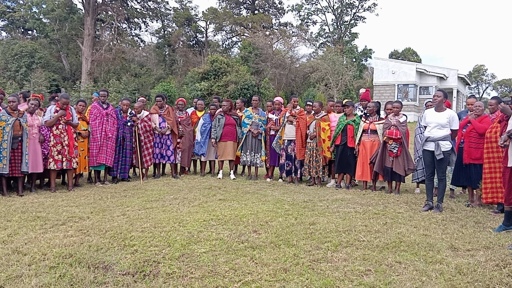
The Yaaku Indigenous People of Mukogodo Forest, a 30,000-hectare national forest reserve, are facing a major crisis. In late January 2026, a wave of coordinated armed attacks, livestock theft, killings, and forced displacement tore through Yaaku settlements in and around Mukogodo Forest.
A pattern of violence
Between January 21 and 29, 2026, the Yaaku community experienced repeated and escalating attacks by armed groups operating with organization, mobility, and heavy weaponry. On January 21, attackers raided the National Police Reserve camp at Wakumbé, reportedly stealing over 1,200 livestock, a clear indication of how heavily armed they are.
On January 27, a widely reported raid resulted in the murder of two Yaaku community members and the theft of approximately 1,500 livestock. The violence intensified the following day when attackers returned, killing eight people and stealing dozens more animals. On January 29, further livestock theft from four families triggered a retaliatory recovery attempt by Yaaku community members, after which one young Yaaku man was killed by the armed attackers.
These events, condemned by the East Africa Indigenous Women Led Assembly (EAIWA), reveal a sustained campaign of terror rather than just sporadic criminal activity. But official narratives and media reporting have consistently reduced the perpetrators to “bandits”, which is obscuring the reality of what appears to be organized, well-resourced paramilitary formations operating with impunity.
State failure and the criminalization community
Despite credible warnings and escalating attacks, Kenyan security forces failed to provide meaningful protection to the Yaaku community. The state did not act decisively when threats were known, yet moved swiftly after the violence to issue eviction ultimatums against people already traumatized by murder, displacement, and dispossession.
On February 3, 2026, the Ministry of Interior and National Administration issued a 48-hour ultimatum ordering all people “living in the forest” to vacate. On the same day, as per the East Africa Indigenous Women Led Assembly (EAIWA) statement, inflammatory public remarks by political elites framed Mukogodo as a criminal zone, effectively casting Indigenous residents as threats rather than rights-holders.
This response represents a dangerous inversion of state responsibility. Instead of protecting an endangered community, the state has chosen to discipline, displace, and delegitimize it. Such actions echo a familiar historical pattern in Kenya, where Indigenous and pastoralist communities are routinely framed as obstacles to security, conservation, or development, only to be forcibly removed in favor of more powerful political and economic interests.
Displacement and land
The violence in Mukogodo cannot be separated from long-standing land disputes. Mukogodo Forest, ancestral Yaaku land, is a site of competing claims involving conservation, private interests, and elite accumulation. In this context, armed attacks, forced displacement, and eviction threats take on a more sinister character.
As the EAIWA warned, the organization, scale, and targeting of the violence, combined with state threats of eviction, raise serious concerns that the attacks may be strategic and displacement driven. Under international law, such patterns may amount to ethnic cleansing, particularly where violence is used to forcibly remove a distinct community from its ancestral lands.
The Yaaku have historically protected Mukogodo Forest through Indigenous ecological knowledge and sustainable land use. Their removal would not only violate their rights but also undermine long-term environmental stewardship, exposing the hypocrisy of conservation policies that erase the very communities that have preserved these ecosystems for generations.
Solidarity from the social justice movement
In response to the unfolding crisis, the Social Justice Centers Nairobi Chapter issued a solidarity statement on February 9, 2026, fully endorsing the EAIWA’s concerns and demands. The movement condemned the state’s failure to act on early warnings, rejected narratives that criminalize Indigenous communities, and warned against the normalization of violence as a tool of land dispossession.
The statement situates Mukogodo within a broader national crisis of policing, land governance, and elite impunity, where insecurity is selectively addressed and often instrumentalized against the poor. As the movement affirmed, there can be no security without justice, and no justice without land rights.
Speaking to Peoples Dispatch, Gerald Kamau from the Social Justice Movement said:
“We can no longer afford to fight separately. The urban movement against IMF-backed bills is the same fight as the Indigenous struggle for land. The fight for public spaces is the same fight against forest evictions. The demand for clean rivers and an end to pollution is inseparable from the demand for Indigenous sovereignty over ancestral lands.
When they steal land in the countryside, they steal our food sovereignty. When they poison rivers in the city, they poison the water that flows to rural communities. When they slash healthcare budgets, they kill our elders, the memory keepers of our resistance. When they grab public spaces, they erase our ability to gather, to organize, to rise.”
Demands for justice and protection
Civil society and EAIWA voices have articulated clear and reasonable demands, including:
An immediate shift from eviction and militarization to community protectionAn independent inquiry into the size, financing, and political protection of armed groups operating in MukogodoThe safe return of all forcibly displaced Yaaku familiesIndependent human rights monitoring of any security operations in the regionFull recognition of Yaaku ancestral lands under the Community Land Act (2016)
These are constitutional obligations. The Yaaku Indigenous People have survived centuries of marginalization, erasure, and dispossession. What is at stake in Mukogodo is their future.
The post An Indigenous community in Kenya’s Mukogodo Forest faces violence, forced displacement appeared first on Peoples Dispatch.
From Peoples Dispatch via this RSS feed