


Image by Dominique Hicks.
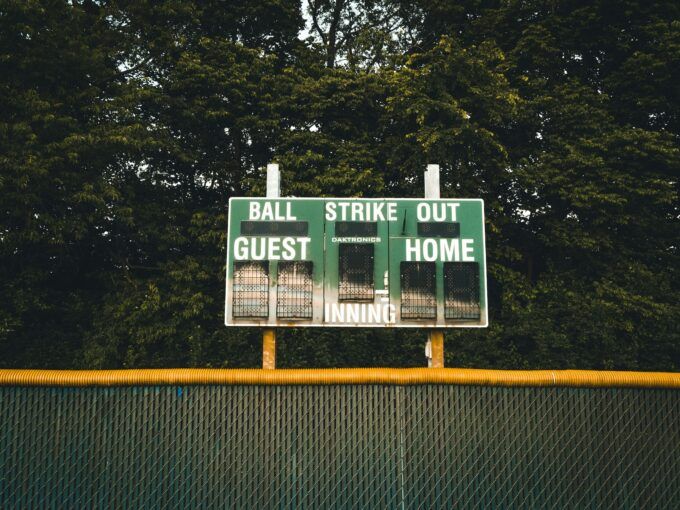
“It’s a beautiful day for a ballgame… Let’s play two!” was a favorite saying of Hall of Famer and Chicago Cubs shortstop Ernie Banks. Diplomats recently came to Geneva to play a diplomatic doubleheader. In the morning, in the first “game,” there was a negotiating session between Iranian and U.S. representatives on Iran’s nuclear program, with Oman acting as the intermediary (referee). In the afternoon, the second “game,” a third round of trilateral peace talks involving the United States, Russia, and Ukraine, took place. Both were played — “jaw-jaw is better than war-war,” as the saying goes — in the City of Calvin, but neither produced a successful result. The scoreboard never lit up. U.S. representatives Steve Witkoff and Jared Kushner started in both “games” of the doubleheader, but neither chalked up a W in the standings.
People in Geneva were pleased that both negotiations took place. It had been a long time since a major diplomatic event had been held here – the Biden-Putin summit of June 2021. And the local team – the United Nations – was reeling from financial problems following U.S. funding cutbacks. “We can congratulate the [Swiss] Federal Department of Foreign Affairs for having managed to create this platform and for having put Geneva back at the center. We really needed this…it is a beautiful success,” boasted Micheline Calmy-Rey, a former Swiss president and foreign minister.
The doubleheader scorecard
But besides the games being played in Geneva, what was the scorecard? Where was the “beautiful success”? In the first round of negotiations, according to the local Geneva press, the U.S. “wanted to obtain commitments from Iran regarding its stockpile of enriched uranium. Israel not only wanted these nuclear raw materials to be moved to another country but also any infrastructure that could produce them to be dismantled. On the Iranian side, Foreign Minister Abbas Araghchi hoped for rapid reciprocity, in particular the lifting of US sanctions in exchange.”
During the talks, the United States deployed a second aircraft carrier group toward the Middle East, with dozens of fighter jets, bombers and other planes positioned within striking distance of Iran. Iran’s Islamic Revolutionary Guard Corps, meanwhile, held live-fire exercises in the Strait of Hormuz. “They better negotiate a fair deal… otherwise bad things happen,” Donald Trump warned, giving Tehran a 10–15 day deadline during the first meeting of his Board of Peace in Washington.
Thus, the “jaw-jaw” unfolded amid escalating military pressure on both sides. “Talks have become almost a countdown to war rather than diplomacy — both sides want very different things, and mistrust runs deep,” commented Ross Harrison, non-resident scholar at the Middle East Institute and expert on the Islamic Republic. U.N. Secretary-General António Guterres warned that the Geneva meetings demonstrated how fragile multilateral diplomacy had become: “The world cannot afford another diplomatic vacuum in the Middle East. The absence of agreement in Geneva is deeply concerning,” he said.
Witkoff and Kushner showed no positive results on the Iranian nuclear front. Were the results of the Russia/Ukraine negotiations any better? If the first negotiation was conducted under mounting military pressure, the second took place amid an actual ongoing war.
February 24, 2026, marked the fourth anniversary of the Russian invasion of Ukraine. The Geneva peace talks on Ukraine, February 17–18, 2026, have been described as the third round of negotiations between Ukrainian and Russian officials in this U.S.-mediated process. Prior to Geneva, there were two earlier rounds of talks in Abu Dhabi in January and early February 2026.
The first day’s discussions lasted around six hours with delegates from Ukraine, Russia, and the United States (and some European advisers) meeting in various formats. The talks continued on February 18, but ended abruptly after only two hours with no agreement on important issues such as territory, political settlement or security guarantees. “Yesterday’s meetings were indeed difficult, and we can state that Russia is trying to drag out negotiations that could already have reached the final stage,” President Zelensky said.
Or, as Opinion columnist M. Gessen wrote in the New York Times, “American and Russian representatives continued their endless negotiations — negotiations about negotiations that, Trump kept promising, would bring an end to the war. Meanwhile, 2025 had been the deadliest year for civilians since the war started.”
The limits of “Jaw-Jaw”
A local Geneva website placed some of the blame for the lack of success in both negotiations on the diplomatic inexperience of the U.S. representatives, Steve Witkoff and Jared Kushner. “After discussions aimed at averting a full-blown war with Iran on Tuesday morning, the duo rushed to the other side of Geneva to oversee talks between Russia and Ukraine.” A seasoned Swiss diplomat was quoted proposing a similar reason for the negotiations’ failures: “In the past, they [Witkoff and Kushner] have been able to close the political gap, but they underestimate the professional expertise that is required to reach a sound agreement.”
As Melvin Goodman correctly pointed out in CounterPunch; Neither [Witkoff or Kushner] has expertise in the issues they are negotiating, and as recently as last week both were in Geneva, shuttling back and forth to meet with key negotiators from Iran, Russia, and Ukraine. This is amateur hour.”
Five days after the Geneva diplomatic doubleheader, the Times ran the following front-page headlines: “Trump Considers Targeted Strike Against Iran, Followed by Larger Attack,” and “Russia Attacks Ukraine Ahead of Invasion’s 4th Anniversary.”
The February Geneva doubleheader showed that diplomacy should not be measured by the number of meetings held but by the distance closed between conflict and peace. The negotiations were held, the diplomats spoke, but the scoreboard did not move.
In competition, greatness is remembered not for appearances but for results. Ernie Banks was a two-time National League Most Valuable Player and a 14-time All-Star selection for driving in runs, not for merely stepping up to the plate. International diplomacy faces the same test. The world does not need more venues for negotiation; it needs negotiations that deliver outcomes and make the next war less likely. The disappointing Geneva doubleheader suggested the familiar signs of diplomatic theater — process without resolution and conversation without peace. (The United States and Iranian representatives were scheduled to meet again on February 26, suggesting that the season is not yet over.)
The post A Most Disappointing Geneva Diplomatic Doubleheader appeared first on CounterPunch.org.
From CounterPunch.org via this RSS feed
You must log in or # to comment.