


Since Dmytro Volynets studied mechanical engineering at university over a decade ago, he’s worked in retail, call centers, and on a warehouse floor.
Unable to join the army due to a spine injury, the 35-year-old has struggled to find a coherent career path related to his studies — even as several industries offering high paying jobs face labour shortages.
In large part because of Russia’s full-scale invasion, Volynets’ story is typical right now in Ukraine — despite possessing some of the highest rates of tertiary education in Europe, the country faces low productivity and a persistent shortage of skilled workers.
Construction, transport, energy, and industry reported critical labor shortages in 2024 and 2025, according to Swiss development organization Helveta — driven in part by a war now in its fifth year that has disproportionately absorbed the blue-collar workers that Ukraine needs.
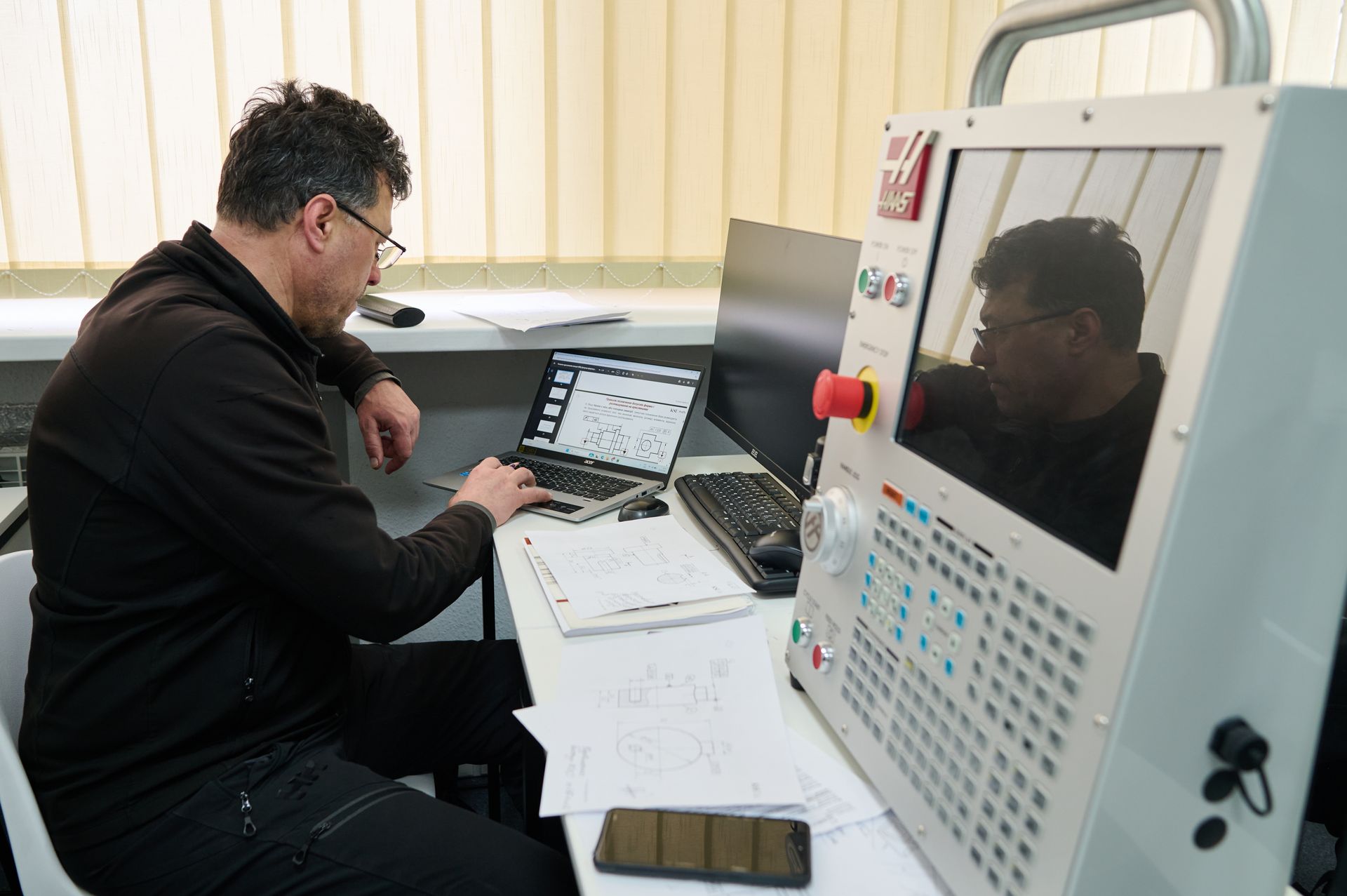
KSE ProfTech students train in a classroom equipped with machine control units (MCUs) for CNC machines at the KSE ProfTech facility in Kyiv, Ukraine, on Feb. 25, 2026. (Oleh Tymoshenko / The Kyiv Independent)
Hoping to play a small role in plugging that gap, Volynets is now back in school, taking a six-week vocational training course in which he’s learning to operate CNC machines — high-precision metal cutting equipment, used across industries including in Ukraine’s burgeoning military sector.
“I can’t protect my country as a soldier, but I can make rockets,” he says.
Ukraine’s skill gap
Labour shortages are not new in Ukraine, the population of which shrank year-on-year since the mid-1990s, according to the World Bank. But Russia’s full-scale invasion in 2022 caused a precipitous acceleration of this trend — with mobilization and emigration reducing the country’s workforce by a whopping quarter, according to one recent study.
Yet paradoxically, the issue faced by businesses today is not always the lack of workers available — but a lack of relevant skills.
“The biggest gap is in blue-collar professions, like plumbers, welders, machine operators, drivers,” Michael Shneider, CEO at Kyiv School of Economics, says.
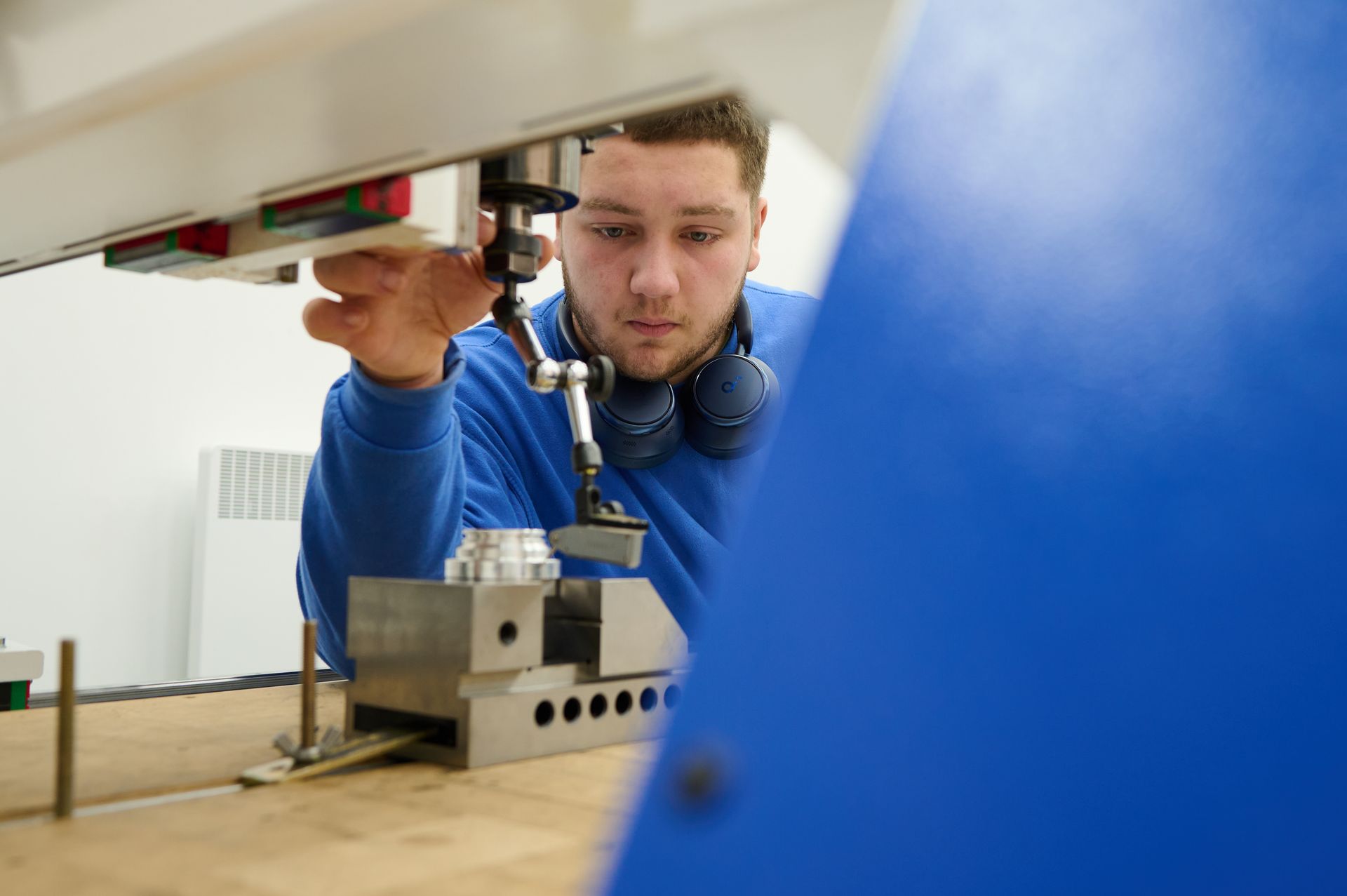
A KSE ProfTech student practices manufacturing metal parts on a CNC machine at the KSE ProfTech facility in Kyiv, Ukraine, on Feb. 25, 2026. (Oleh Tymoshenko / The Kyiv Independent)
According to the country’s economy ministry, over 12 million Ukrainians are economically inactive, and another 1.5 million are stuck in low-productivity jobs. Simultaneously, they estimate that Ukraine will face a shortage of over half a million blue-collar workers in 2027.
That skill shortage could deteriorate further as Kyiv lifts travel restrictions for men. Already, companies like steel plant ArcelorMittal Kryvyi Rih have reported an exodus of young factory workers after the government revised travel rules for 18-22-year-old men last August.
“It [the Obriy system] should become a comprehensive database showing how many people hold which qualifications, what professions currently exist, and where the gaps are.”
The talent pool is also drained by military recruiters targeting male-dominated workplaces, like factories, making it harder for companies to find and train new employees. Now, those jobs are in high demand — with repair work necessitated by Russian air strikes and a burgeoning military industry compounding the need for that skillset.
With the country facing a $586 billion reconstruction bill, according to the World Bank, and with the military sector set to play a central role in Ukraine’s future economic competitiveness, a lack of builders, laborers, tradesmen, and factory workers could be a fatal bottleneck.
What’s being done?
While mobilization and emigration are hard to fix while Russia continues its full-scale invasion, the skills gap still can be.
To get a more granular picture of that gap, Ukraine’s Economy Ministry is taking a leaf out of the dating world, having developed “Tinder for the labor market,” according to Darina Marchak, deputy economy minister.
The Obriy system, which is due this spring, will be “an online one-stop shop for individuals, businesses, and local councils,” Marchak told the Kyiv Independent.
The system will match job seekers’ skillsets with vacancies when it’s launched later this year, and also help the ministry spot critical gaps in the depleted labor market, according to Marchak.

Welded metal parts left over from students’ welding practice at the KSE ProfTech facility in Kyiv, Ukraine, on Feb. 25, 2026. (Oleh Tymoshenko / The Kyiv Independent)
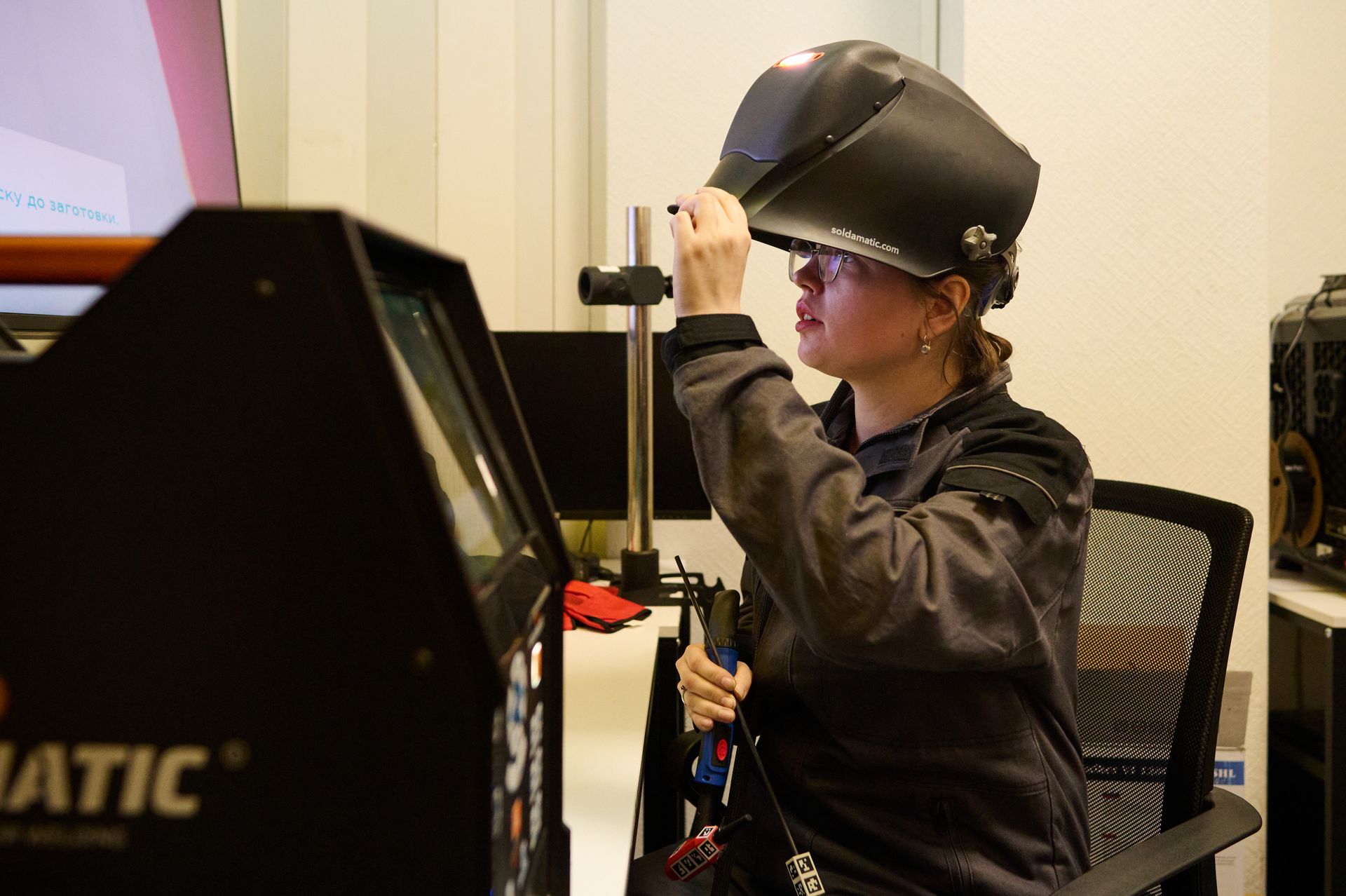
A KSE ProfTech instructor sets up a welding simulator before the students’ training session at the KSE ProfTech facility in Kyiv, Ukraine, on Feb. 25, 2026. (Oleh Tymoshenko / The Kyiv Independent)
“It should become a comprehensive database showing how many people hold which qualifications, what professions currently exist, and where the gaps are. It should also forecast future labor market demand based on economic development trends and emerging shifts in the workforce,” she added.
While the government is developing new immigration policies to plug some shortages with migrant labor, it’s also necessary to retrain Ukrainians, she said.
But with a culture of university education and white-collar professions as the goal, encouraging retraining is not always easy.
“There is some stigma around occupational training in Ukraine,” says Shneider.
“We need to change this culture.”
Having repeatedly encountered the issue of skills shortages in conversations with the private sector, KSE decided to set up its own vocational center, KSEProfTech, in 2024.
Alongside training the country’s future white-collar workers, they now also train machine operators, welders, and electricians in short 6-week programs designed to fill the critical skills gaps that businesses are concerned about — so much so that the businesses themselves cover 100% of the costs.
Of the 400 people who have already completed the reskilling program, 90% are employed, with an average increase in personal income of 43%, according to KSE ProfTech.
Aside from graduates like Dmytro Volynets, the program has also helped fast-track older adults, internally displaced people, veterans, and women back to employment.
Graduates go on to work in the state rail service, defense industry, and making electronics for Ukrainian cybersecurity giant Ajax.
But attracting students is not always the easiest thing, says Shneider, who tried to raise awareness of the program by putting flyers up in apartment blocks, elevators, and at bus stops.
“One to six weeks, with guaranteed employment and increasing your salary by 40% — people think there is something wrong.”
Read also: Europe is rediscovering the bomb
From The Kyiv Independent - News from Ukraine, Eastern Europe via this RSS feed