

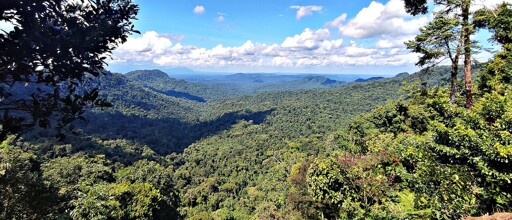
Ecuador has announced the creation of a new biological corridor designed to connect the eastern ranges of the Andes with the Amazon Rainforest, part of a larger initiative to strengthen ecological connectivity and protect biodiversity. The Llanganates–Yasuní Connectivity Corridor, officially announced this month, spans 2,159 square kilometers (834 square miles) across two provinces, connecting Llanganates National Park with Yasuní Biosphere Reserve. It’s one of several projects in the country aiming to preserve ecological connectivity between the Andes and Amazon, a transition zone vital for species adaptation as climate change and human pressure reshape habitats. “By securing ecological connectivity between the Andes and the Amazon, we are helping safeguard biodiversity, strengthen climate resilience, and support local communities whose livelihoods depend on healthy ecosystems,” WCS Ecuador country director Sebastian Valdivieso said in a press release. “This corridor reflects the power of collaboration between national authorities, local governments, civil society and international partners.” Yasuní Biosphere Reserve covers 27,564 km2 (10,643 mi2) of Amazon Rainforest, while Llanganates National Park covers 2,197 km2 (848 mi2) of high-elevation ecosystems in the Andes. The two protected areas appear close on a map but are actually separated by significant elevation differences, with parts of Llanganates reaching around 4,000 meters (13,000 feet) above sea level. Now, the corridor allows “altitudinal connectivity” between the two protected areas, according to WCS Ecuador, one of the organizations overseeing the project. The corridor will help protect species that need to migrate between different elevations, such as the black-and-chestnut eagle (Spizaetus isidori). It could…This article was originally published on Mongabay
From Conservation news via this RSS feed
You must log in or # to comment.