

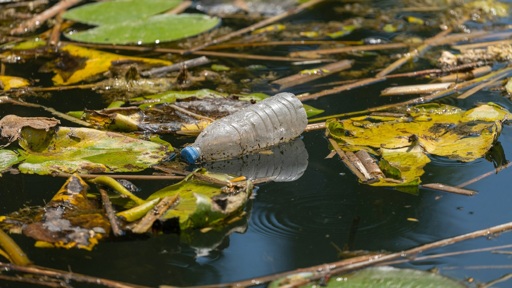
Plastics have a gigantic built-in problem: They’re tenacious, which is very good for a milk jug or a car bumper. But they don’t easily break down, which is bad for the environment. From the 1950s, when plastics were first produced in significant amounts, through 2017, the petrochemical industry churned out more than 8.3 billion metric tons of the nearly indestructible stuff, the vast majority of which is still with us today, polluting the natural world, contaminating wildlife and ourselves. Add to this an estimated 25 billion metric tons of plastic expected to be produced by 2050, and the agonizingly intractable nature of this mega-pollution crisis becomes clear. Humanity’s take-make-waste linear manufacturing economic model for plastics stands in stark contrast to natural systems. Over billions of years of evolution, living organisms developed strong, durable materials (think bone, shell and silk) that self-deconstruct back into harmless components after use. Inspired by the circularity of natural materials, chemists at Rutgers University in the U.S. set out to design plastics that could do the same. And they think they have found a breakthrough solution to the circularity problem, or at least may have taken a big step toward a solution. In a paper published last November, they report that they’ve developed a new molecular structure for plastic, inspired by nature, that allows it to self-deconstruct at the end of a product’s lifespan. In fact, researchers say that a timely programmable breakdown date can even be built into future plastic products. Chemist Yuwei Gu (left)…This article was originally published on Mongabay
From Conservation news via this RSS feed
You must log in or # to comment.