


It should be no consolation that Trump’s illegal war on Iran is inflicting further damage to his historically low favorability ratings. But as congressional Republicans insulate Trump from constitutional oversight and voter backlash, we need cause for hope. While we should never count on Trump or Republicans to defeat themselves, they are doing their best—or rather, their worst—to ensure that they have alienated Americans on every major issue that Trump lied about in securing his second term. Our job is to amplify and focus the dissatisfaction of American voters on its source: Trump and the cowards who prop him up.
The natural response to most wars is a rush of patriotism and pride. But as wars grind on, soldiers and resources are depleted, the grim reality of war often turns public opinion against continued fighting. For example, President Truman launched the Korean War with 78% public support. Five months later, 50% of Americans thought Truman had “made a mistake” by sending troops into Korea. See Gallup (2/4/2003), The Gallup Brain: Americans and the Korean War
Trump, on the other hand, started with low levels of support for his war against Iran. See Talking Points Memo, Charles Walldorf, Trump’s War Against Iran Is Uniquely Unpopular Among US Military Actions of the Past Century.
Charles Walldorf is a professor of Politics and International Affairs at Wake Forest University who has researched the popularity of American wars over the last century. Walldorf writes,
Trump’s Iran war is historically unique in one critically important way: In its early stages, the war is not popular with the American public. . . . A recent CNN poll found that 59% of Americans oppose the war – a trend found in poll after poll since the war began.
Walldorf explains that Trump’s war is missing a “grand-purpose narrative” rooted in major geopolitical events. While Trump and his acolytes have attempted to backfill such a narrative, the American public isn’t buying it.
Per Walldorf,
Today, most Americans see no existential danger from Iran. A Marist poll from March 3, 2026, found that 55% of Americans view Iran as a minor threat or no threat at all. And the number who see Iran as a major threat, 44%, is down from 48% in July 2025.
By contrast, 64% of Americans saw Iraq as a “considerable threat” prior to the 2003 U.S. war in Iraq.
Because Trump started the Iran war on impulse, he failed to explain his theory of the case to the American people or Congress. Now that deaths and injuries are accumulating, the public is already focused on the risks and costs of a war that was a surprise to them.
Because Trump has no conception of the seriousness or complexity of war, he apparently believes he can “turn off” the war like a water spigot. Not so. He has provoked Iran into taking measures that are not easily reversible. On Tuesday, media sources reported that Iran was preparing to release mines into the Strait of Hormuz. See CNN Politics, Iran begins laying mines in Strait of Hormuz, sources say.
Iran’s intention to mine the Strait of Hormuz was confirmed by the Pentagon’s announcement that it had attacked 16 ships that could be used to lay naval mines. While the report of attacking 16 ships sounds impressive, Iran relies on fleets of small boats to deploy two to three mines at a time. Iran still has 80% of its minelaying fleet and has between 2,000 and 6,000 mines in its arsenal—a number that would make passage through the Strait of Hormuz unreasonably dangerous. See CBS News, Iran signaling it may deploy mines to disrupt Strait of Hormuz, U.S. sources say.
The danger of navigating a narrow strait, seeded with naval mines and subject to drone and missile attack, is highlighted by the fact that even the US Navy has refused to escort commercial ships through the strait. See Reuters, US Navy tells shipping industry Hormuz escorts not possible for now. (“The U.S. Navy has refused near-daily requests from the shipping industry for military escorts through the Strait of Hormuz since the start of the war on Iran, saying the risk of attacks is too high for now . . . .”)
The situation is complicated by the need for insurance to keep oil flowing through the strait. The large oil tankers (called Very Large Crude Carriers) cost between $110 to $130 million. See iMarine, Tanker Prices. The VLCCs carry about 2 million barrels of crude. At $85 per barrel, the cargo’s commodity price is $170 million. A single naval mine that can be manufactured for $15,000 could inflict a $300 million economic loss—before accounting for lives and environmental damage.
While “war risk” insurance is still available for ships transiting the Strait of Hormuz, the policies are now limited to 7 days (as opposed to the whole voyage) and cost 1% of the hull value—or more than $1 million per week.
For a detailed and fascinating discussion of the role that the absence of insurance is playing in the closure of the Strait of Hormuz, see Shanaka Anslem Perera (Substack), The Invisible Siege: How Insurance Markets, Not Missiles, Closed the Strait of Hormuz.
Here’s my point: The “end” of Trump’s war on Iran is not entirely within Trump’s control. If Iran succeeds in mining the Strait of Hormuz with a flotilla of small boats, the process of “de-mining” the strait will be neither easy nor quick. For a fascinating history and prescient article detailing US efforts to protect Persian Gulf shipping against Iranian mines (in the 1987 Iran-Iraq Tanker War), see The Tanker War | Naval History - June 2025, Volume 39, Number 3.
If you don’t have time to read the article linked above, here’s the point: In its efforts to provide safe transit for commercial vessels, the USS Samuel B. Roberts nearly sank after being struck by an Iranian mine; the Roberts was saved only by truly heroic actions by its crew.
The strait is 21 miles across at its narrowest point, with two shipping lanes, each 2 miles wide, separated by a 2-mile buffer. See The Strait of Hormuz is the world’s most important oil transit chokepoint - U.S. Energy Information Administration. Laying a few dozen or a few hundred mines in narrow shipping lanes would make passage treacherous—and effectively uninsurable.
If Trump stopped US attacks on Iran tomorrow, it would take months to mine-sweep the Strait of Hormuz of a few dozen mines. During that time, shipping would likely remain at a standstill because of the lack of insurance (even if Iran ceased firing on ships in the strait).
Trump has set in motion a complicated series of global events that he cannot control. Americans will continue to experience the cascading effects of Trump’s rash decision—in lives lost, injuries suffered, increased prices, broken alliances, and the moral injury of killing innocent civilians in Iran in America’s name by waging a reckless war that seems designed to satisfy the adolescent fantasies of the self-named “Secretary of War.”
Public opinion will quickly whiplash Trump. The first $100 tank of gas will be a shock. The second may be a financial crisis for many Americans. And the third will have Americans demanding that Trump stop the war now—something easier said than done, and something that Trump failed to consider when he gave the order to start the war.
Trump pressures House to add anti-trans provisions to SAVE Act.
Trump apparently believes that including anti-trans provisions in the SAVE Act will increase its chances of passage. See The 19th, Trump adds pressure to pass the SAVE America Act, with new anti-trans provisions.
That new development caused Senate Majority Leader John Thune to reiterate his opposition to passing the SAVE Act by adopting the “talking filibuster.” See CBS News, Thune stands firm on SAVE America Act as Trump threatens legislative blockade.
Thune said,
“The votes aren’t there, one, to nuke the filibuster, and the votes aren’t there for a talking filibuster,” Thune said. “It’s just a reality. And I’m a person who has to deliver, sometimes, the not-so-good news that the math doesn’t add up. But those are the facts. There’s no getting around it.”
Thune’s comment means that there are not 51 votes among Republicans in the Senate to use the “nuclear option” to carve out an exception to the filibuster for voting legislation.” And his comment that “the votes aren’t there for a talking filibuster” means that Republicans don’t have 67 votes to amend the Senate’s standing rules.
Again, the fact that Trump is putting so much pressure on congressional Republicans to pass the SAVE Act demonstrates his understanding that he cannot impose the SAVE Act anti-voting restrictions by executive order.
Trends among Latino support for Trump
The Economist published an analysis of Latino support for Trump from 2020 to the present, using a mix of voting results and favorability ratings. See The Economist, Lost Latino love could cost Republicans the midterms | Trump’s much-vaunted success with Hispanics is turning to ashes (Gift article, accessible to all.)
Per the Economist,
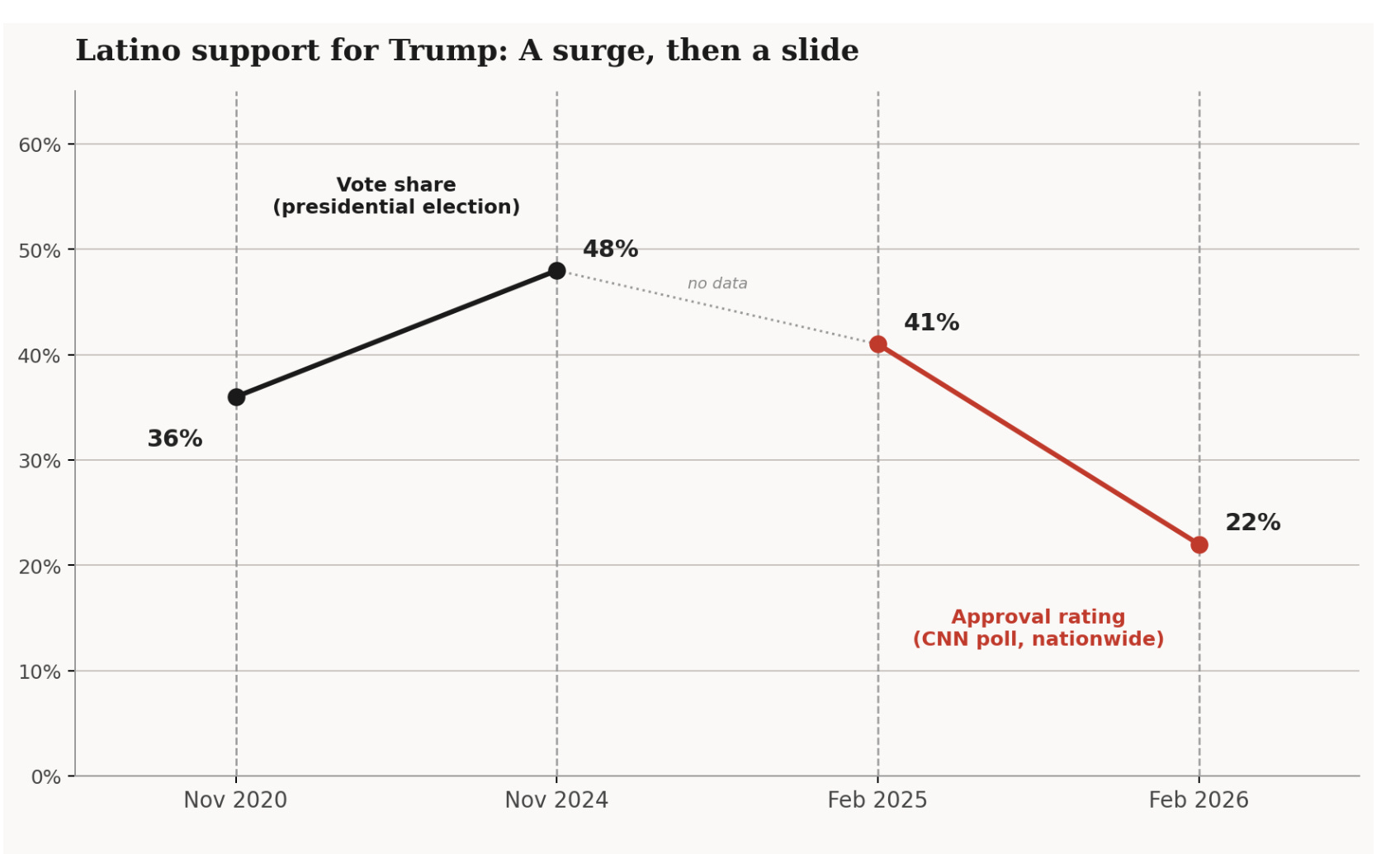
Latinos helped Mr Trump win his second term. Polls show their support for him surged from 36% in 2020 to 48% in 2024, the highest share ever for a Republican presidential candidate. [¶]
Now those gains are slipping away. A CNN poll found that [from February 2025 to] February [2026] Mr Trump’s approval rating among Latinos nationwide fell from 41% to 22%.
The referenced CNN poll is here. Diagramming the data described by the Economist shows a dramatic turn:
Polls are not elections and no one should assume that the Latino community is “monolithic” or beholden to any party. Still, the elections earlier this month demonstrated that Latinos played a decisive role in dozens of races—especially in South Texas.
The issues that motivated many Latinos in 2024 continue to motivate them today, including immigration and the economy. But Trump has managed to turn presidential campaign strengths into midterm weaknesses.
Indeed, in a sign of panic inside the Trump administration, White House officials have told surrogates to stop talking about “mass deportation.” See Axios, Scoop: White House tells House Republicans to stop talking about mass deportations.
Immigration and “mass deportations” were Trump’s signature issues. They have become a liability. And like mines in shipping lanes, the issue won’t go away simply because the administration stops talking about mass deportations. The fear and anxiety will remain as long as ICE and CBP are the largest paramilitary forces in the world.
It does Trump and his surrogates no good to stop talking about mass deportations when they are refusing to agree to ICE reforms, such as unmasking, obtaining judicial warrants to search homes, stopping “roving patrols” and surges, and no longer using racial profiling.
The good news is that the decline in support for Trump among Latinos aligns with similar trends among independents and younger voters, including young men.
So, while no single cohort was responsible for Trump’s victory in 2024, declining favorability ratings among multiple cohorts is good news, especially among Latino voters who are increasingly the majority minority in many congressional districts.
Concluding Thoughts
In another victory for accountability, Trump’s hyper-partisan foot soldier in the DOJ, Ed Martin, is under investigation by the DC Bar. See Justice Department’s Ed Martin faces disciplinary proceedings from the DC Bar.
Among the many despicable actions taken by Martin, he threatened Georgetown University Law School, telling the school that its graduates would be banned from the DOJ if it continued to promote diversity and inclusion. Of course, as a Jesuit university with a deep commitment to social justice, Martin’s effort to censor and punish the law school for its social and religious values violated the Constitution in multiple ways.
Martin was recently demoted within the DOJ when reports emerged that he was the subject of a grand jury investigation for leaking confidential information about Trump’s political enemies. Martin now faces the loss of his law license in the DC bar proceeding.
The DC disciplinary proceeding is one small step against one person among thousands in the Trump administration who have violated the law, their oaths to defend the Constitution, and relevant regulatory and licensing requirements. It will take a while, but many of them will be brought to justice. In the meantime, the fact that one of Trump’s favorites now faces the loss of his livelihood should have others, like Pam Bondi and Todd Blanche, staring at the ceiling in the middle of the night.
Talk to you tomorrow!
Pro-democracy protest photos
This amazing woman, on the right, is sponsored by Indivisible and shows up every Saturday morning, no matter the weather, with boxes of signs . . . .

Hinesburg Resists on their 1st Birthday! It was a great day to support democracy in Hinesburg, VT.
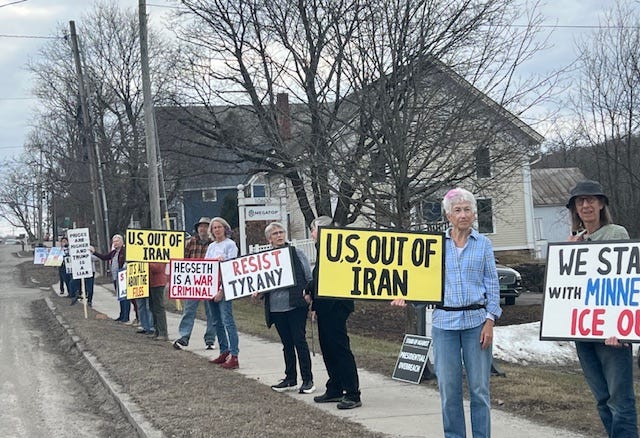
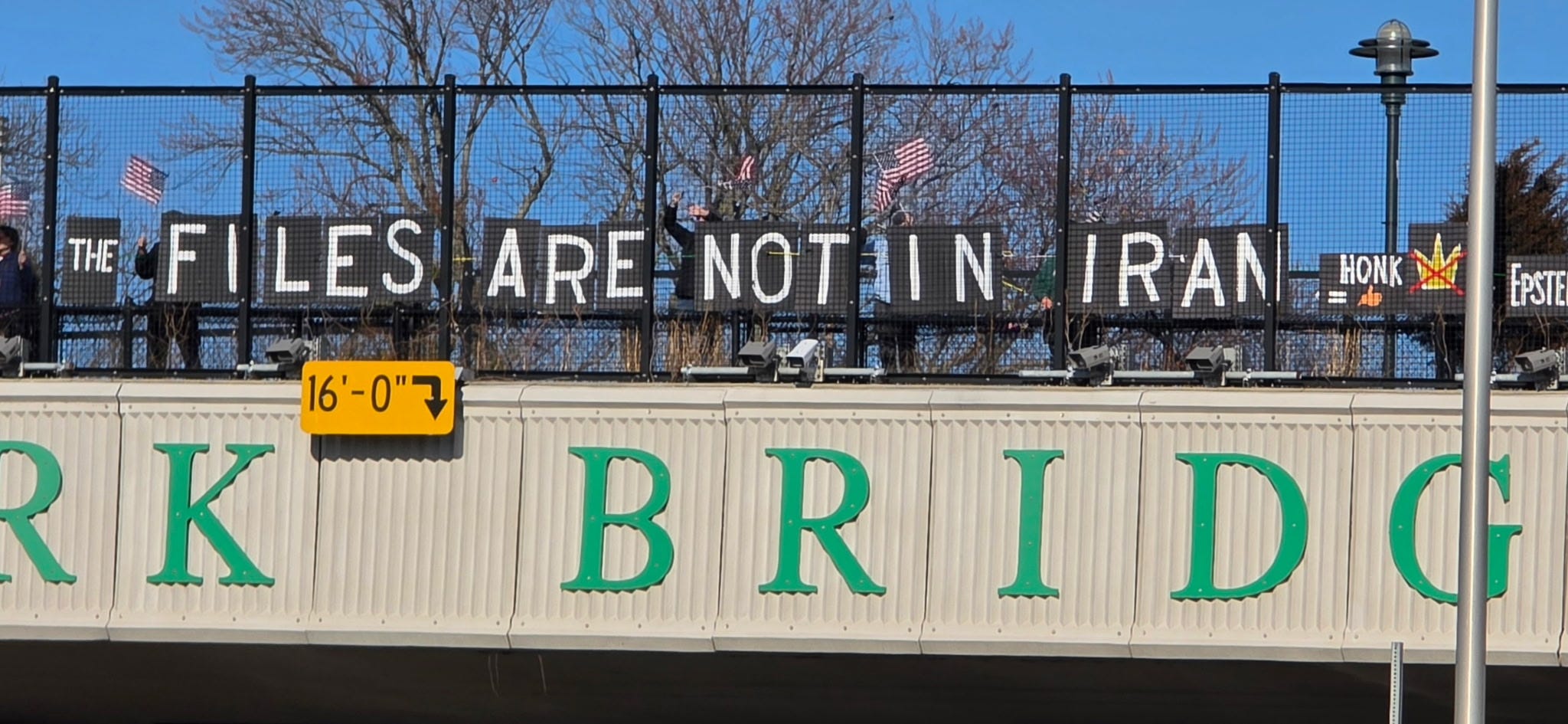
India Point Bridge in Providence RI. Joyous bridge work today. Great weather and MUSIC! It makes so much difference!
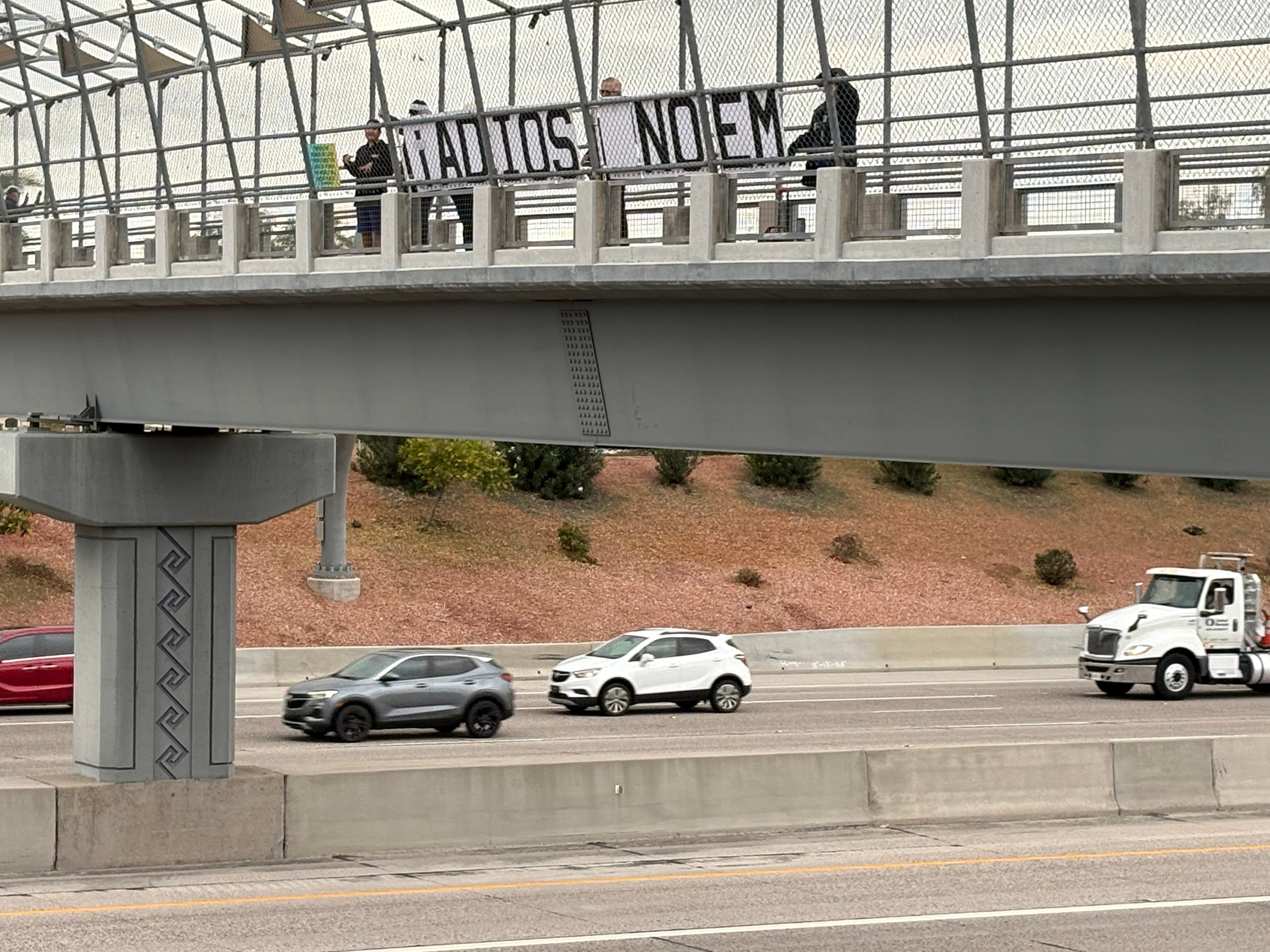
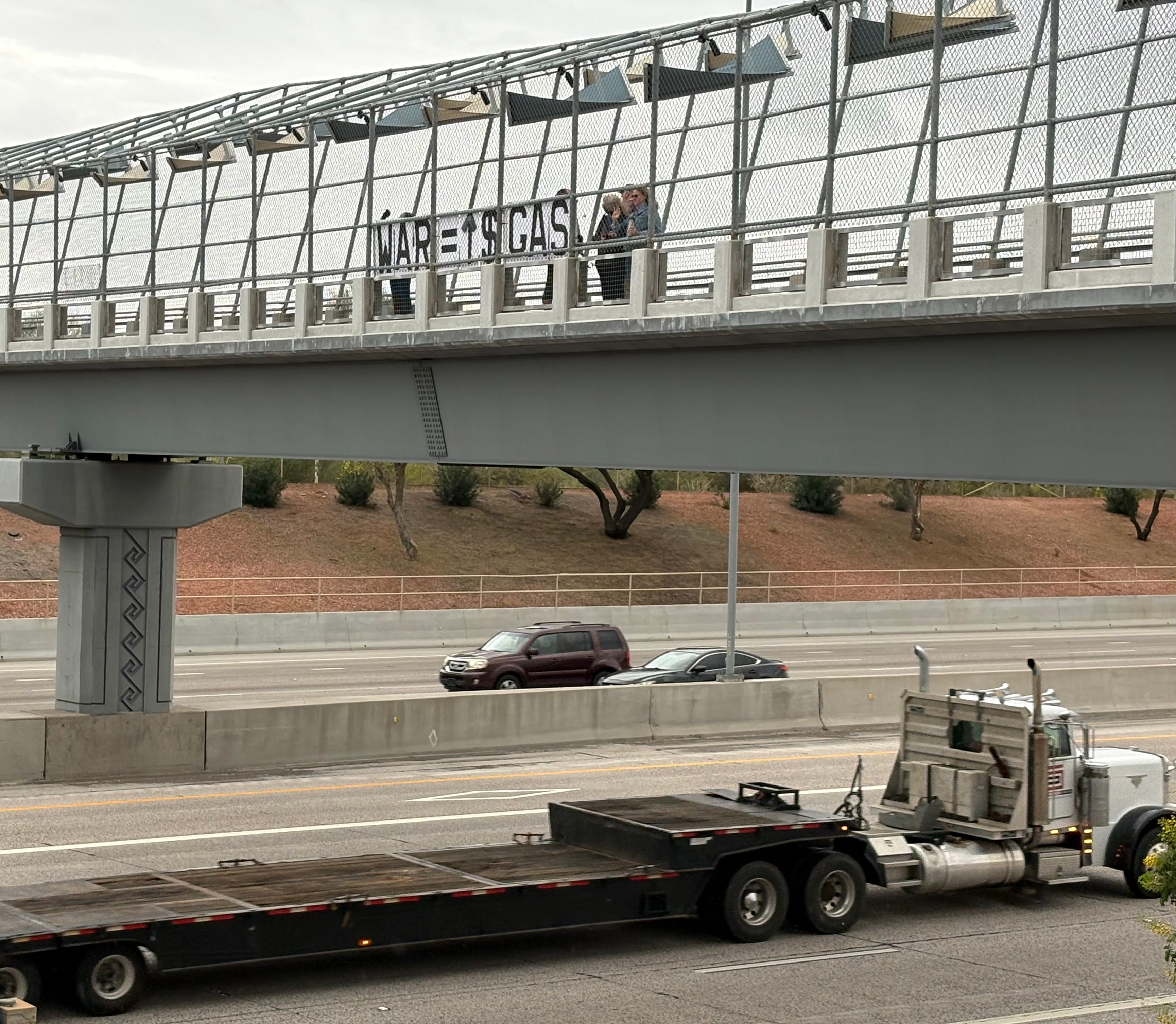
Chandler, AZ. We now have enough volunteers for signs on both the north and southbound sides of the freeway!
The Boone County Democratic Party in Columbia, Missouri, started protesting in March 2025 and called our protests “Stop the Coup”. We evolved into PAKA (Protest Against Kings in America) and gather every Saturday morning. This past weekend, we celebrated a year of standing up and speaking out.
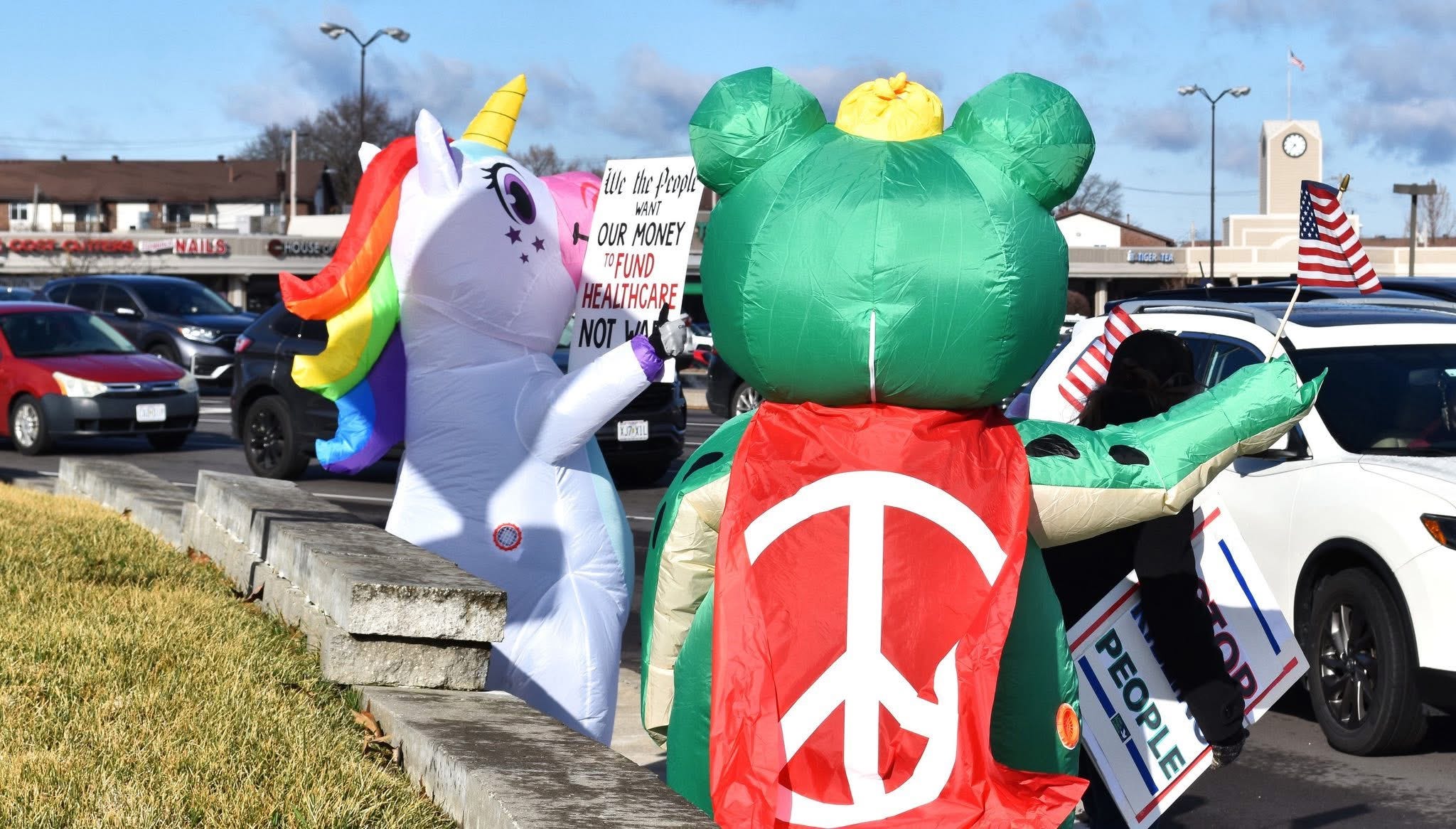
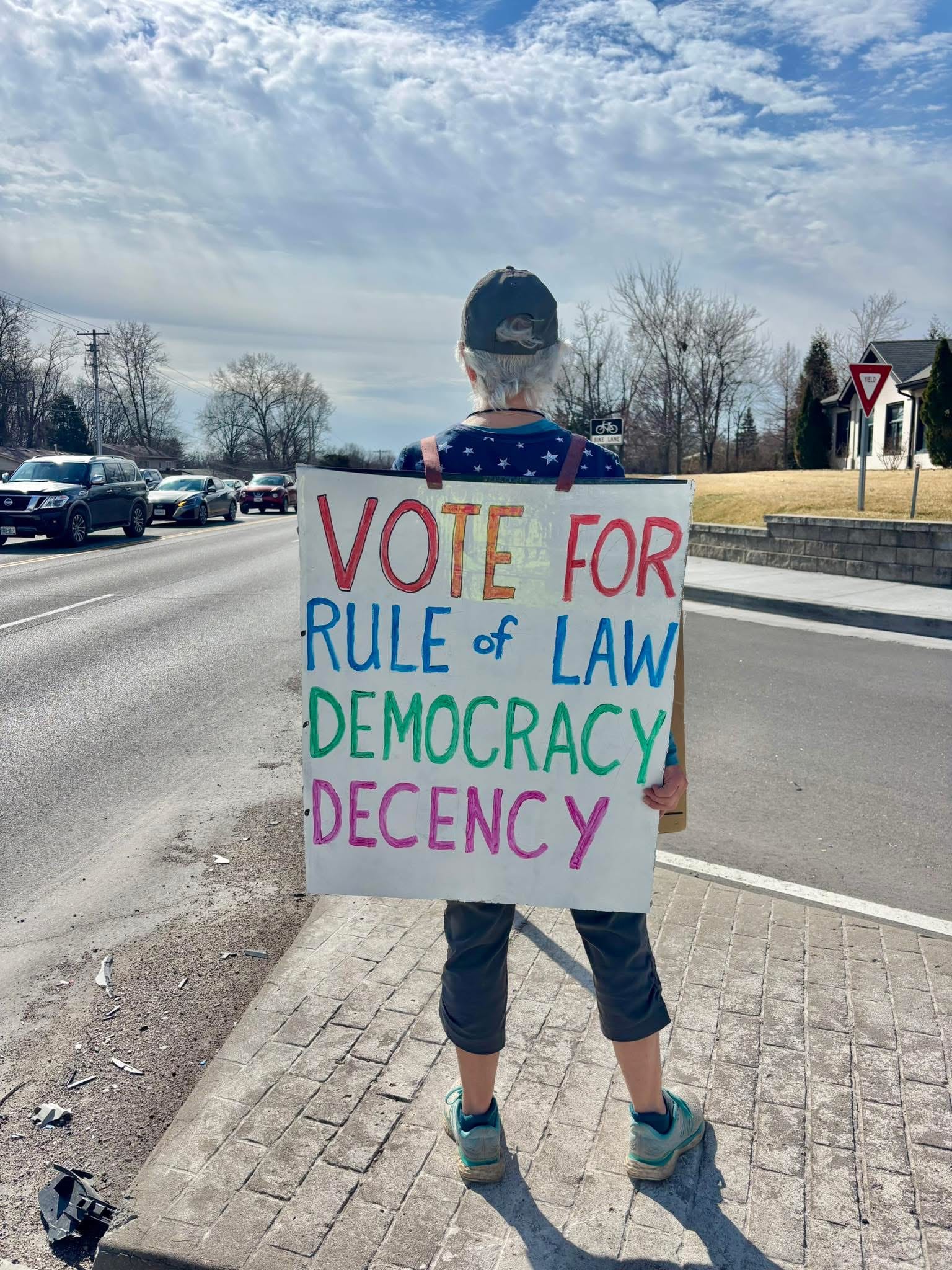
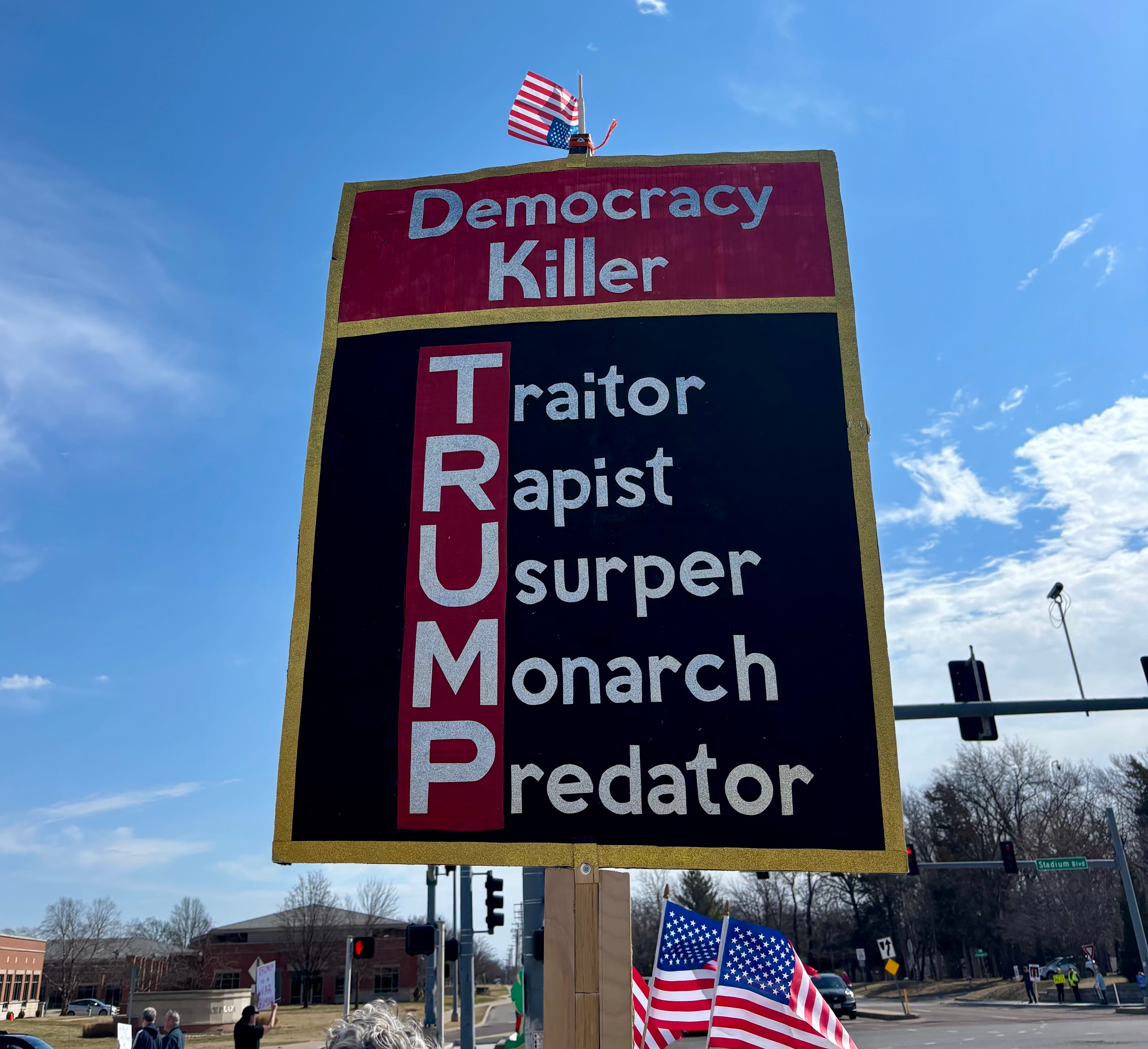
Today we had more than 50 people at the weekly protest outside the ICE facility in Framingham, MA, and were encouraged by all the honks and waves from cars driving past us!
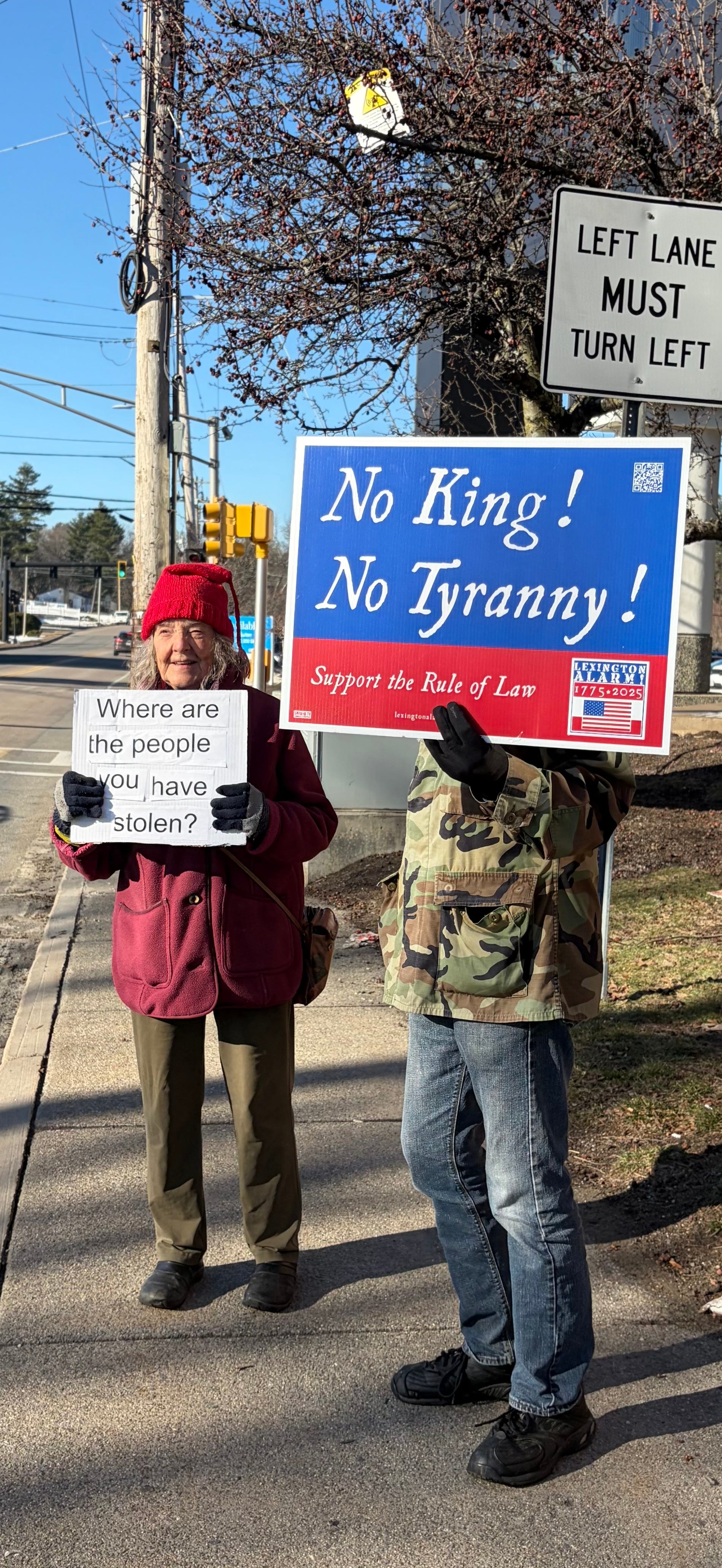
Pasadena, CA, overpass.

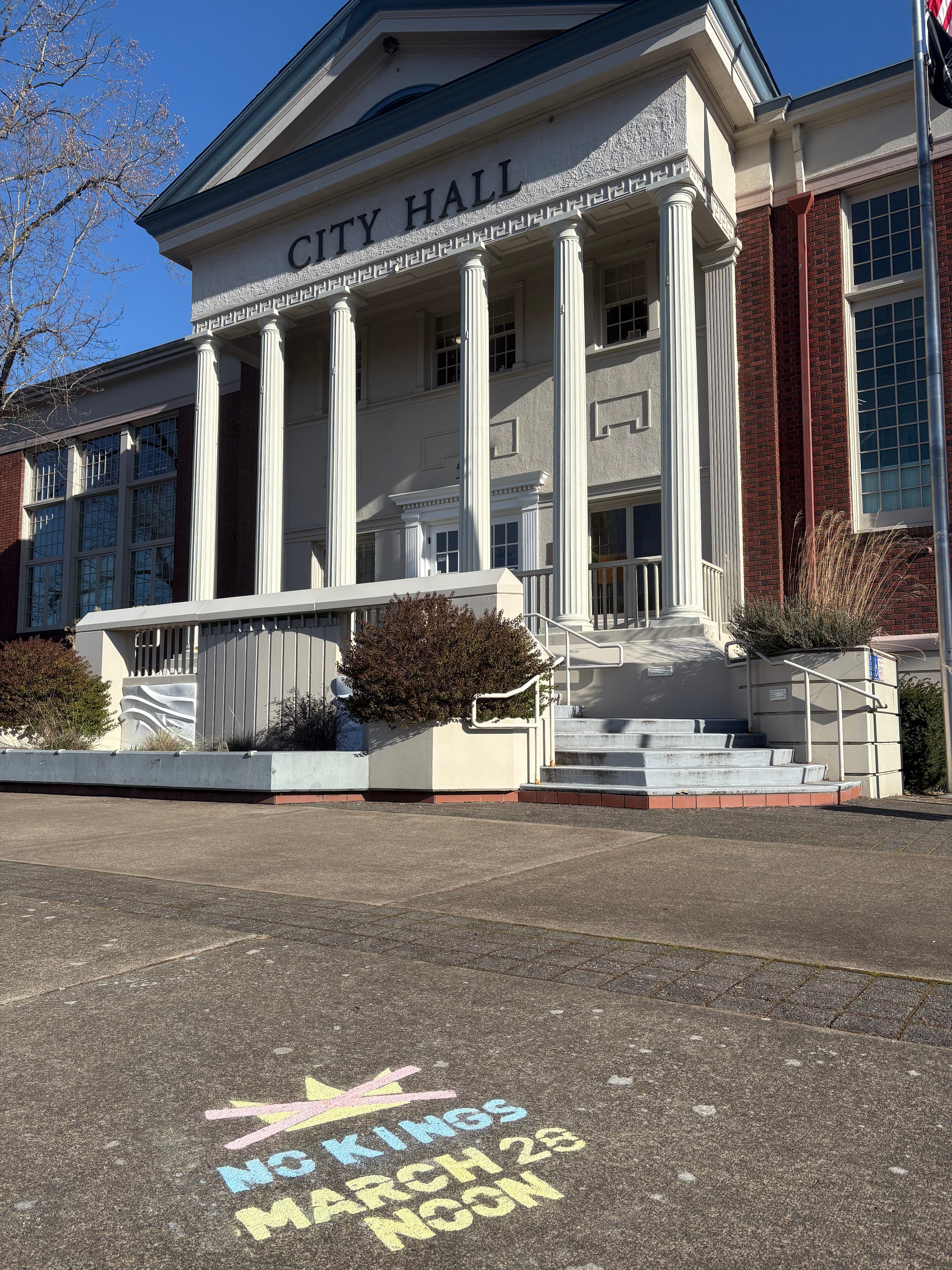
In Corvallis, Oregon, we are branding sidewalks and walking paths with our No Kings III message.
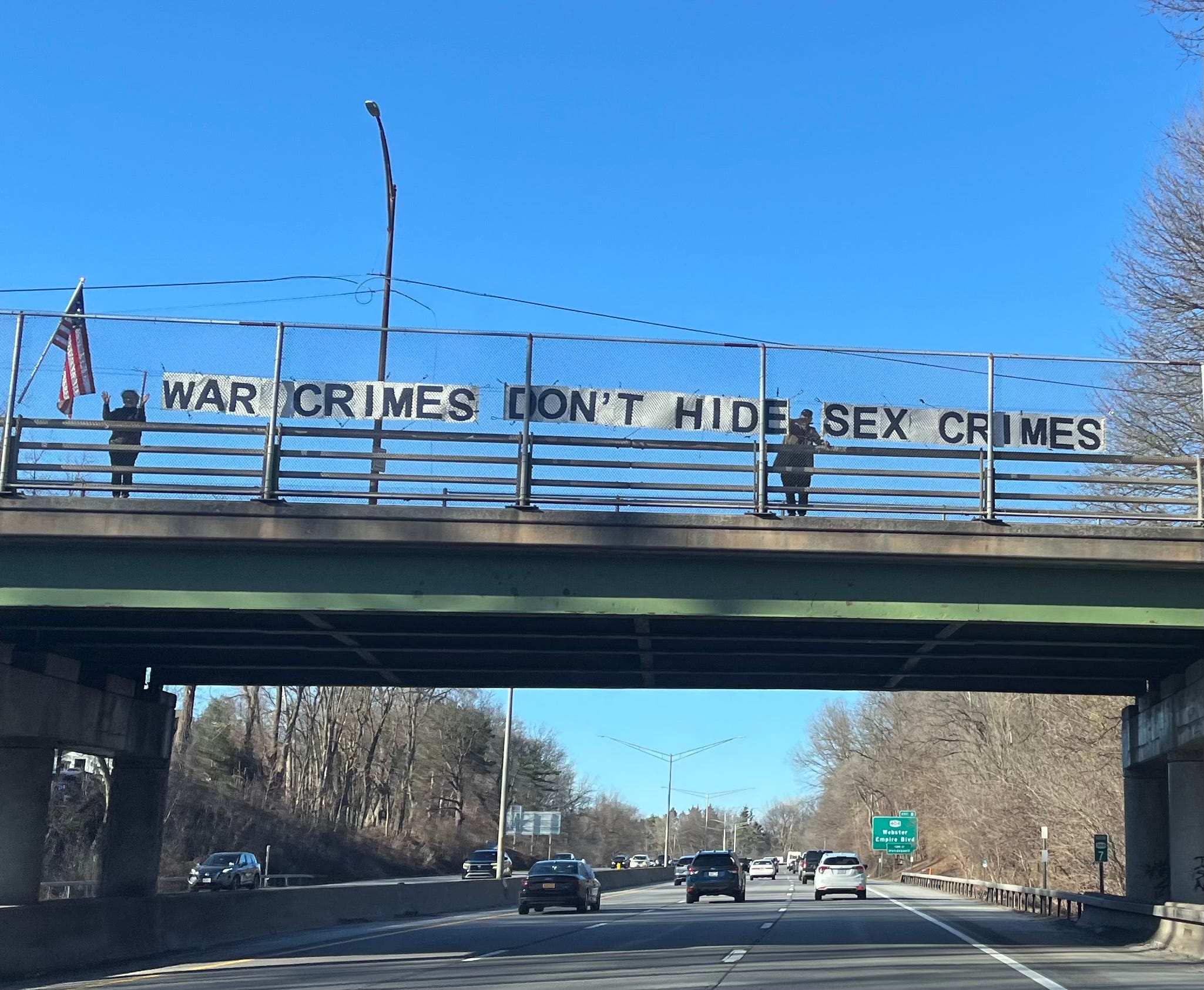
Overpass protest on our 1-year anniversary. We’re still at it. The 3rd picture below drew 200 folks on very short notice when it was announced that ICE officials were visiting to consider a Detention Center inside our Fed Building…where Schumer and Gillibrand have local offices and there is a DAY CARE CENTER.
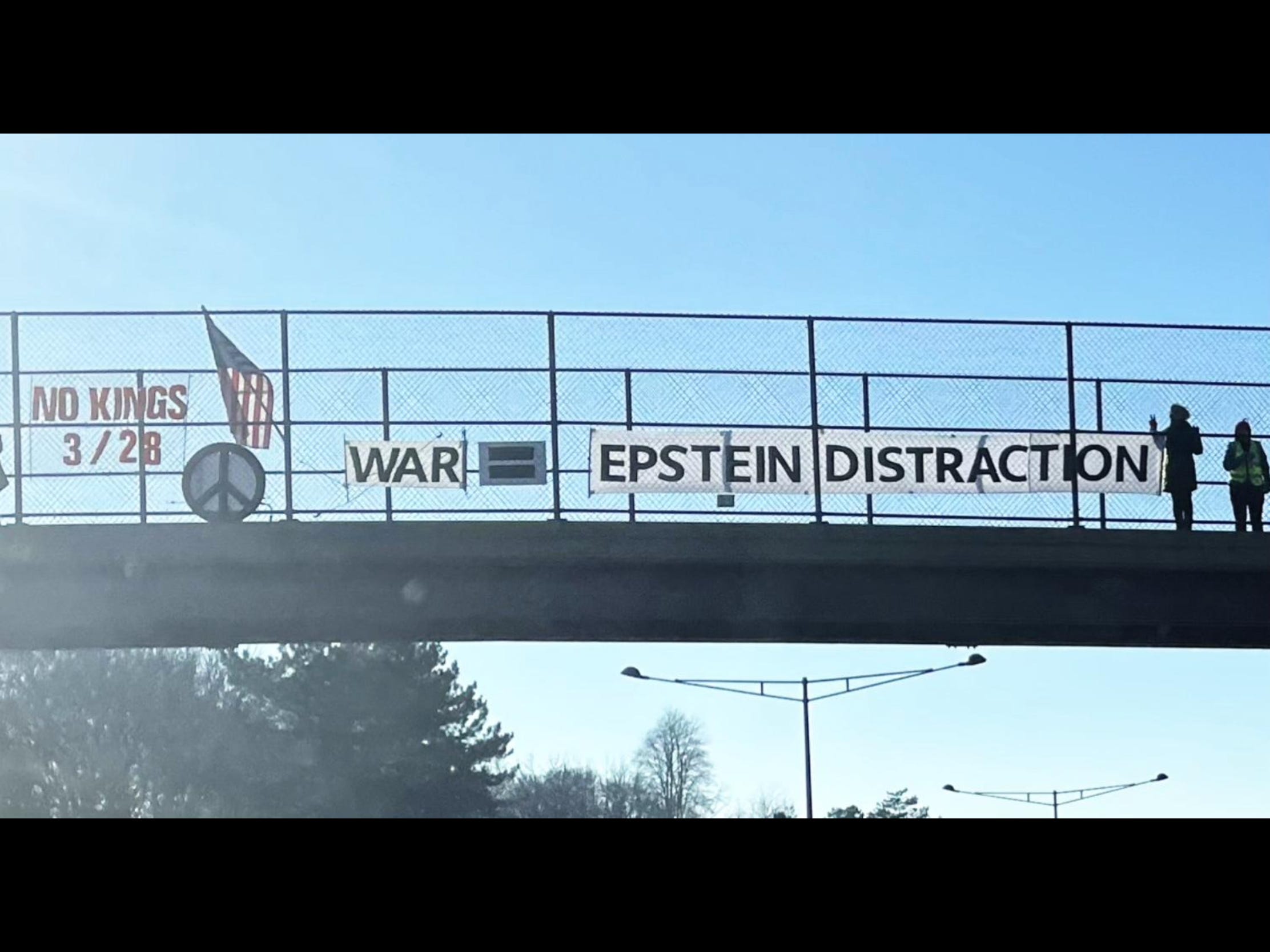

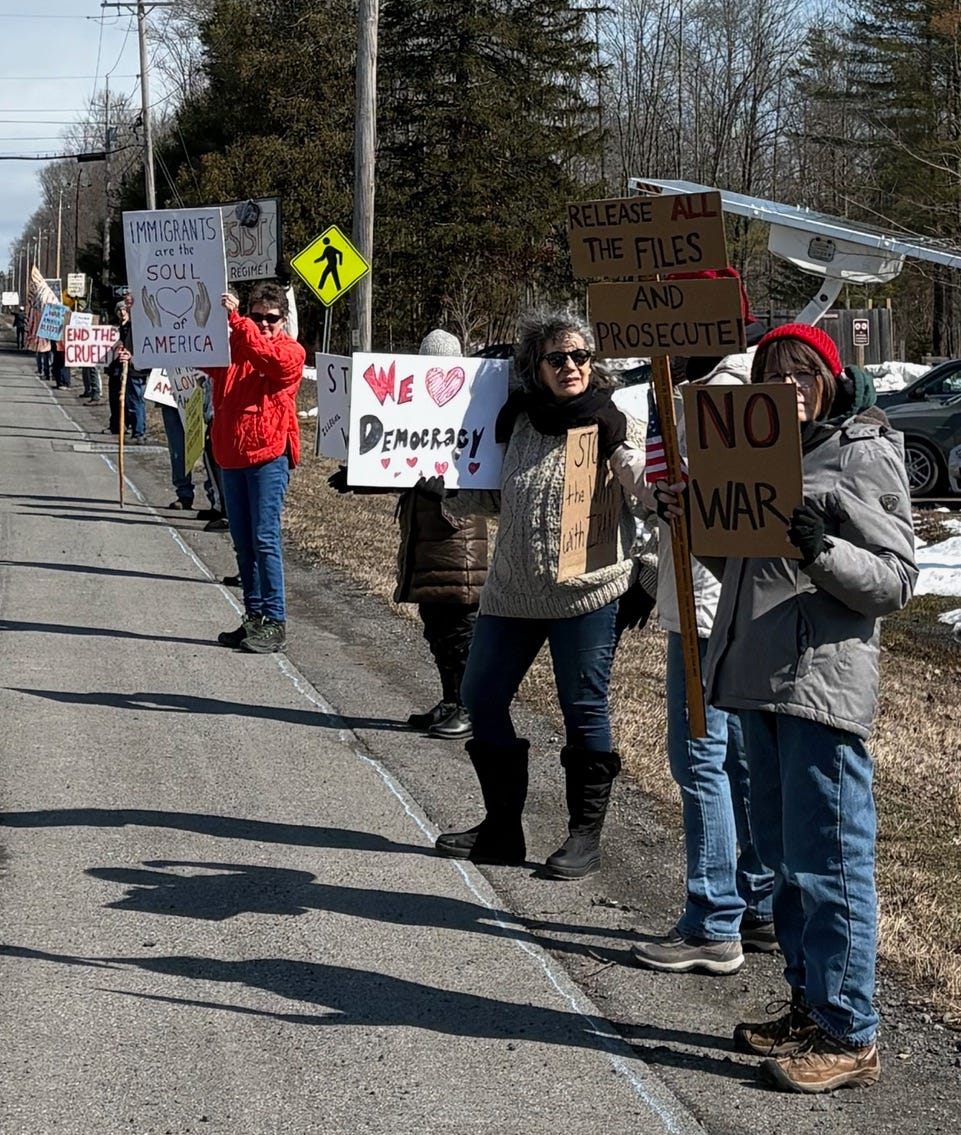
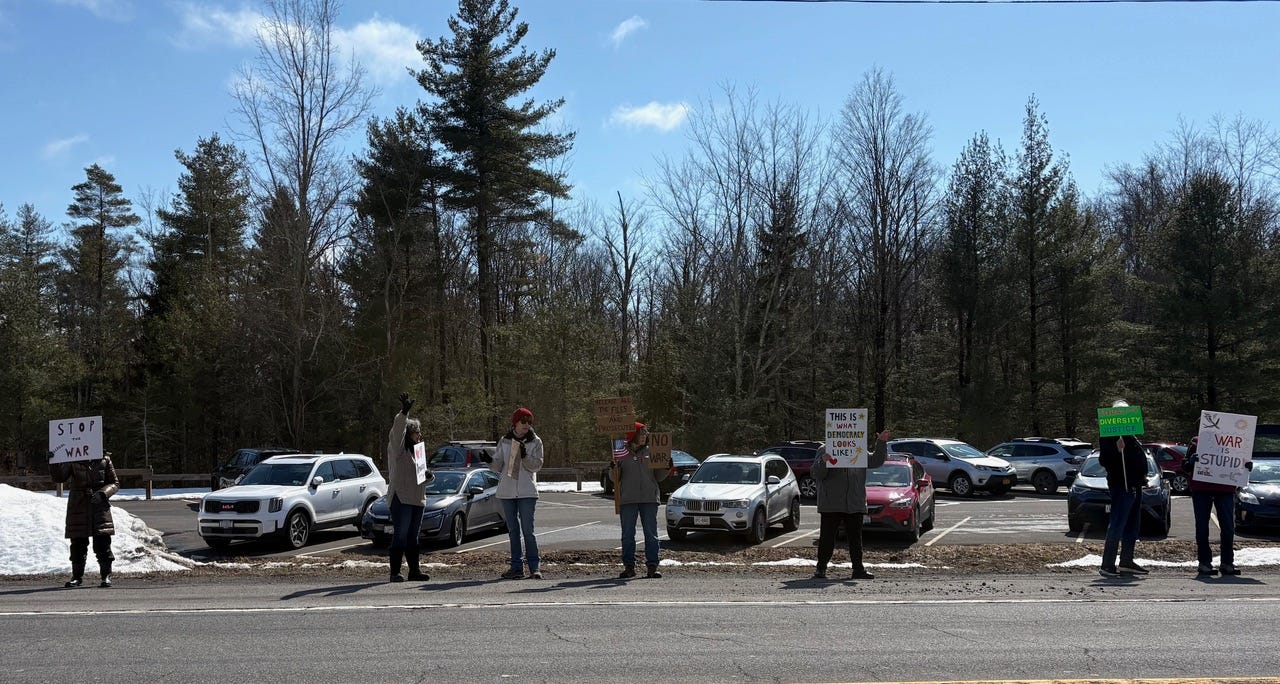
Shandaken rally every Saturday on Route 28, Shokan, N.Y.
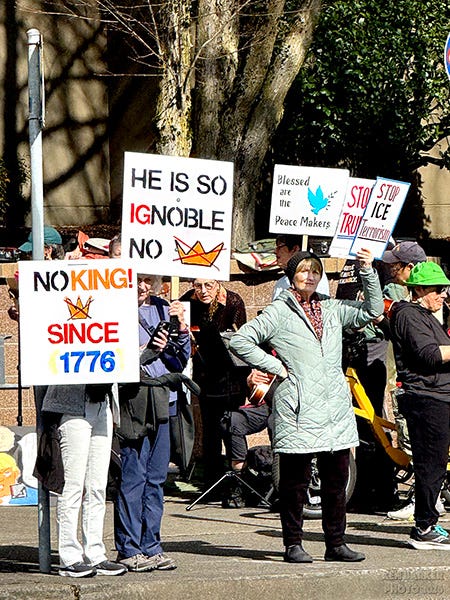
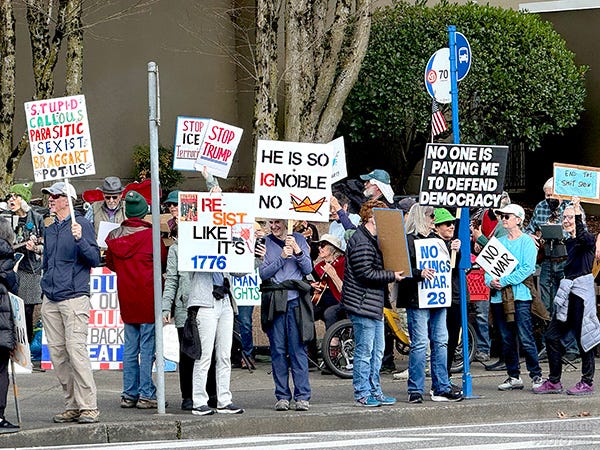
The following photos were taken at 16th & Multnomah on 7 March 2026 in Portland. Next Saturday will be the fiftieth protest at this location. That’s reason to celebrate!

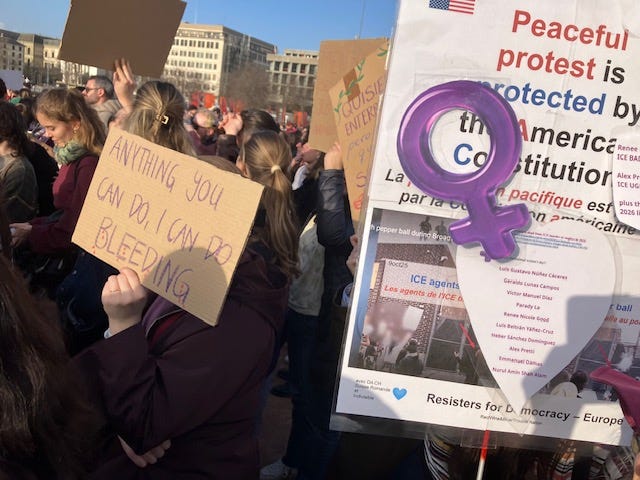
8 March in Geneva, Switzerland.

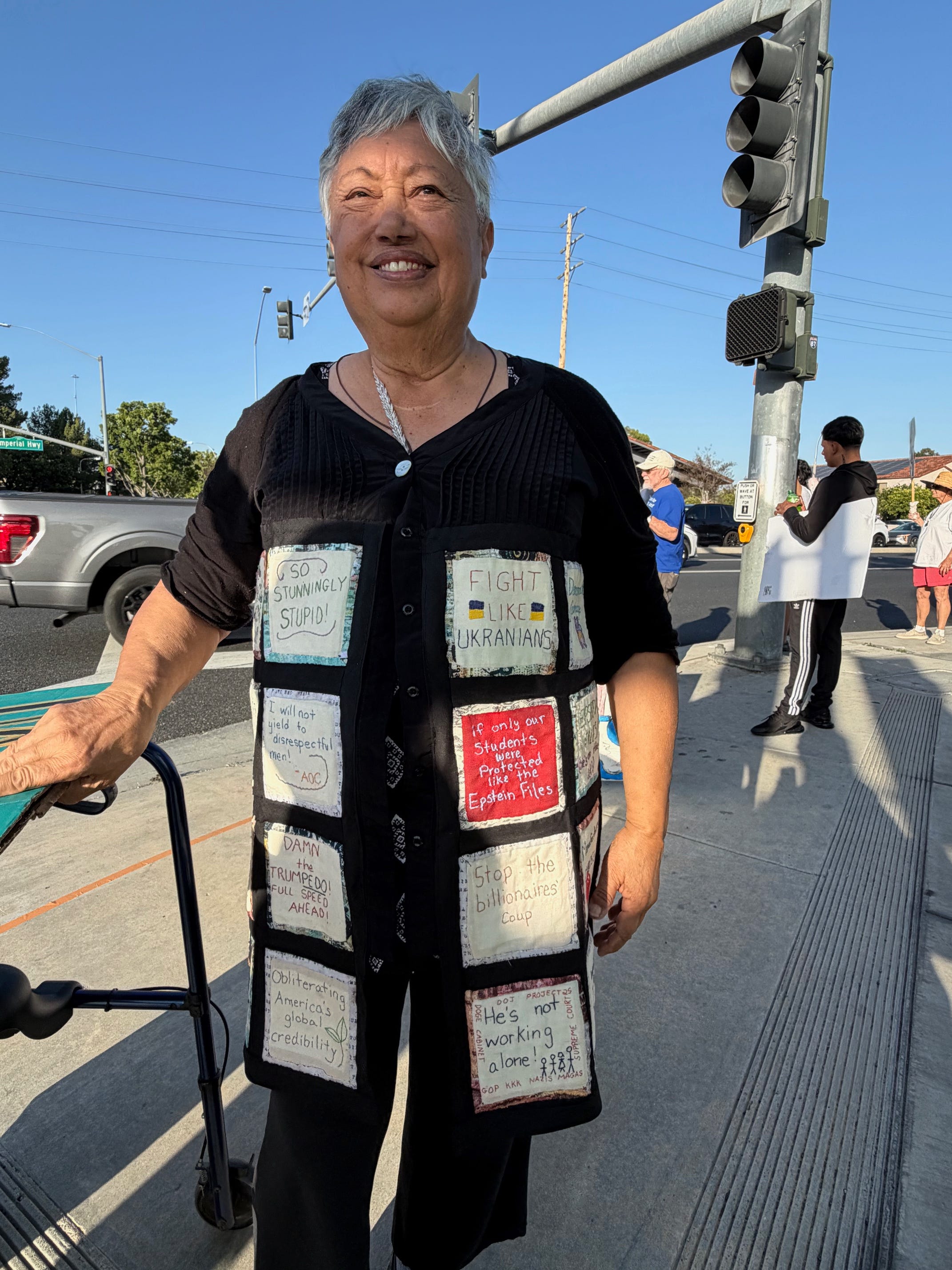
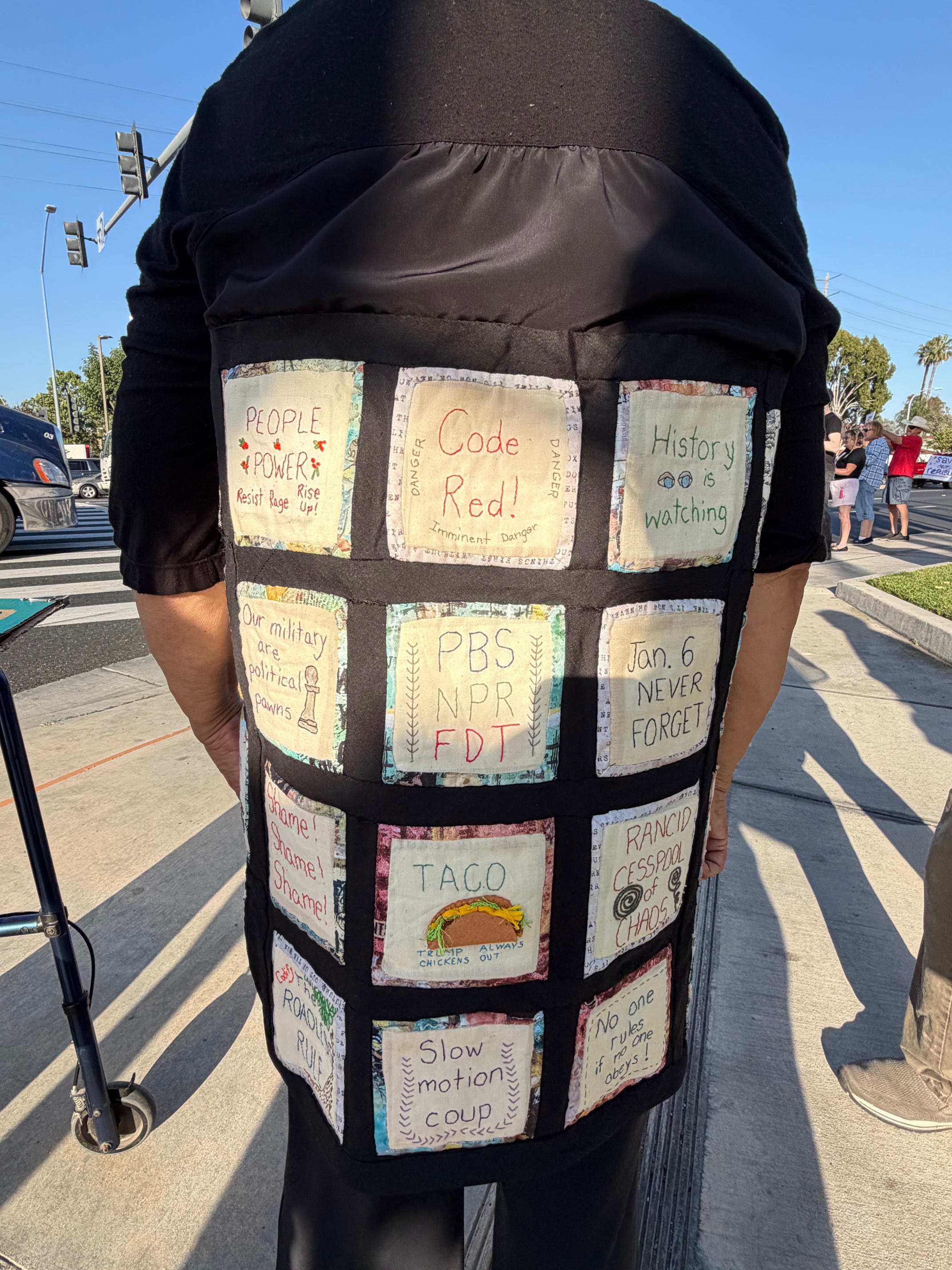
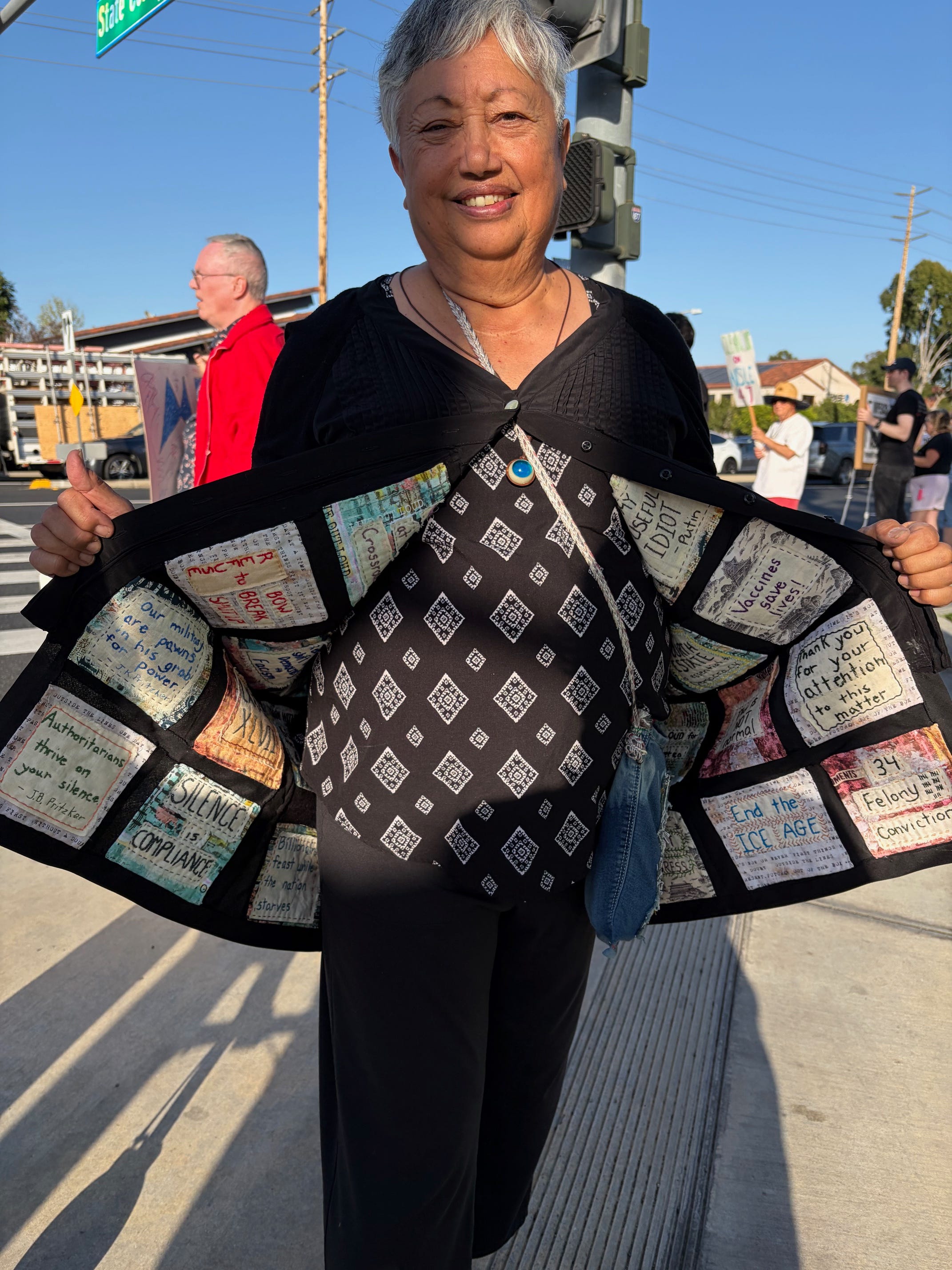
Greatest protest shirt ever. Took her 6 months to make this with handmade squares, each making a statement.
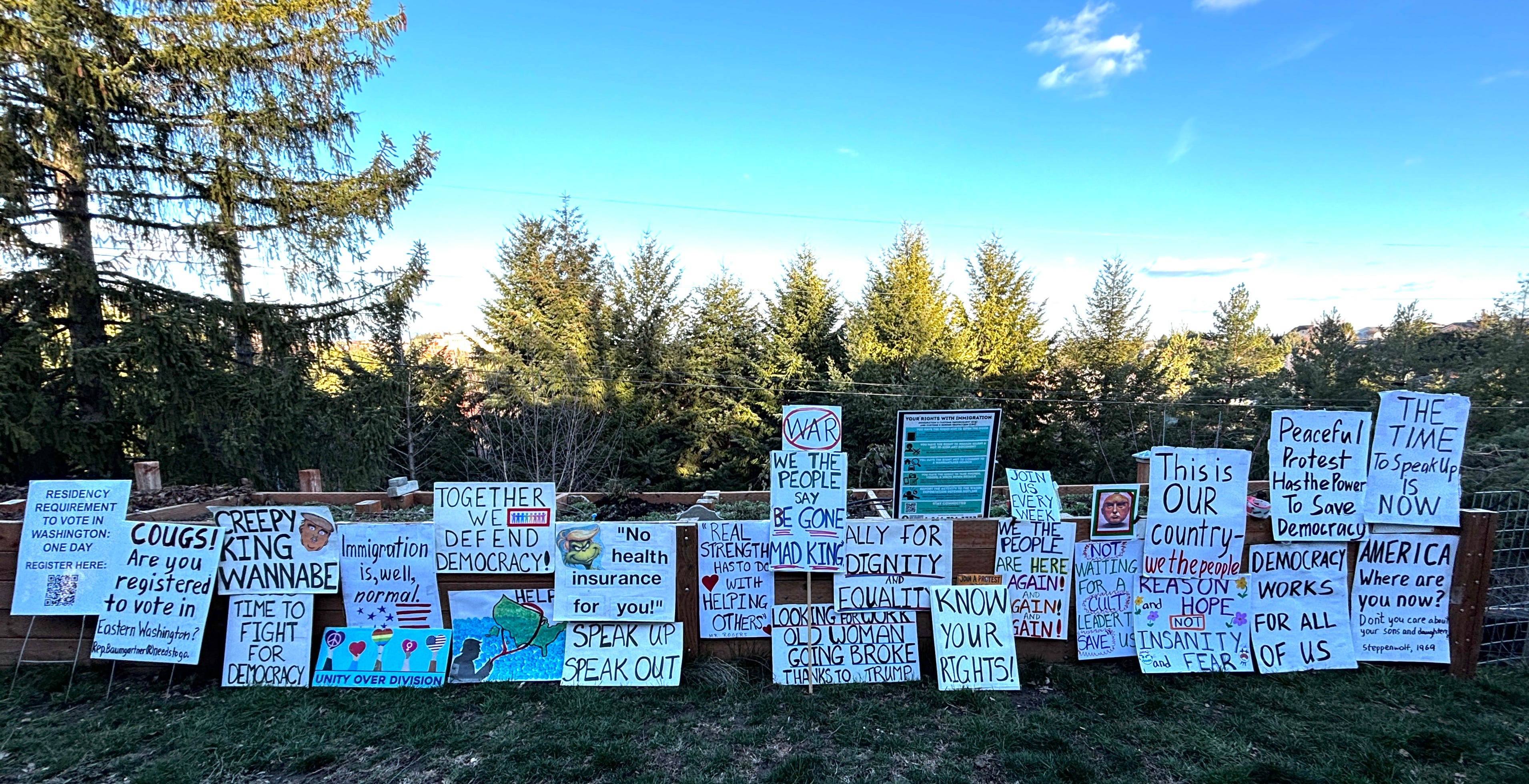
My husband and I lined up some of the signs that we have made in the last 12 months. We are in Pullman, WA. Elizabeth W.
From Today’s Edition Newsletter via this RSS feed
You must log in or # to comment.