

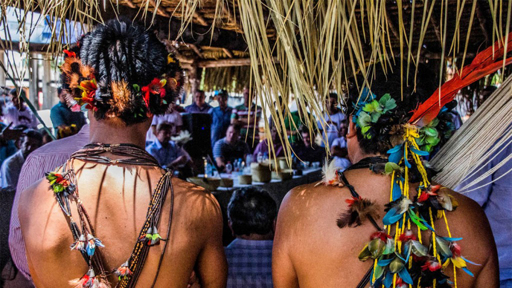
On Feb. 3, at the request of an association of the Indigenous Cinta Larga people in the Amazon, the Brazilian Supreme Court authorized the possibility of mining exploration and exploitation inside an Indigenous territory for the first time. While the decision does not automatically authorize mining in the Cinta Larga Indigenous territory, it has set a deadline for Congress to regulate mining in all Indigenous lands, and has established provisional rules in case mining is approved. The absence of such mining laws has meant that many Cinta Larga people have been unable to benefit economically from mining within their Indigenous territory in southwestern Brazilian Amazon, where some of the world’s largest diamond deposits are thought to exist and are being mined illegally. Unregulated illegal mining has caused river contamination, deforestation, violent conflicts and social problems in some communities. The court decision also framed lack of regulation as an Indigenous autonomy issue. If approved, this will allow Indigenous peoples to mine in their territories, as well as any company if they receive permission — subject to the usual social and environmental checks. In this case, a portion of the profits must be shared with Indigenous communities for matters of collective interest. “The main motivation was to seek economic autonomy and better living conditions for the community,” Gilmar Cinta Larga, a Cinta Larga leader and coordinator of the Patjamaaj Association, which is one of several associations that act as a representative body for the Cinta Larga people, told Mongabay via WhatsApp. “The…This article was originally published on Mongabay
From Conservation news via this RSS feed
You must log in or # to comment.