

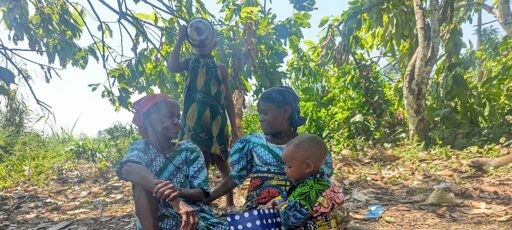
NORTH KIVU, Democratic Republic of Congo — Over the last decade, towns in the north of North Kivu province in eastern Democratic Republic of Congo have seen the increasing migration of Indigenous Batwa people, according to censuses seen by Mongabay. Traditionally living by hunting and gathering in the Congo Basin forests, many Twa people (also known as Batwa) have now abandoned their forest-based livelihoods to settle in towns, far from ecosystems their ancestors relied on and developed deep knowledge about. According to Batwa people who spoke to Mongabay, the reasons are various. Some have long been expelled from protected areas, while others are fleeing the growing insecurity in the region. Other groups of Batwa are seeking to escape land conflicts with neighboring Bantu communities, or to find alternative livelihoods in the face of difficulties accessing forest resources, thus severing their ties with the forest. Filipo Anania, one of the Twa community leaders we met in Mavivi, at the Ngite camp, says the outmigration from the forest began with the expulsion of his community from Virunga National Park around 1994. He says they hadn’t initially planned to live in the city and that this move to an urban environment was by no means a conscious choice, but a decision linked to a series of events that forced them to relocate several times. “At first, we were asked to leave the area around the park. We went to settle in Kubeti, near PK25 [in the middle of the forest in outside the…This article was originally published on Mongabay
From Conservation news via this RSS feed
You must log in or # to comment.