

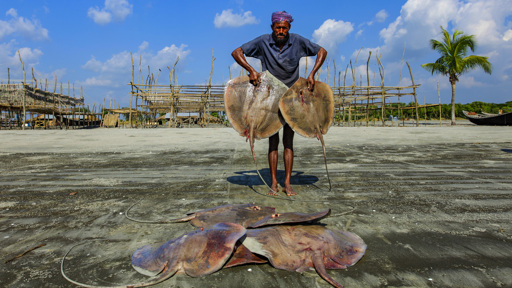
Though seafood is a prevalent protein source in Bangladesh, some fishes, like stingrays and sharks, never appealed to most of the population here, barring a few coastal Indigenous groups. However, the illegal fishing of such species has become common in the country in recent years. In a recent incident on Feb. 21, authorities detained 22 fishers and confiscated around 400 kilograms (880 pounds) of stingray from the coasts of Sundarbans mangroves. Conservationists and experts working in fishery sectors blame poor law enforcement, lack of awareness among fishers, rising illegal demands and poverty of the fishing community as some of the reasons behind the exploitation of such protected marine species in Bangladesh. Data from WCS Bangladesh’s research shows the country’s waters are home to 10 families of sharks and 12 families of rays. Of them, stingrays and whiprays (Dasyatidae family), locally known as shapla pata, are the most common. More than half the shark and ray species found in Bangladesh are threatened with the risk of extinction, according to the research. A 2018 study shows that in Bangladesh stingrays are mainly harvested by artisanal fishers using gillnets, set bag nets (a low-cost, artisanal commercial method in coastal and estuarine waters) and longline hooks between depths of 5 meters (16 feet) and 40 m (130 ft) by the seashore and in coastal rivers in coastal districts like Noakhali, Bhola, Patuakhali, Khulna and Bagerhat. Fishers collect their catch of stingrays together. Image by Muhammad Mostafigur Rahman. Stingrays have become popular among the poorer…This article was originally published on Mongabay
From Conservation news via this RSS feed