


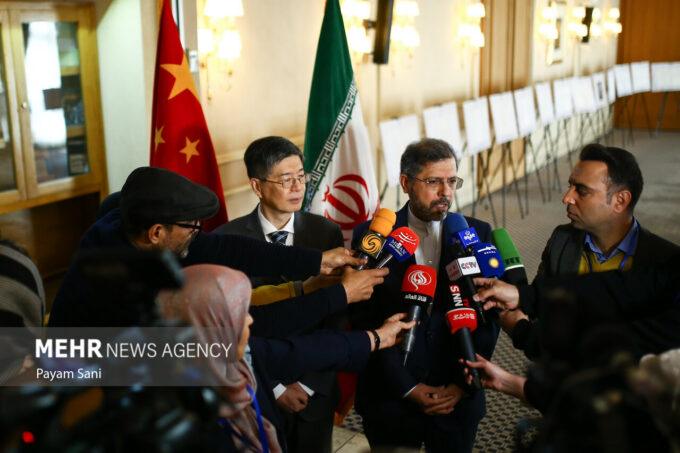
Photograph Source: Payam Sani – CC BY 4.0
China’s energy security may be put to its first true test in 2026 with the seizure of Venezuelan leader Nicolás Maduro in January and joint U.S.-Israeli military action against Iran beginning in late February. These events have disrupted two sources of China’s oil supply. Coupled with damage to energy infrastructure across parts of the Middle East as the conflict unfolds, oil prices jumped to more than $100 a barrel when markets opened on March 9 before falling back, but are still up from roughly $60 at the start of the year.
Despite U.S. President Donald Trump’s claims that the war will be over soon, the crisis shows little sign of abating. Strikes have hit Iranian oil facilities, as well as those of the Gulf States allied with the U.S., and tanker traffic through the vital Strait of Hormuz—a critical artery in the global oil supply chain—has been reduced. About a fifth of the world’s oil trade normally passes through the strait, and its current vulnerability is worrying for many countries, with some already having introduced emergency measures in response to the energy crunch.
This is especially the case for China, the world’s largest energy consumer, which accounted for 27 percent of energy consumption in 2024. With more than 1.4 billion people spread across a vast territory and a technologically advanced, expanding economy, China requires immense quantities of energy to sustain itself. Its electricity usage was more than double that of the United States in 2025. Iran, meanwhile, accounts for 13 percent of China’s crude oil imports, with Venezuela supplying another 4 percent, and global price volatility will complicate long-term planning for Beijing.
China maintains strategic oil reserves that provide it with some breathing room in moments of crisis, with estimates suggesting it has roughly 120 days of oil storage available. This slightly trails the U.S. Strategic Petroleum Reserve, created in the 1970s following the Arab oil embargo. American reserves have fallen back to where they were during the 1980s, after being tapped during the 2022 energy crisis, with slow replenishment since. Meanwhile, “to address the acute disruption in oil trade caused by the war,” the International Energy Agency member nations on March 11 decided to release stockpiled oil.
The U.S. is widely considered to have achieved “energy independence” by 2019, largely thanks to the shale revolution. Advances in hydraulic fracturing and horizontal drilling dramatically increased domestic oil and natural gas production, turning the country into one of the world’s largest producers and a net exporter of oil and gas. Even so, the U.S. energy system remains interconnected with global markets. Canadian crude and Russian nuclear fuel imports show that true energy independence is rare for modern economies.
Nonetheless, China’s vulnerability lies in the scale of its external dependence. The country imports roughly 70 percent of its oil, for example, with much of it transported by sea. And unlike the U.S., China lacks the global military reach to fully secure its supply routes. “Ninety percent of Chinese trade travels by sea, as do 80 percent of Chinese oil imports,” according to Georgetown Journal of International Affairs.
This concern over securing the important “sea lines of communication” is often associated with the “Malacca Dilemma.” Chinese strategists frequently warn that major maritime chokepoints such as the Strait of Malacca, the Strait of Hormuz, and the Suez and Panama canals have a large share of China’s imported oil and liquefied natural gas (LNG) flowing through, with around 60–80 percent of them passing through the Strait of Malacca alone. An extended closure of one or more of these chokepoints would have a profound impact on China’s energy supply and economic stability.
The ongoing threat to the Strait of Hormuz serves as the latest disruption. Qatar’s shutdown of several gas facilities has knocked out 20 percent of the world’s LNG exports. China is the world’s largest LNG importer, with about a quarter of its LNG supply coming from Qatar in 2025.
Fortunately for Beijing, it has an alternative supplier largely insulated from maritime disruption or U.S. military pressure. Russia’s vast land border with China, along with the energy infrastructure connecting the two countries, has provided Beijing with a secure energy source throughout the 21st century. Moscow has also become increasingly dependent on Chinese markets following Western sanctions related to the war in Ukraine, leaving it in a weaker bargaining position during energy negotiations.
Rising energy prices amid growing geopolitical pressure, however, may push China to treat Moscow as a more equal partner. Projects such as the Power of Siberia 2 gas pipeline, which would carry oil from Russia’s Yamal Peninsula to northern China, are reportedly receiving renewed attention, alongside general increases in oil and other Russian energy imports.
Additionally, China’s population has been declining since 2022, but is likely lower than official figures suggest. This demographic trend is expected to help reduce energy demand over the next decade and bring down peak oil consumption sometime before 2030.
For decades, China has also been able to rely on domestically produced coal to meet its massive energy demand. Roughly 60 percent of China’s energy consumption and electricity generation comes from coal, and while environmentally costly, China’s coal reserves have provided it with an important source of energy security.
China’s situation has seen some improvement in recent years thanks to massive investments in renewable energy. Beijing’s green energy expansion over the last 15 years, in particular, is continuing to reshape its power system, and it now manufactures “60 percent of the wind turbines and 80 percent of the solar panels installed globally,” according to the Yale School of the Environment.
[Content truncated due to length…]
From CounterPunch.org via this RSS feed
You must log in or # to comment.
Oh please. As if they thought that far ahead.