

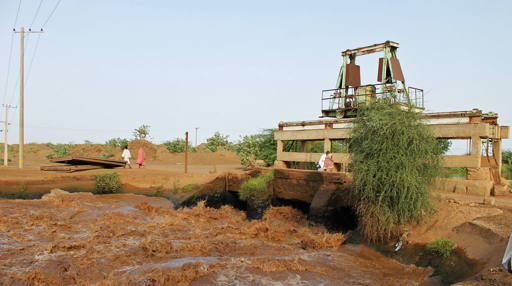
In happier times, Mohamed Ahmed grows sorghum, lentils and beans on three feddans of land in Gezira state. But for more than a year, no irrigation water has reached the 1.2 hectares (3 acres) he cultivates in the Managil section of Sudan’s vast Gezira irrigation scheme. He spends his time clearing weeds, repairing field boundaries and preparing the soil in case water returns. The canals have been dry since May 2024. “I waited for the water as I always did,” the 38-year-old tells Mongabay by phone, “but nothing came. Two full seasons were lost. I even considered leaving farming and searching for work abroad.” Ahmed is one of as many as 4,000 farmers in the Managil section who face ruin. The Gezira Scheme spans nearly 890,000 hectares (2.2 million acres), pumping water from the Nile to farmers through a network of canals fed by the century-old Sennar Dam. According to irrigation engineer Abdullah Al-Haj, until 2005, the project’s administrators regulated water levels and flow and coordinated maintenance of the of the main pumps and canals. View of the Gezira Irrigation Scheme from space. Image by NASA Johnson via Flickr (CC BY-ND 2.0). However, in 2005, operation of the irrigation scheme was partially privatized. New legislation — and a 2014 amendment — emphasized administrative and financial independence, granting farmers freedom to choose which crops to grow and requiring them to establish water user associations. Legally, the associations have the authority to manage and maintain sections of the Gezira Scheme, but in…This article was originally published on Mongabay
From Conservation news via this RSS feed
You must log in or # to comment.