

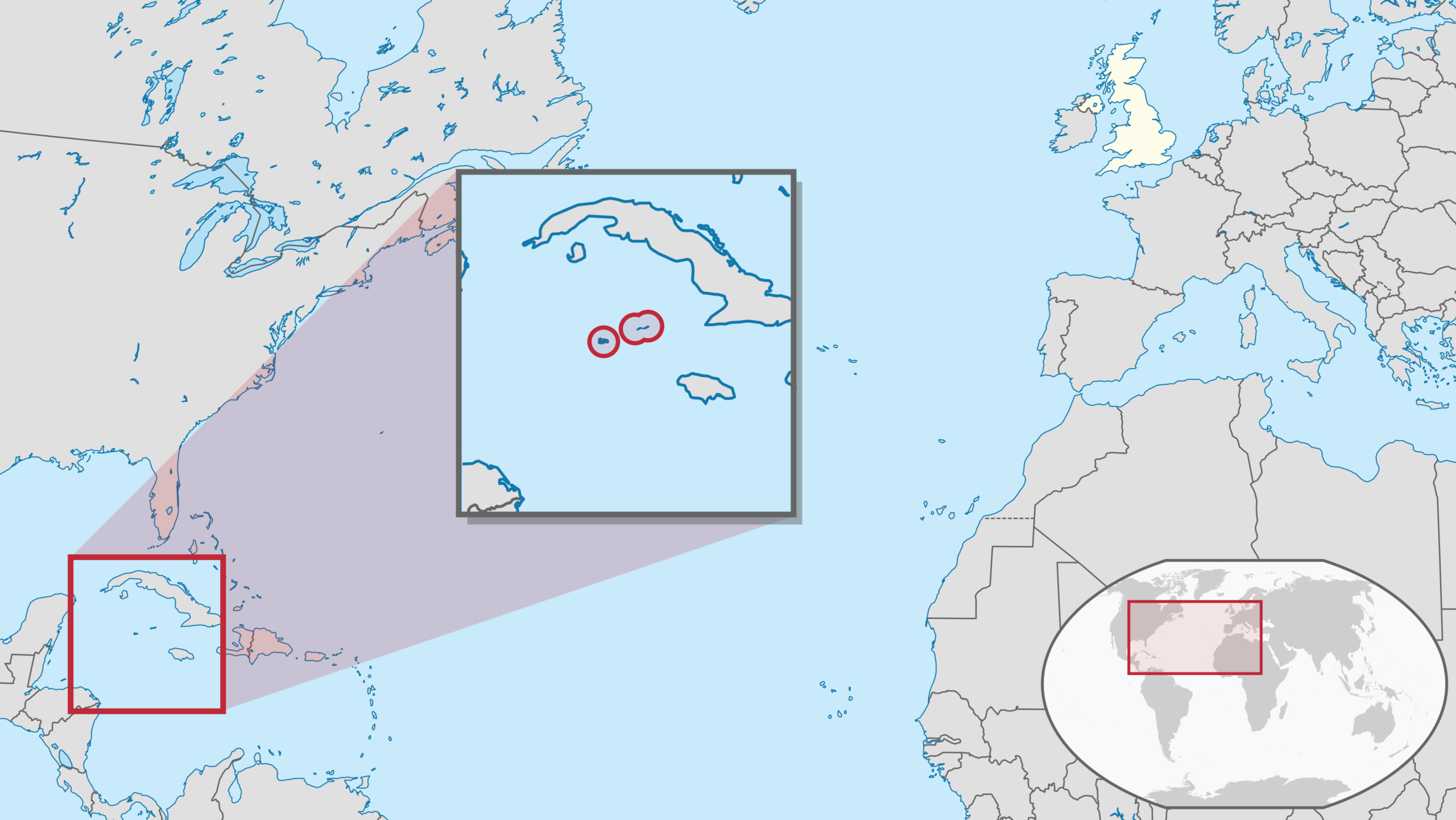
Image Source: TUBS – CC BY-SA 3.0
China, which was the largest holder of U.S. government debt as recently as 2019, has cut its holdings to the lowest level since 2008, driven by changing trade patterns, geopolitical concerns, and domestic economic pressures.
The Cayman Islands has emerged as an unlikely place to fill the gap. This small British overseas territory held $427 billion in U.S. Treasuries as of November 2025, making it the sixth-largest foreign holder. But a 2025 Federal Reserve analysis revealed that the total figure was actually closer to $1.4 trillion by the end of 2024—with some estimates reaching as high as $1.85 trillion—after nearly 40 percent of new treasury notes and bonds were purchased in the Cayman Islands after 2022.
While these figures suggest that the territory is the largest foreign holder of U.S. debt, the main buyers are not Caymanians or the government, but hedge funds. After the territory passed its Mutual Funds Law in 1993 amid the 1990s hedge fund boom, these vehicles began incorporating in large numbers, drawn by flexible regulation and low taxes. The Cayman Islands today is home to roughly three-quarters of the world’s offshore hedge funds.
Many have used so-called “basis trades,” borrowing heavily to profit from small price gaps between U.S. Treasury bonds and their future equivalents. The strategy has grown so large and opaque that it has triggered a Federal Reserve investigation.
Emergence and Evolution of a Financial Hub
The Cayman Islands has played a major role in global finance since the 1960s, operating as a center for tax evasion and asset parking. Mostly European banks trading in dollars outside the U.S., nicknamed Eurodollars, could lend these dollars beyond the reach of American regulations and capital controls. As the market grew, the Cayman Islands became a central place to store and use these Eurodollars.
Local Cayman lawmakers also passed financial laws to attract international businesses in the 1960s, including having no direct taxes on individuals, corporate profits, or capital gains, which helped cement the islands’ role as an offshore financial center. The legal system, based on English common law, offered clear rules, modern legislation, and independent courts. Packaged into a simple, finance-focused framework, it gave investors confidence and turned the territory into a quiet financial powerhouse.
Despite the Cayman Islands’ own elected government led by a premier, key powers remain with the United Kingdom. Final appeals in major cases are heard in London, while a governor appointed by the British monarch, on the advice of the British government, oversees internal security and coordinates foreign affairs with London. In theory, Britain can also intervene in the territory’s governance, providing a level of political stability valued by outside investors.
The Cayman Islands’ success has come from a “collaborative policymaking process that involved local leaders, expatriate professionals, and British officials,” according to a working paper by the University of Alabama, along with embracing financial trends. Home to more than 120,000 companies as of 2025, including thousands registered at the five-story Ugland House, hedge funds are just one of several recent financial booms. The parent company of Theleme Partners LLP, a hedge fund linked to former UK Prime Minister Rishi Sunak, “lists the notorious Ugland House as its address. The small office is the registered home to approximately 40,000 entities,” stated the Good Law Project.
In 2022, the bankruptcy of cryptocurrency exchange FTX exposed billions in missing customer funds and became one of the largest financial frauds of the decade. Court filings showed that more than a fifth of its registered customer accounts were from the Cayman Islands—greater than any other jurisdiction—highlighting how easily new and risky ventures could be structured.
The territory also plays a central role in shadow banking. After banks pulled back from lending following the 2008 financial crisis, non-bank loans and financing surged, and many such funds have been domiciled in the Cayman Islands, such as Blackstone’s iCapital Offshore Access Fund SPC.
The Cayman Islands were also central to the 2020–2021 boom in special purpose acquisition companies (SPACs), which raised capital through IPOs to merge with private firms and take them public. Of the more than $100 billion raised in 2021, half of the SPACs were Cayman-incorporated. Rising interest rates and increased regulatory scrutiny slowed the expansion, but SPAC activity in Cayman has seen a resurgence since 2024.
It also sits at the center of China–U.S. capital markets. Because Chinese law restricts foreign ownership in certain industries, many Chinese firms list abroad via Cayman holding companies using variable interest entity (VIE) structures. This includes giant Chinese e-commerce company Alibaba, whose ultimate parent company is incorporated in the Cayman Islands.
The scale is remarkable, with Cayman-registered investment funds holding more than $8 trillion in assets by the end of 2023, in a territory with a population of less than 80,000 people.
London and Other Jurisdictions
The Cayman Islands are part of a wider network of British-linked financial jurisdictions. According to Global Financial Integrity, “The UK’s offshore tax havens are estimated to facilitate nearly 40 percent of the tax revenue losses suffered annually by countries around the world.”
[Content truncated due to length…]
From CounterPunch.org via this RSS feed