

Trump’s second term is a massive grift. We are the marks. We must stop the con in the only way that seems to work: Citizens in the streets, raising their voices to “petition the Government for redress of grievances.”
The defining characteristic of the Trump administration is corruption. But Trump’s corruption reached new heights on Monday. Trump caused a $3 trillion swing in the capitalization of the US securities markets with a claim that the US had made “very good and productive conversations regarding a complete and total resolution of our hostilities in the Middle East,” a claim that Iran categorically rejected 27 minutes later.
Indeed, the market manipulation was so blatant that Iranian officials condemned it. See Common Dreams, Top Iranian Lawmaker Accuses Trump of Trying to ‘Manipulate’ Markets With Claims of Talks. And yet, insiders with advance knowledge of Trump’s surprise claim profited tens of millions by executing exquisitely timed trades that monetized their insider knowledge. It is good to be king—or someone with a direct line to the king’s war plans.
In a less obvious but no less nefarious example of corruption, Trump is deliberately extending the security-line chaos at airports by holding TSA funding hostage to the passage of the SAVE Act. He has declared that he will sign no legislation, including TSA funding, until the SAVE Act is passed and sent to his desk for signature.
By intentionally extending the unfunded operations of TSA, Trump has effectively taken US air travelers hostage for his voter suppression bill, the SAVE Act. See Emine Yücel, Josh Kovensky, and John Light in Talking Points Memo, Trump Takes the TSA Hostage in Gambit to Pass the SAVE Act.
It’s like springtime for corruption; it is popping up everywhere you look.
But it is no laughing matter. Trump has effectively converted his second term into a massive grift. See Mediaite, Trump Pocketed ‘At Least $1.4 Billion’ in the Past Year — Shocking NY Times Editorial Reveals.
Until February 28, 2026, he was stealing the hard-earned dollars and trust of the American people. But with the launch of his illegal war against Iran, Trump began using the lives of US soldiers as chits in his effort to enrich the Trump Organization, the Trump family, and his friends. We have lost 13 US soldiers; hundreds more have suffered injuries, including traumatic brain injury. Meanwhile, someone pocketed tens of millions of dollars by trading minutes ahead of Trump’s apparently false—or at least grossly exaggerated—announcement of progress toward peace.
Monday’s insider trading on Trump’s illegal war on Iran is not the first instance of Trump making suspiciously timed announcements that allow insiders to place bets on crypto gambling platforms and to sell options on oil, arms manufacturers, and gasoline. See CNN, Analysis: Trump’s suspiciously market-timed announcements on Iran.
Peace negotiations or cessation of hostilities against Iran cannot happen soon enough. There may be some truth in Trump’s social media posts about back-channel contacts between the US and Iran. If peace talks proceed, that is a positive development for the people of the US, Iran, and the world. But it is reprehensible that the US president views the peace process as a means of becoming richer.
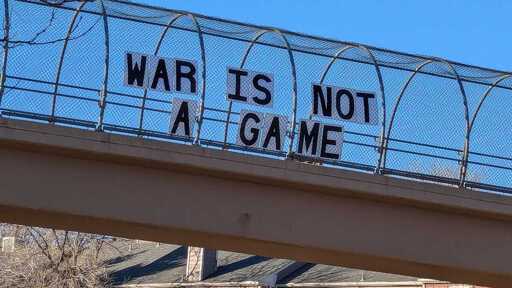
War is not a game. The long delays travelers endure in needless lines caused by Trump’s desire to pass the SAVE Act are not a game. But Trump sees everything and everyone as a profit opportunity for him—regardless of the pain and suffering to those who bear the cost.
When we take to the streets on No Kings Day 3.0, many issues should motivate us. Trump’s corruption in everything he touches should be a significant part of the message.
The complicated state of play on DHS funding and the SAVE Act
The Hill published an article late Monday evening suggesting that Trump was open to a way around the impasse over DHS funding. The deal is complicated and subject to misinterpretation, so I will take a moment to explain what I believe is happening. First, see The Hill, Senate GOP says DHS deal in sight after Trump signals he can back compromise with Democrats.
I will let you read the article, but here is the proposed path forward:
Step one: Democrats and Republicans agree on a bill to fund DHS except for “Enforcement and Removal Operations,” i.e., ICE and Border Patrol. So far, so good. In this part of the deal, Democrats must provide enough votes to overcome the filibuster.
Step two: Republicans will then introduce a reconciliation bill that is limited to budgetary matters. Reconciliation bills are not subject to the filibuster because they relate only to the budget. Republicans will pass a funding bill for ICE and Border Patrol without Democratic votes—something they could have always done.
Step 3: Here’s the tricky part: Republicans are already suggesting that they will insert into the reconciliation bill (from Step 2) some provisions of the SAVE Act, which imposes various voter suppression measures. Republicans hope this will allow them to enact the SAVE Act in a bill not subject to the filibuster.
Before you panic, Step 3 won’t work. Republicans attempted to cram all sorts of non-budgetary items into the last reconciliation bill (the One Big Beautiful Bill Act, July 2025), but the Senate Parliamentarian ruled that those non-budgetary items must be removed from the bill or the bill would be subject to the filibuster. See NLIHC, “Senate Parliamentarian Orders Removal of CFPB Provisions from Reconciliation Bill” (July 14, 2025). (This article explains how the Senate parliamentarian enforces the restrictions on reconciliation bills.)
The outcome of this “deal” is that Democrats vote against funding for ICE and Border Patrol, and Republicans then say they funded the remaining portions of ICE and Border Patrol budgets through a reconciliation bill on a party-line vote not subject to the filibuster. Whew! Got that?
But . . . here is the double-tricky part: the reconciliation bill doesn’t actually appropriate money. There will need to be a follow-on appropriations bill, which will be subject to the filibuster! 1
In short, this entire complicated mechanism appears to be a PR stunt to defer the fight over appropriations for ICE and Border Patrol to some later, unspecified point. In the meantime, Republicans and Trump can crow that they passed a bill that plans to appropriate money in the future to ICE and Border Patrol, but which does not actually do so. That must be accomplished through an appropriations bill, which is subject to the filibuster.
I suspect that Trump’s handlers hope this scheme is too complicated for him to understand, and, in the meantime, TSA will be funded.
Is the Supreme Court’s reactionary majority poised to limit the receipt of mail ballots to Election Day or before?
The Supreme Court heard oral argument today on a Trump claim that mail ballots must be received on or before Election Day to be counted. I saw several reports that suggested the reactionary majority would adopt Trump’s theory, thereby disenfranchising hundreds of thousands of voters whose ballots arrived after Election Day, but within a “grace period.”
But Ian Millhiser’s analysis in Vox suggests that a 5-4 majority will uphold Mississippi’s mail ballot provision, which allows a five-day post-election grace period for ballots postmarked on Election Day. See Ian Millhiser, The Supreme Court seems alarmingly willing to trash 1000s of ballots, in Watson v. RNC | At least four justices appear to be on board with a frivolous lawsuit attacking voting by mail.
Despite the headline to Millhiser’s article, here is his conclusion:
[B]oth Chief Justice John Roberts and Justice Amy Coney Barrett seemed skeptical of the Republican Party’s arguments. So the most likely outcome in Watson is a 5-4 decision rejecting this attempt to trash lawfully cast ballots. But it is unnerving that any judge, whether Democratic or Republican, would take the GOP’s cockamamie legal arguments seriously.
As Millhiser notes, mail ballots have been accepted after election day since 1854. The ballots of Union Soldiers in the field during the Civil War were delivered to their commanders on Election Day, who then arranged for them to be delivered to voting officials after Election Day.
In short, the Republican theory is that a practice that has been in widespread use for more than a century was suddenly discovered to be unconstitutional after Trump said he didn’t like mail ballots.
Millhiser writes,
If the United States had a nonpartisan judiciary, [the case] would have been laughed out of court months ago. The premise of the Republican Party’s lawsuit in Watson is that, beginning in 1845, Congress banned states from counting many absentee ballots — and somehow no one noticed this for the better part of two centuries.
We won’t know where the Court will land until it releases its opinion, but Millhiser is a reliable Court observer. I trust his judgment. We have plenty of potential problems to worry about in the meantime—problems with contingent outcomes that can be affected by our efforts. Let’s focus on those!
Does Substack have a bad-news echo-chamber problem?
Last week, I recommended an article by Micah Sifry that analyzed whether protests have had an impact during Trump’s second term. Sifry’s analysis concluded that they do—something that seems to align with reality.
Sifry has tackled another thorny subject that is particular to Substack, i.e., Whether the pro-democracy authors on Substack are recognizing the impact of the grassroots resistance movement and its leaders. See Micah Sifry, The Bad News Echo-Chamber of Pro-Democracy Substack
Sifry selected ten leading pro-democracy authors on Substack and analyzed how frequently they mentioned resistance protests such as No Kings Day. (In case you are wondering, I was not among the ten authors selected by Sifry.)
Sifry concludes that most of the authors—7 of 10—did not mention or promote resistance protests or their leaders prominently in their Substacks. Accordingly, many of the authors spent significant time speaking about “the bad news” of the day and the partisan political response—without acknowledging the massive, ongoing protests by grassroots activists and everyday citizens.
According to Sifry, the failure to acknowledge and promote grassroots resistance by the leading Substack authors is compounded by the fact that those authors tend to promote and interview one another—the so-called “Network Effect.” As a result (my gloss), you could devote a lot of time reading pro-democracy Substack authors and come away feeling depressed and panicked.
Sifry acknowledges that there are some exceptions to the general rule—Robert Hubbell of Today’s Edition, Jessica Craven of Chop Wood Carry Water, and K. Starling of We the People, Dissent. But those authors—me included—do not have the advantage of the “network effect,” and we suffer the (joyful) burden of promoting resistance efforts every day, which is not always as sexy or exciting as trashing Trump and criticizing the Democratic Party’s response thereto.
Sifry covers a lot of ground, and I suspect much of what he writes will resonate with readers of this newsletter. Substack is fast becoming a “video-based” platform that rewards talk-show formats where popular commentators interview other popular commentators. That bodes ill for writers like me, Jessica Craven, K. Starling, and many others who adopted Substack because it provides the opportunity for long-form, thoughtful commentary.
As I noted several months ago, I am seeing a steady, slow decline in subscriptions as new authors on Substack attract tens of thousands of instant subscribers by producing glitzy, cross-platform content. So, my personal experience resonates with Sifry’s analysis.
But I digress. The point of Sifry’s essay is to urge the top ten authors to break out of the mold of interviewing one another about the bad things that happened today and start talking to the grassroots leaders who are doing something about it.
In Sifry’ swords, the leading pro-democracy authors should open up their high-visibility platforms to people like
Ezra Levin and Leah Greenberg of Indivisible, Doran Schrantz of Faith in Minnesota, Cristina Jimenez of United We Dream, Maurice Mitchell of the Working Families Party, Ian Bassin of Protect Democracy, Lisa Gilbert of Public Citizen, Chris Dols of the Federal Unionists Network, and Alex Winter of #TeslaTakedown somehow don’t get called much by these folks’ bookers. And it’s not like these organizers are press-shy or afraid to go on a live show.
Read Sifry’s analysis; I think it will articulate many of the vague feelings of discontent you have had about Substack over the last year.
One qualification and personal observation: Sifry includes Heather Cox Richardson in his analysis, appropriately so, because she is THE leading Substack author. It is difficult to fit HCR into Sifry’s analysis because she is sui generis, as he acknowledges. She single-handedly created the pro-democracy space on Substack. None of us would be here if it weren’t for her trailblazing efforts. So, in my book, whatever HCR does is constructive because it gives people like me a platform I would not otherwise have. For that, I am grateful to HCR every day.
Concluding Thoughts.
No Kings Day 3.0 is March 28, 2026.
Do you have a plan?
Have you invited a friend?
Check out No Kings.
See you in the streets on Saturday!
Daily Dose of Perspective
IC 443, known as the Jellyfish Nebula, is a supernova remnant located approximately 5,000 light-years from Earth. The stellar explosion that created it occurred somewhere between 3,000 and 30,000 years ago

Pro-democracy protest photos
[Email photos to rbhubbell@gmail.com. Please indicate city and state in body of email.]
Our MondaysWithMarjorie in West Seattle inspire honks, waves, and art! Marjorie is 87 and has been on her corner EVERY DAY since June!

Middletown, CT, every Saturday morning. 90 patriots on March 21st.
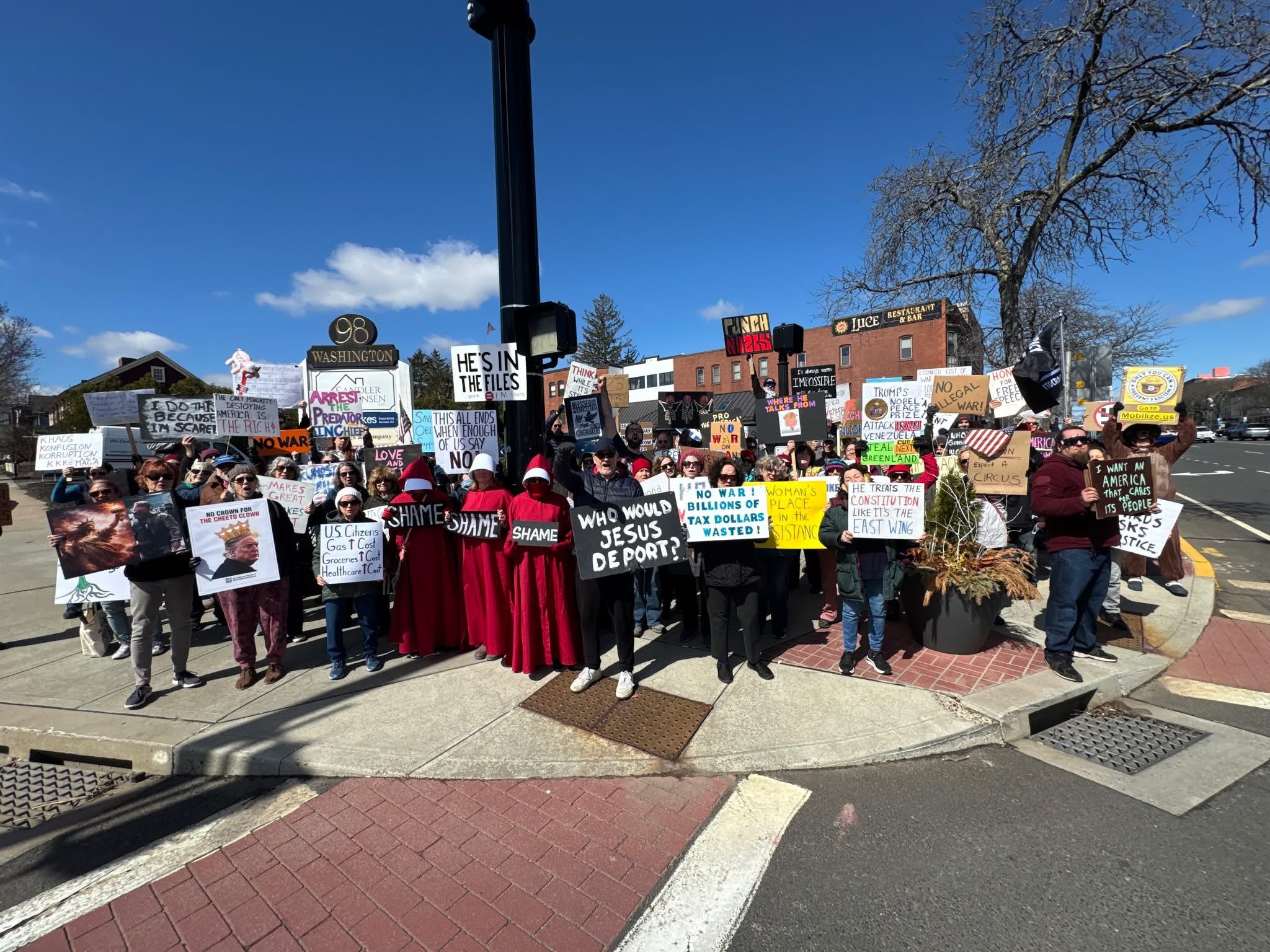
Boulder County, Colorado.
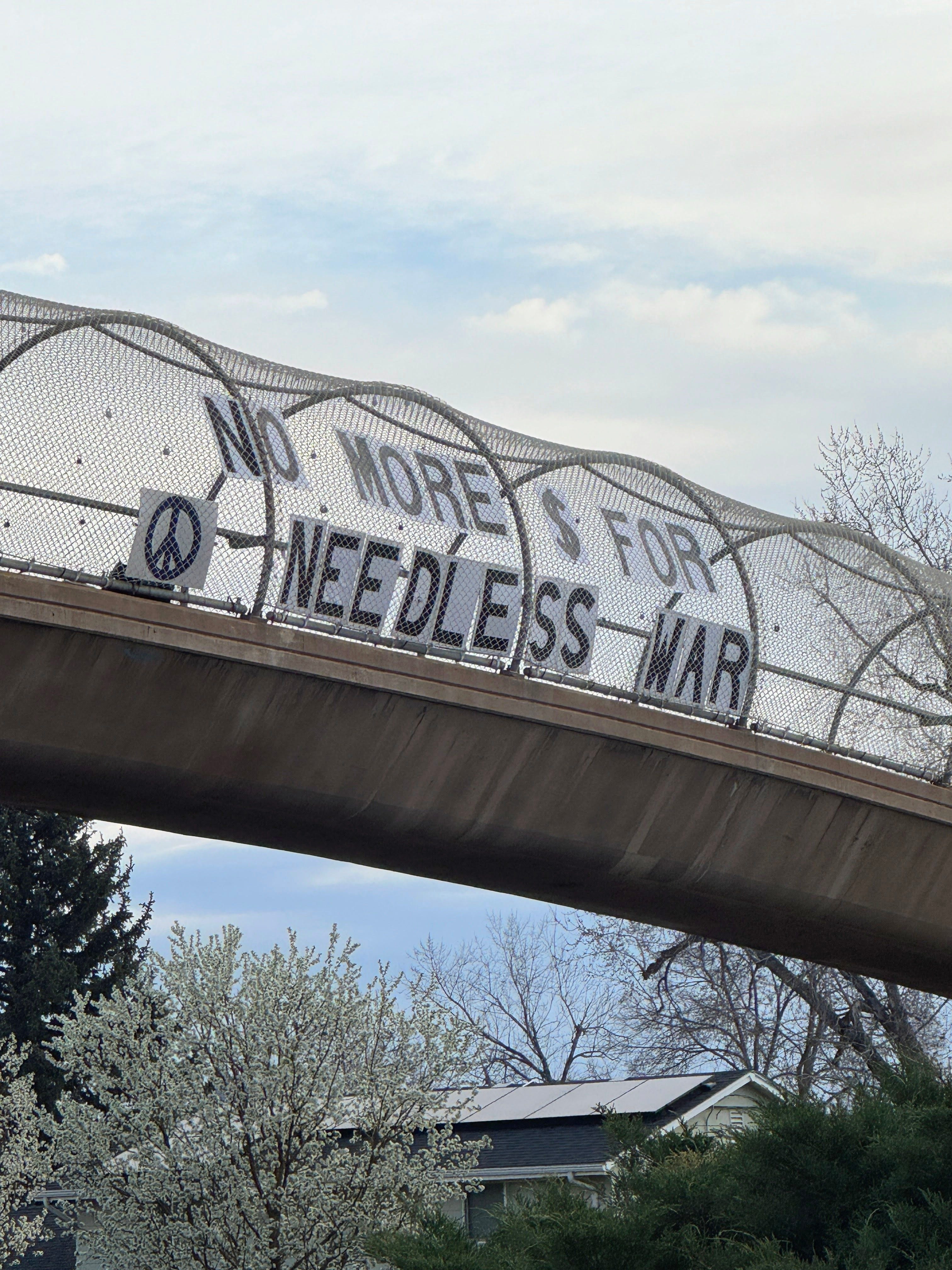
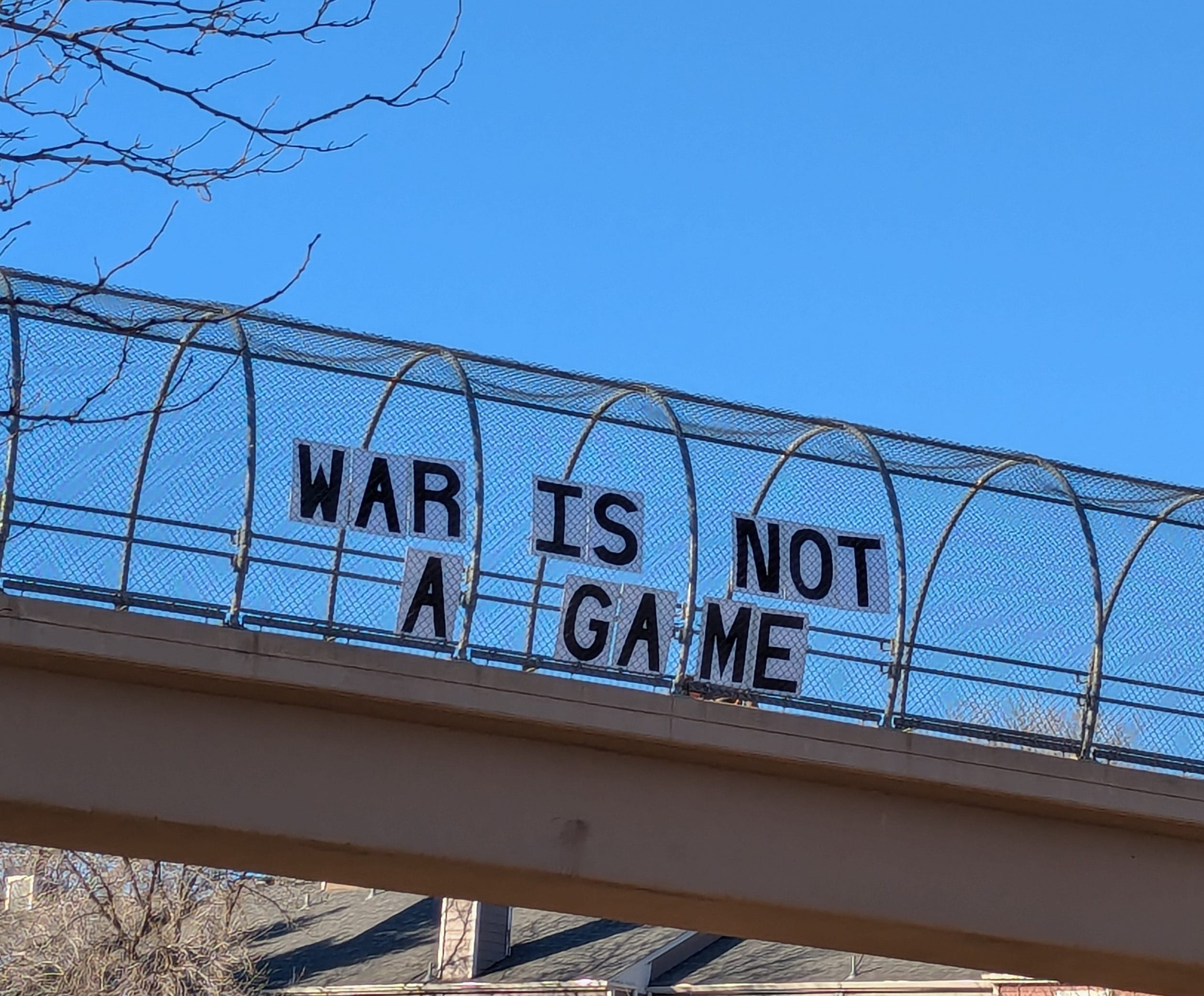
Last Saturday, the crew at Indivisible Charlotte held a “Signs of Fascism” protest in front of the Tesla dealership on Independence Boulevard.

Somewhere in America . . .

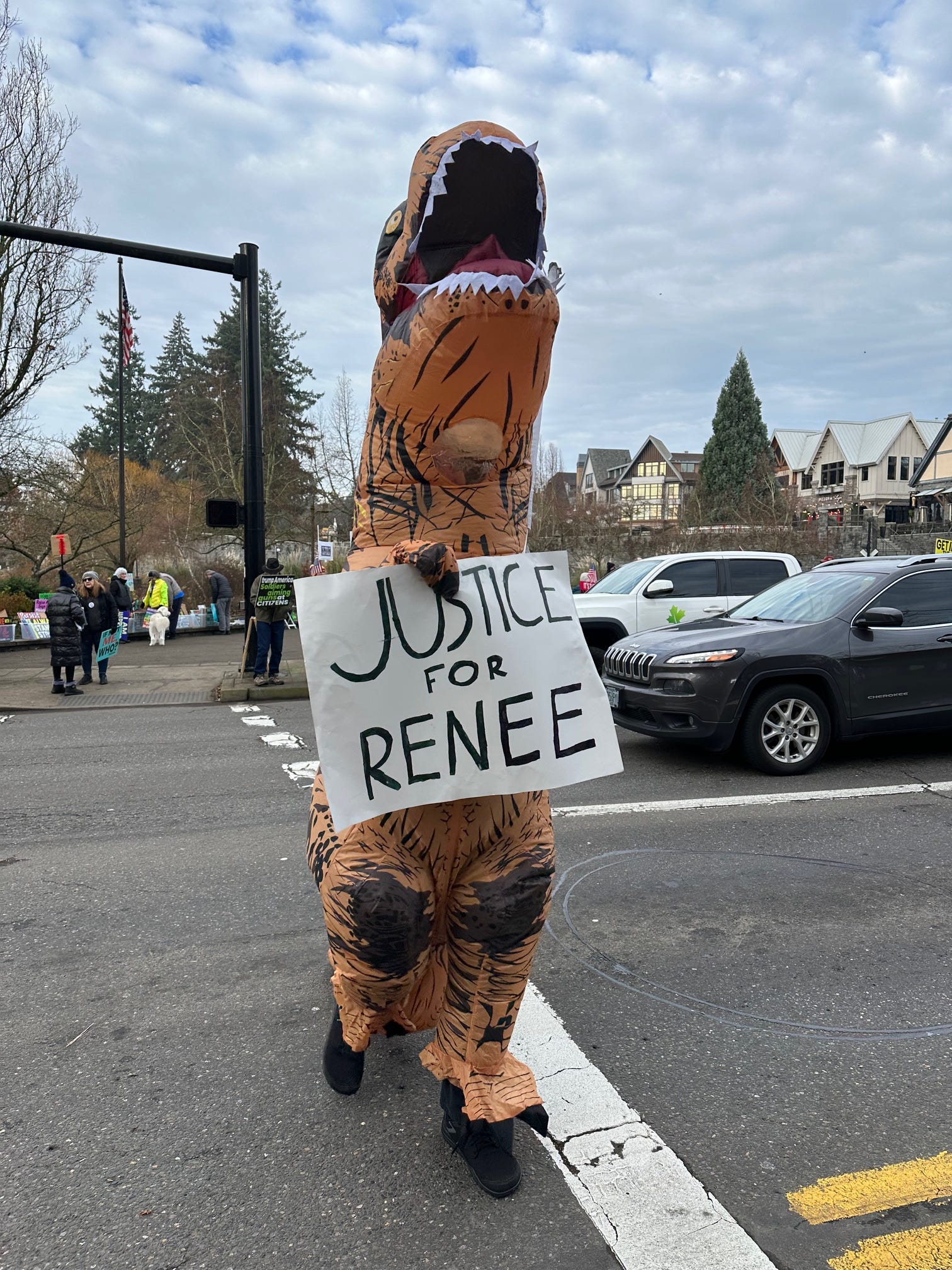
Oakland, CA
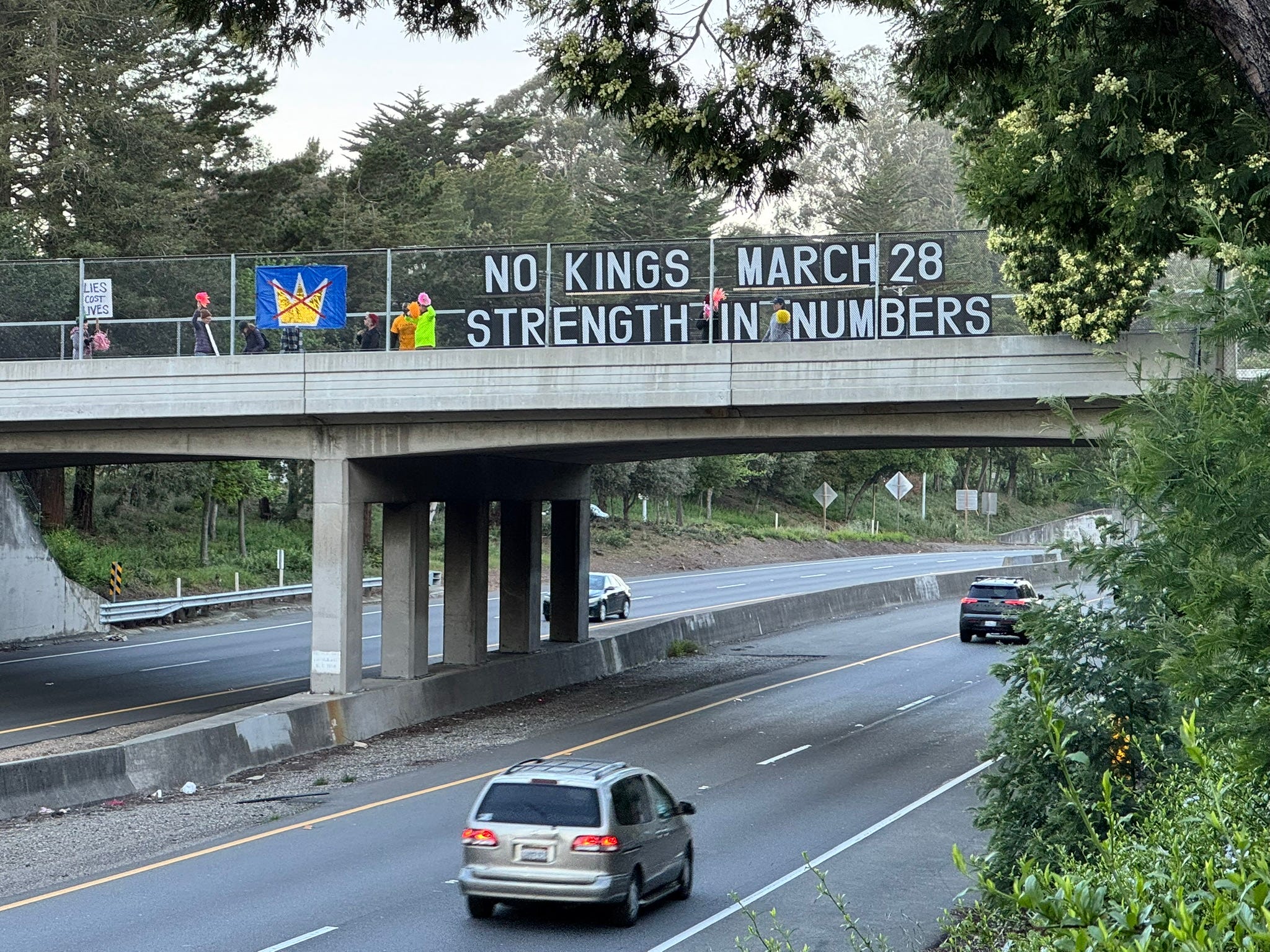

San Gabriel Valley, CA
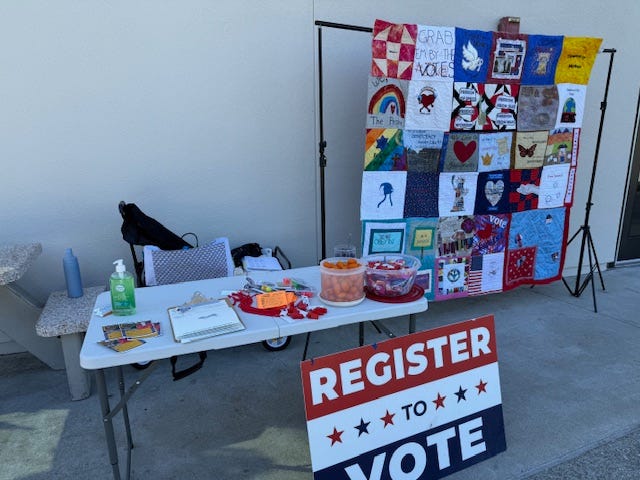
The Quilt for Democracy Project lent Swing Left Inland Valley a panel from their democracy quilt to display at a student voter registration drive.
Note of caution: Mandatory spending doesn’t need a separate appropriations bill (e.g., Medicare). Republicans could argue that ICE and Border Patrol are mandatory spending. I don’t think they will do that because if that artifice works with ICE and Border Patrol, it effectively creates a massive carve-out to the filibuster, which John Thune doesn’t want to do.
From Today’s Edition Newsletter via this RSS feed