

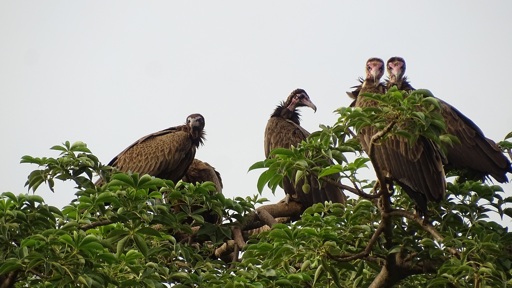
The hooded vulture, a small, scruffy-looking raptor native to sub-Saharan Africa, gets its name from a patch of beige feathers on its head: It appears to be wearing a hood. Unlike other vulture species, hooded vultures (Necrosyrtes monachus) love human hubbub more than forests. They’re often seen around villages, scavenging for meat and garbage near abattoirs and landfills. “They’ve always been close to people … they’re kind of like the pigeons of West Africa,” said Nico Arcilla, president and research director at the International Bird Conservation Partnership (IBCP). Arcilla has studied many West African bird species, including hooded vultures. But that proximity to people has cost the birds a great deal. Since they don’t shy away from humans, they’re easily caught — often with poisoned or tobacco-laced bait on a fishhook — and sold. In parts of Nigeria, people eat hooded vultures. But the greatest demand comes from belief-based users such as practitioners of Vodún, a traditional religion that gave rise in the Western Hemisphere to voodoo. Many believers hold that vultures have magical superpowers that can influence luck, act as harbingers of rain, or signify misfortune. They use powdered vulture parts to make soaps to wash, and some display dried vulture carcasses or heads in their homes to bring good fortune, wealth and protection against witchcraft. Others say the birds have medicinal properties. There’s no recent estimate on the demand, but somewhere between 5,800 and 8,700 birds were traded illegally between 2008 and 2013 across West and Central Africa.…This article was originally published on Mongabay
From Conservation news via this RSS feed