

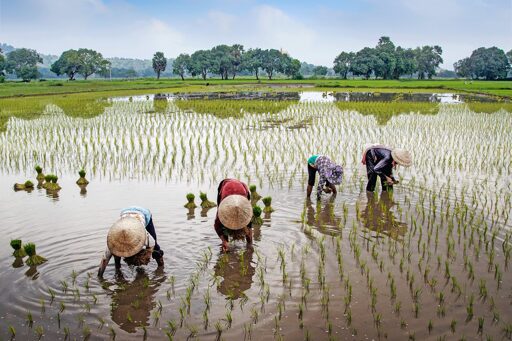
The Mekong Delta of Vietnam ranks among the world’s three most climate-vulnerable regions. Known as Southeast Asia’s “rice basket,” the region is home to 18 million people, produces half of Vietnam’s rice and 65% of its aquaculture, but faces escalating threats from rising sea levels, water pollution, groundwater depletion, saltwater intrusion and land subsidence. With only 20% of wastewater treated and more than 60% of rural residents lacking safe water and sanitation, the region’s environmental and economic stability hangs in the balance. A new proposal, the Nature-Based Mekong Delta Water Replenishment System (MD-GWRS), offers a sustainable, cost-effective solution to restore water security, leveraging the delta’s natural features and proven global technologies. The proposed MD-GWRS will increase Mekong groundwater yield by 1.5 million cubic meters per day to 4 million m3/day (53 million to 141 million cubic feet per day) at a cost of $317 million per year, with a potential benefit of $450 million per year from higher agriculture yield and aquaculture production. A region under threat The Mekong Delta’s challenges are stark. Surface water, often a mix of stormwater and untreated wastewater, is heavily contaminated. Groundwater is increasingly saline due to saltwater intrusion, affecting 1.7 million hectares (4.2 million acres), while overextraction has led to depletion and land subsidence at alarming rates (1.1-5.7 centimeters per year, or 0.4-2.2 inches, in Can Tho). Sea-level rise (2.2-13.5 millimeters per year, or 0.09-0.5 in), frequent droughts, and reduced dry-season river flows exacerbate the crisis, threatening the livelihoods of millions and the region’s…This article was originally published on Mongabay
From Conservation news via this RSS feed
You must log in or # to comment.