

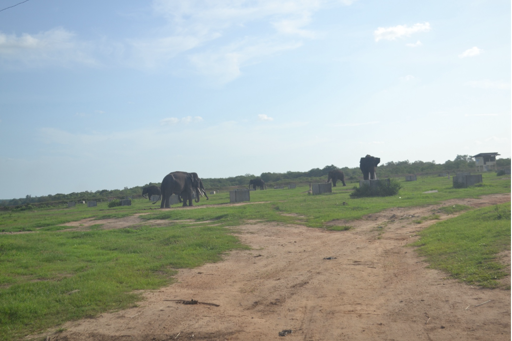
Indonesia is moving to rezone Way Kambas National Park, transforming the Sumatran sanctuary from a “cost center” into a “profit center.” As Mongabay’s Hans Nicholas Jong reports, the government has framed the initiative as a carbon-trading and luxury-tourism initiative to fund conservation for ecosystem restoration. The proposed land reclassification would cut the park’s strictly protected core area in half, from roughly 60,000 to 27,661 hectares (148,100 to 68,352 acres) while expanding nearly tenfold the area that can be used for carbon trading and development. The move has sparked criticism from environmental experts and activists. “If the reason for reducing the core zone is to increase the utilization zone for business, that’s not appropriate,” Indonesian ecologist Wishnu Sukmantoro, a member of the Asian Elephant Specialist Group at the IUCN, the global wildlife conservation authority, told Mongabay. Counterintuitively, restoration and tree-planting projects can sometimes damage wildlife habitat. Carbon projects often prioritize high-density tree planting to maximize credits, but Sumatran elephants in Way Kambas rely on open grasslands for food. Replacing grass with dense forest could drive elephants into human settlements, increasing human-wildlife conflict, according to Irfan Tri Musri, director of the Lampung chapter of the Indonesian Forum for the Environment (Walhi), the country’s largest environmental advocacy group. Aida Greenbury, a sustainability expert with the advisory board of the World Bioeconomy Forum, also raised questions about the level of engagement with local communities and the process of free, prior, and informed consent. “Proper FPIC is essential for a high-integrity carbon project,” said Greenbury,…This article was originally published on Mongabay
From Conservation news via this RSS feed
You must log in or # to comment.