


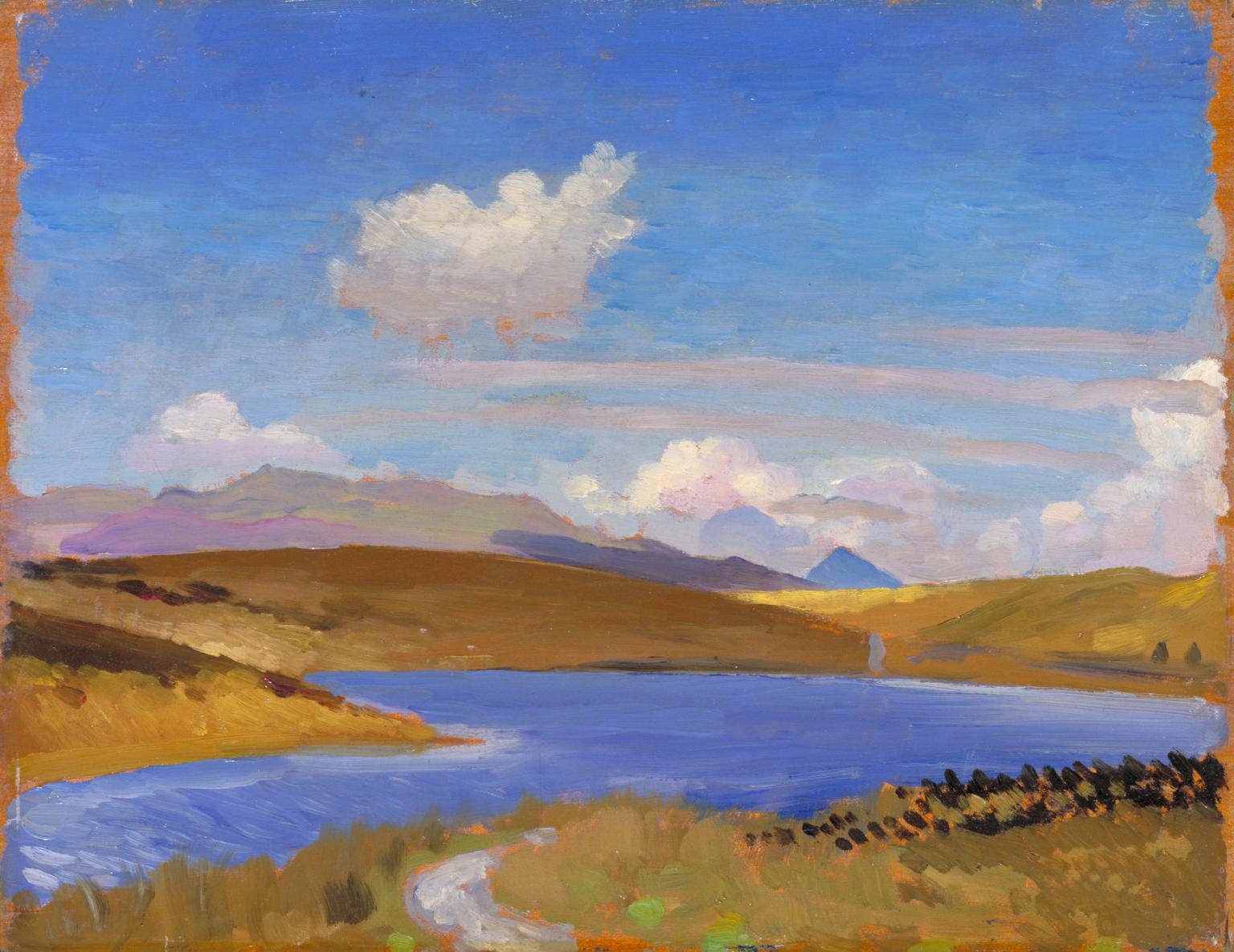
Llyn Treweryn by Augustus John
Hello,
Welcome to Cultural Capital! This week in The Times I wrote about how the gravitational pull of the much-mythologised “golden age” of the late nineties and early noughties distorts modern culture and politics.
I also appeared on David Runciman’s podcast Past Present Future to discuss my favourite film Whit Stillman’s Metropolitan.
And I was also on Amol Rajan’s podcast Radical to talk about my perennial hobbyhorse the death of reading.
Thanks for reading Cultural Capital! Subscribe for free to receive new posts and support my work.
Social media is a freakshowNate Silver reports on the slopification of Twitter, noting that the “content that gets ‘engagement’ on Twitter is mostly complete crap”. Who could disagree?
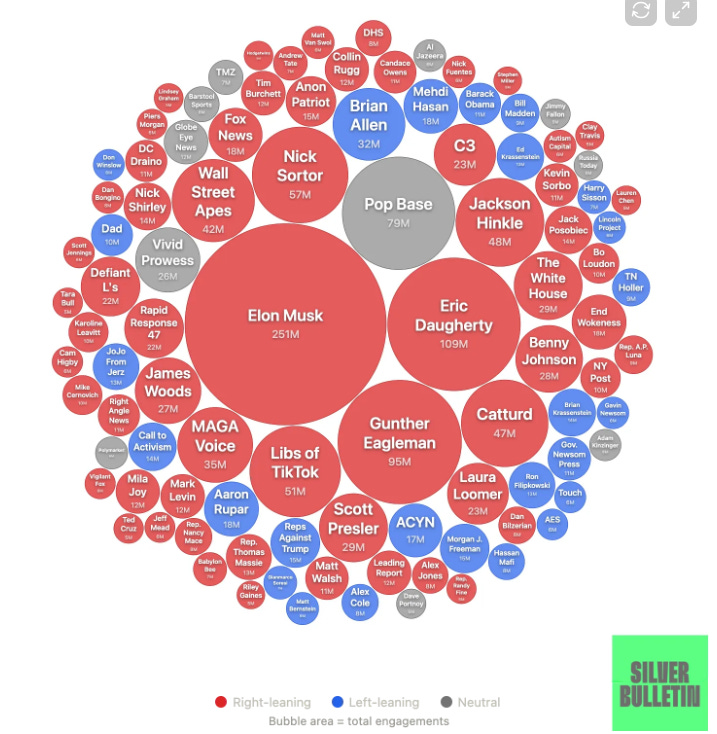
It’s not hard to notice that Twitter has become extremely right-leaning. But I’d argue there’s an equally important trend: the top accounts are of incredibly low quality. Elon, with the algorithmic boost he built in for himself, is at the eye of the storm, of course. But [right wing troll] “Catturd” literally gets far more engagement than the New York Times, for instance.
Silver’s chart of the most popular accounts on Twitter shows right wing brain rot predominates. It’s a reminder that reliable legacy media which report accurate news in a sober manner are now really pretty niche compared to trolls and influencers. This really doesn’t seem like the kind of information environment that can sustain a functioning democracy. Cough* New Dark Ages *cough.
I limit myself to looking at Twitter one day per week and I’m always depressed at how genuinely dumb and hateful it all is. It makes the tabloid newspapers look like the London Review of Books. It’s bleak to think that so many prominent politicians are spending their days marinating in this stuff.
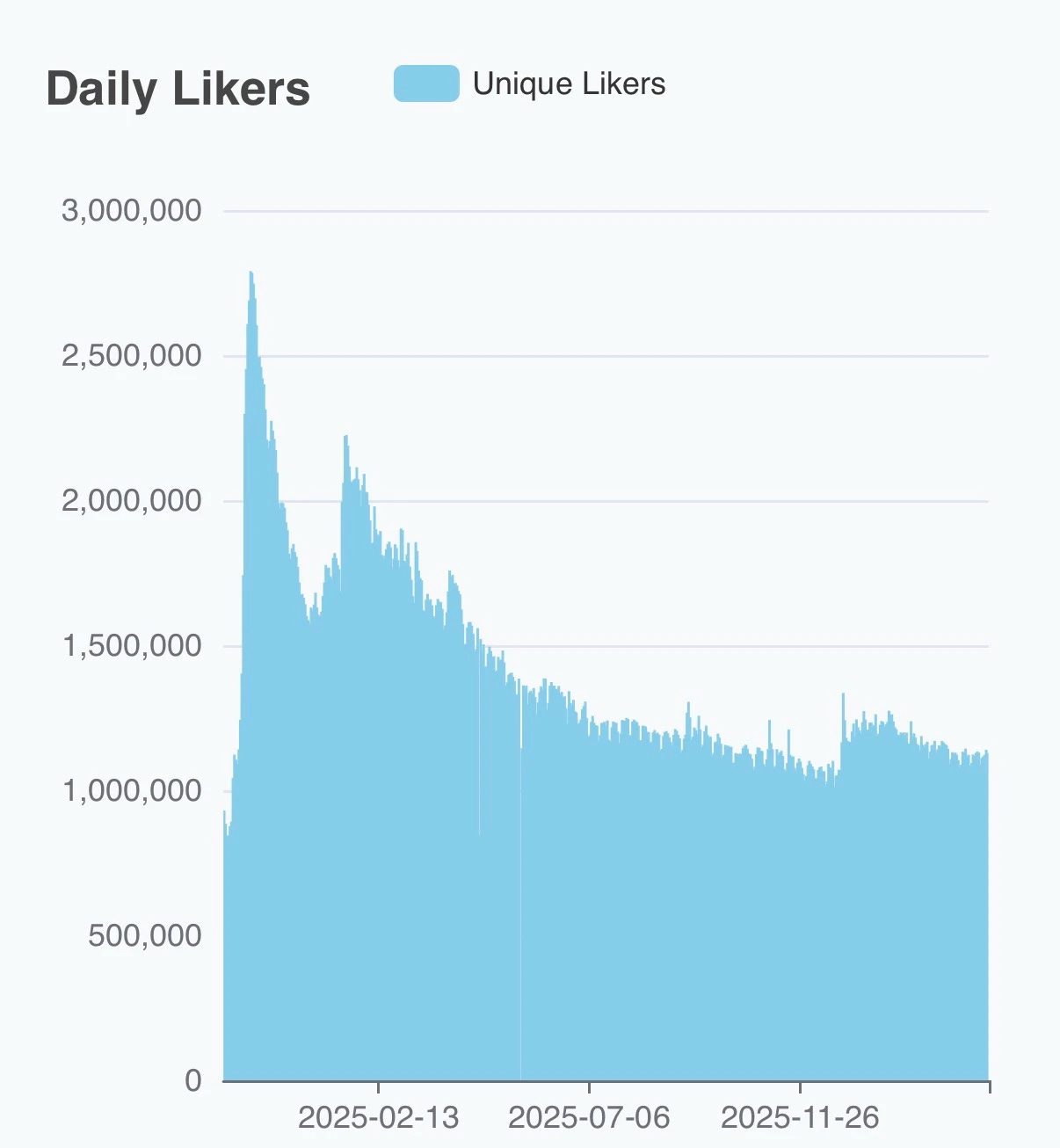
Is social media over? The journalist James Ball reports on the steady decline of Bluesky, the liberal alternative to Twitter. It had a jump in users about the time that Elon Musk took over Twitter but is now in chronic slow collapse. Though clearly infinitely better than X, whenever I go on Bluesky it strikes me that its reputation as a haven for smug liberals is justified. There’s an awful lot of scolding and self-righteous bloviating. It’s not a particularly welcoming atmosphere. Bluesky users also seem to be in the habit of trying to cancel most of the platform’s prominent users for various forms of wrongspeak which is probably not conducive to growth.
Ball suggests that it’s unlikely Bluesky will be able to survive with this small and declining userbase. Perhaps everyone will just eventually have to read books again…
Origins of instant coffeeA typically great piece from Works in Progress about the long and rather sad history of instant coffee, widely acknowledged as a disgusting drink:
During the mid-1800s, several firms produced instant coffees as thick liquid concentrates that could be reconstituted with water. In 1840, the Scottish company T & H Smith developed a ‘coffee essence’ by brewing coffee and reducing it to around a quarter of its original volume. This thick liquid was mixed with chicory extract and burnt sugar syrup, creating a molasses-like concentrate. One or two teaspoons mixed with boiling water made a drink, though it tasted more like coffee flavored molasses than proper coffee.
Another attempt came during the American Civil War. In 1832, President Andrew Jackson had replaced soldiers’ daily spirit rations with coffee beans and sugar. This created a heavy logistical burden for the army, with a 20-day supply for 100,000 troops weighing 250 tons, all needing transport by horse-drawn wagon. Roasting, grinding, and brewing coffee in the field was also time-consuming for soldiers.
In 1861, the Union Army began investigating instant coffee as a solution. They procured a coffee concentrate from the firm HA Tilden & Co, consisting of a mixture of thickened coffee and sweetened, condensed milk. This halved the weight and size of the coffee, but was unpopular with soldiers, who compared its consistency to axle grease.

Among my many other bad opinions I am an addict of decaf instant coffee and drink as many as seven cups of it a day when working from home. I have had three this evening since getting home from work.
Elaborate Ghanaian funeralsHere is another absolutely great piece by David Oks on the extremely elaborate funerary culture of Ghana. Funerals are so expensive that dead Ghanaians are often refrigerated for weeks or months or even a year while the family raise funds to pay for the funeral. When you are finally extracted from the refrigerator the fun really begins:
Eventually, your family decides that they’ve raised the funds they’re going to raise. They hire a graphic designer to produce large colorful banners bearing your name, your photograph, your dates of birth and death, and the time and place of your funeral: these are hung on walls and fences at intersections around the city. They rent a venue, hire a large staff—caterers, a DJ or live band, a photographer, maybe also a videographer—and choose a funeral cloth for the family to wear. And if your family can afford it, or wants the community to believe that they can, they commission a craftsman to carve you a “fantasy coffin” shaped like something you enjoyed or admired in life: perhaps a cocoa pod, a school building, a crab, a paintbrush, or a giant blue teapot.
Oks goes on to speculate very interestingly about why sub-Saharan cultures have developed these extravagant rituals. In his view it’s to do with the fact that these are tightly-bonded kinship societies which “demand constant, visible sacrifices of wealth” from their members. Familiar territory to anyone who has read Joseph Henrich’s great book The Weirdest People in the World.

What an Ivy league education really gets youThe Atlantic’s excellent Rose Horowitch writes about what an Ivy League education really gets you. Of course elite universities probably do offer a better education and obviously employers are impressed by elite credentials. But part of what you’re buying is access to a particular social environment:
what’s going on is more complex and harder to define: an implicit education in how to succeed in an environment full of some of the world’s most gifted, determined people. There’s no class that can really teach someone how to collaborate in a highly competitive environment or emerge as a leader among their peers. “It’s very difficult to develop this leadership skill without the opportunity to be in a community with lots of other ambitious and talented individuals, which is exactly what the Ivy Plus schools are providing”
One of the things I recall from going to Oxford is the shock of exposure to the rocket-fuelled meritocratic work ethic of the southern middle class which I think just didn’t exist in Newcastle in the same way. I remember feeling incredulous at my new peers who were weeping and hyperventilating over essay deadlines. But they were undeniably highly motivated. I think some of those values rubbed off on me a bit. And I’m glad! I was something of a diletantte as a teenager.
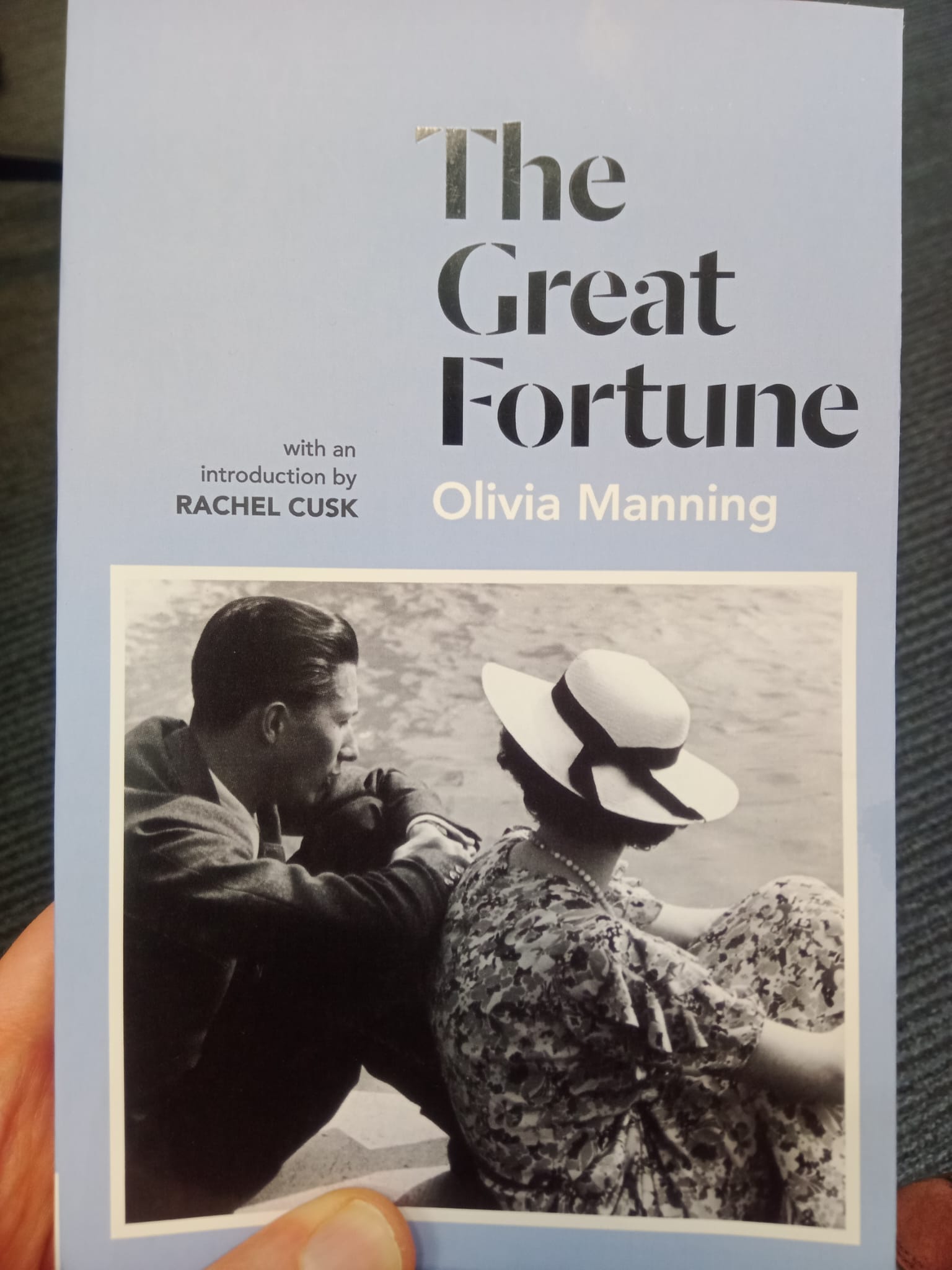
Novel recommendationI loved reading Olivia Manning’s book The Great Fortune (the first instalment of her Balkan trilogy) about a young English couple living in Bucharest at the beginning of the Second World War. Highly recommended to anyone looking for an absorbing novel. I’m so glad there are two more to go.
This one contains a particularly painful portrait of male irksomeness. Men have many fine qualities but there is is a particular combination of obliviousness, entitlement and self-delusion that is common to the sex that I think I have only properly understood by reading female novelists. Rachel Cusk (who introduces this edition) is also alarmingly good on the subject.
Contemplating lobstersI have just started Keith Thomas’s wonderful book Man and the natural world. Changing attitudes in England 1500–1800. It’s a rather dry title but Keith Thomas is one of our greatest living historians who writes these amazing anthropology-style books about the strangeness of the culture and beliefs of the past (his book In Pursuit of Civility: Manners and Civilization in Early Modern England is one of my favourite history books of all time). This one has great stories about human attitudes to animals.
Here is Thomas on early modern clergymen trying to rationalise why God put so many nasty creatures on earth:
Horse-flies, guessed the Virginian gentleman William Byrd in 1728, had been created so ‘that men should exercise their wits and industry to guard themselves against them’. Apes and parrots had been ordained ‘for man’s mirth’. Singing-birds were devised ‘on purpose to entertain and delight mankind’. The lobster, observed the Elizabethan George Owen, served several purposes in one: it provided men with food, for they could eat its flesh; with exercise, for they had first to crack its legs and claws; and with an object of contemplation, for they could behold its wonderful suit of armour
I love the idea that lobsters were put on earth as objects of contemplation. Apparently the clergyman Henry More believed that cattle and sheep had only been given life in order to keep meat fresh ”till we shall have need to eat them”.
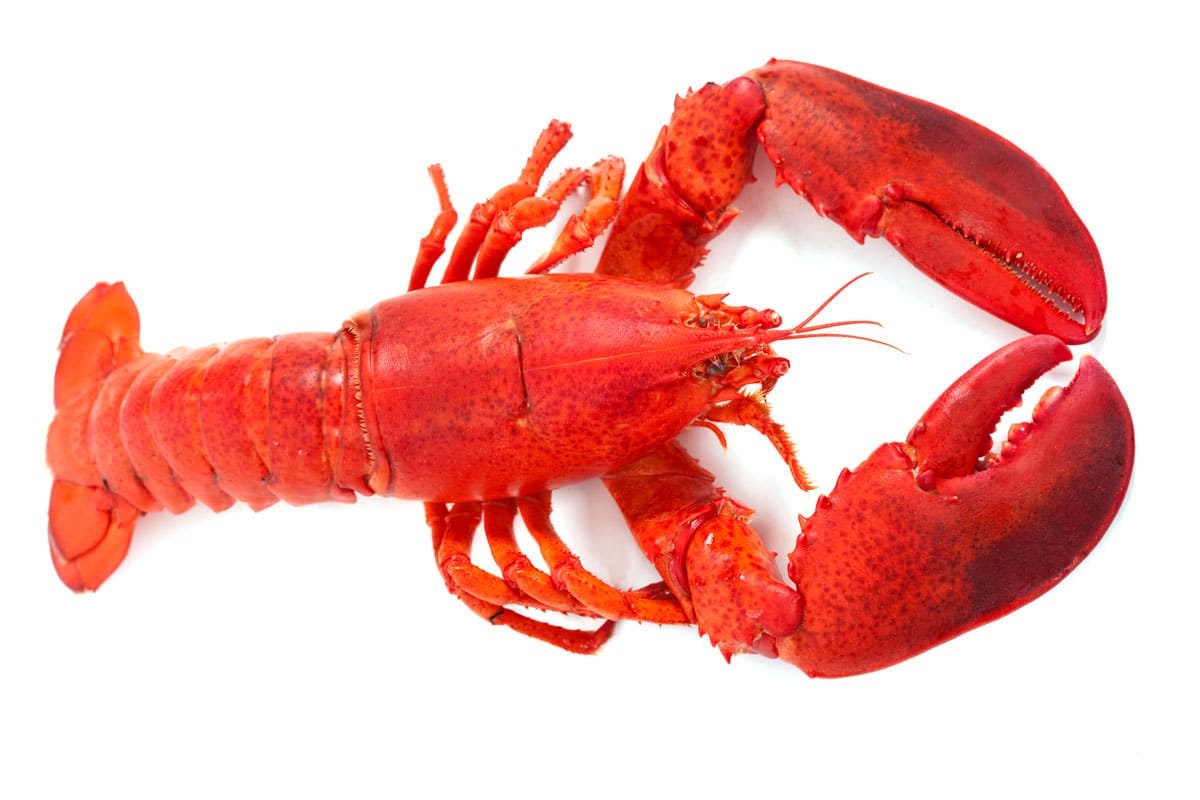
divinely ordained as an object of contemplation
A few good recent podcast episodesI’ve listened to a few good podcast episodes recently. For those in need of things to listen to:
Dominic Sandbrook’s guest appearance on The Rest is Politics should not be missed. Highly enjoyable and also genuinely informative about things like Hungary’s history of isolationism. Who knew!
I absolutely love the Private Eye podcast. This one features a dramatic reading of Prince Harry’s texts which is hilarious.
The Close Readings podcast (in my mind The Rest is History but for poetry) did a wonderful episode on Paradise Lost. Seamus Perry (paraphrasing William Empson) says that if Milton had been put in the Garden of Eden he would have marched straight up to the tree of knowledge, eaten the fruit and then written a series of self-justifying pamphlets about it.
I really enjoyed this conversation with Suzanne O’Sullivan about the age of over-diagnosis and why we have seen an explosion of medical labels in the last few years.
An interesting conversation about societal collapse and why (at least historically) that has not always been as disastrous as it sounds. Apparently when civilisations collapsed in the past many people’s lives got better.
Until next week!
James
From Cultural Capital via this RSS feed