

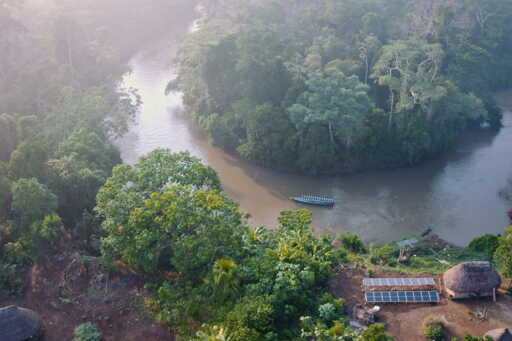
A solar-powered canoe initiative originally launched in Ecuador’s Amazon in 2017 has now expanded to Indigenous coastal communities in Brazil, Peru, Suriname and the Solomon Islands. Researchers say the effort helps communities in tropical regions reduce gasoline and diesel use, avoid road expansion and develop non-extractive income projects like tourism and forestry products businesses. Ichinki Tentets Tanchim Federico, a leader from the Indigenous Achuar community of Wayusentsa in Ecuador, which recently received a solar-powered canoe, told Mongabay via WhatsApp that the boat has reduced pollution by using engines that don’t release exhaust fumes in the waters and air. “[They] do not pollute the environment, especially for those who live near rivers,” he said, adding that it has saved Indigenous people the cost of purchasing fuel and oil. The Kara Solar Foundation, an Indigenous-led team of engineers, communicators, social scientists and solar technicians, created the project after Indigenous Achuar people in the southeastern Ecuadorian Amazon expressed their vision to build a solar-powered boat. Tapiatpia, the first solar canoe, survived an 1,800-kilometer (1,118-mile) journey across several Amazonian rivers and safely returned to Achuar territory in 2017. Since then, Kara Solar has delivered 12 solar-powered canoes to communities in five countries and built solar recharge stations that double as community energy centers. Six of the canoes were delivered to communities in Ecuador, two in Peru, two in Brazil, one in Suriname and one in the Solomon Islands. It has also trained members of Indigenous communities to operate and manage the systems in their…This article was originally published on Mongabay
From Conservation news via this RSS feed
You must log in or # to comment.