

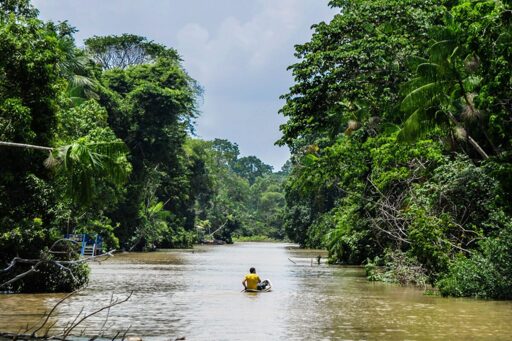
Leia em português. COMBU ISLAND, Brazil — Brazilian poet and songwriter Ruy Barata, born in 1920 in Santarém, in Brazil’s Amazonian state of Pará, once wrote ballads that captured the essence of ribeirinhos, the riverside people across the country. “This river is my street. Mine and yours, mururé,” he wrote, in lyrics that elegantly celebrate the traditions of communities living along riverbanks in the Amazon — a region where peoples, forests and rivers coexist in peace. Local inhabitants use the word mururé to designate several species of aquatic plants that can be easily seen in waterways throughout this part of Brazil. However, the natural life that once inspired Barata’s poetry is now under threat. The story takes us to Combu Island, a 10-minute boat ride from Pará’s capital, Belém. In November, the city will host the 30th United Nations Climate Change Conference, or COP30. But as the event draws near, the island is seen as a textbook example of the risks posed by unregulated human activity, biodiversity loss and shifting climate patterns. In a collaborative investigation by journalists and scientists, led by Brazil’s science-fostering Serrapilheira Institute and the Latin American Center for Investigative Journalism (CLIP), we examine how the deterioration of the Amazon Rainforest is interrupting vital environmental services — such as the upkeep of local biodiversity and preservation of water cycles — provided by the region. A stilt house in Combu, a typical residence of riverside communities in the Amazon. Image by Anna Peres/O Liberal. Combu Island is surrounded…This article was originally published on Mongabay
From Conservation news via this RSS feed